I Thought I Knew My Husband After 40 Years—Until His Ex-Wife Showed Up With a Secret That Destroyed Everything
I Thought I Knew My Husband After 40 Years—Until His Ex-Wife Showed Up With a Secret That Destroyed Everything
The Trembling Hands
Frank's coffee cup rattled against the saucer that Thursday morning, and I remember looking up from the newspaper, puzzled. We'd been married forty years, and I'd seen this man through every imaginable stress—Mark's appendicitis when he was twelve, Sarah's car accident in college, even the death of his mother. But I had never seen his hands shake like that. He was gripping the edge of our kitchen table, knuckles white, staring at his phone like it contained news of a terminal diagnosis. 'Linda's coming for dinner tonight,' he said, his voice barely steady. I blinked. Linda. His ex-wife from a marriage that ended before I'd even met him. The woman he hadn't mentioned in at least five years, maybe longer. 'Linda?' I repeated. 'Why?' He wouldn't meet my eyes. Just kept staring at that phone, jaw clenched, a muscle twitching in his cheek. 'She said it's important. She needs to talk to both of us.' The tremor in his hands spread to his voice. This wasn't nervousness. This was fear. Raw, desperate fear. I had never seen him this afraid, not even when Mark was in the hospital—what could Linda possibly know?
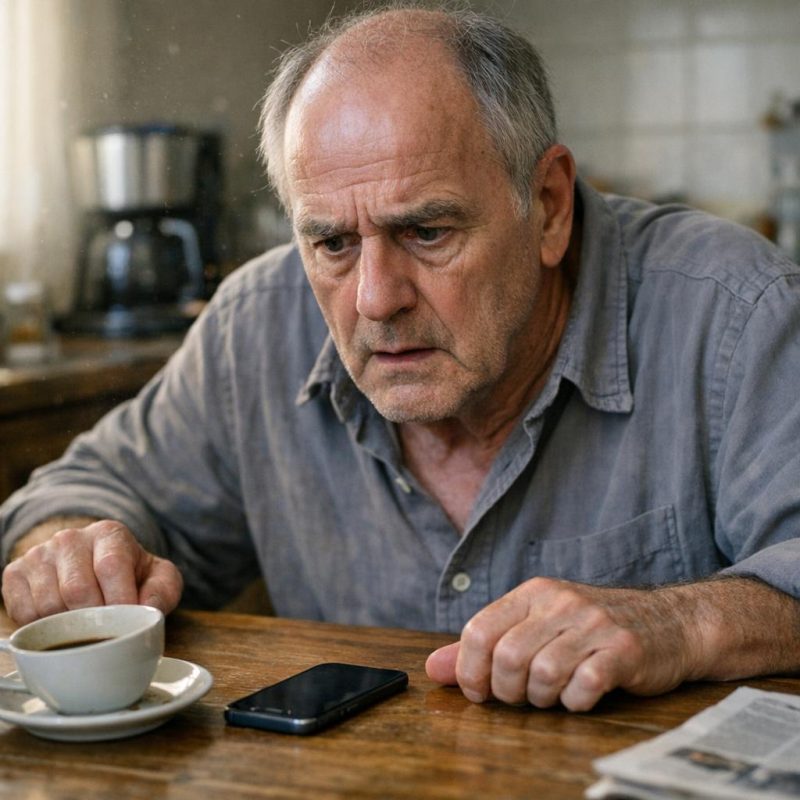 Image by RM AI
The Woman I Never Met
Frank left for his Thursday golf game—or at least that's where he said he was going—and I went straight to my laptop. I typed 'Linda Morrison' into Google, then remembered she'd probably remarried. I tried 'Linda' with Frank's hometown. Nothing useful came up. Facebook showed three Linda Morrisons in our state, none with profile pictures I could access. I found one old photograph from a community newspaper archive, maybe thirty years old, showing Frank and Linda on their wedding day. She looked young and hopeful, dark hair pulled back, holding his arm. That was it. No social media presence, no LinkedIn profile, no digital footprint whatsoever. It was like she'd deliberately erased herself from the internet. I spent three hours searching and came up empty. Who was this woman? What did she want after all these years? And why had Frank looked absolutely terrified? I made chicken piccata—Frank's favorite—though I wasn't sure why I was trying to comfort him when I didn't even know what was happening. I set the table for four, including place settings for Mark and Sarah, who Frank had insisted needed to be there. The doorbell rang at exactly six o'clock, and I realized I had no idea what to expect from the woman who had once been Mrs. Frank Morrison.
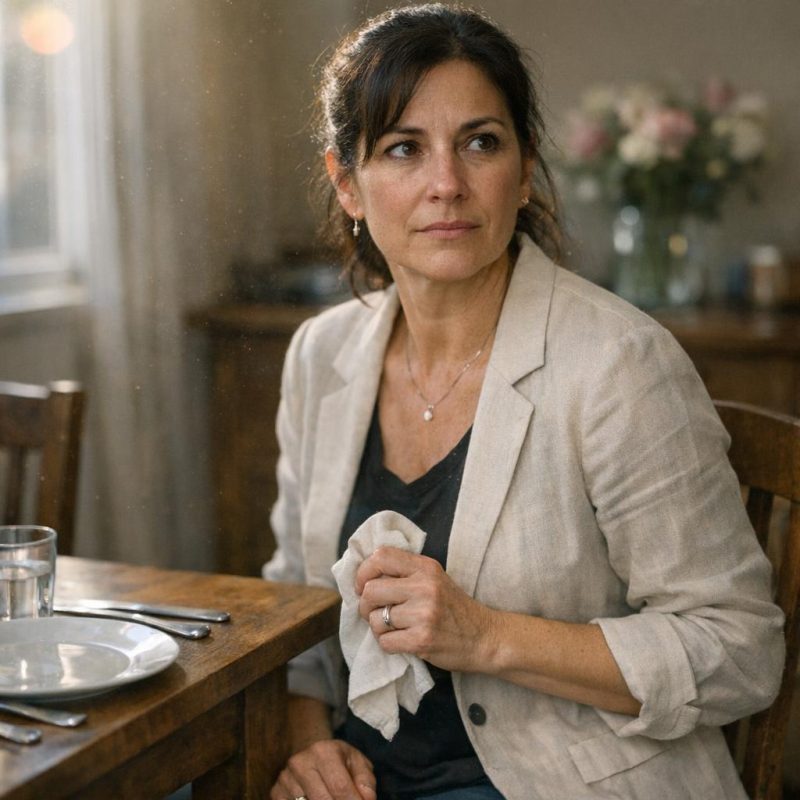 Image by RM AI
She Didn't Look Like a Villain
Linda wasn't what I expected. I'd built up this image of someone bitter, angry, maybe vengeful. But the woman standing on our porch looked tired more than anything else. Thin, gray-haired, wearing a simple cardigan and slacks. She had deep lines around her eyes and mouth, the kind you get from years of worry, not laughter. 'Carol,' she said quietly, and offered her hand. Her grip was dry and cold. Mark and Sarah arrived within minutes, both looking as confused as I felt. Frank had called them that afternoon, apparently, saying only that it was 'a family matter.' We sat around the dining room table, the chicken getting cold on its platter. Frank hadn't touched his wine. Linda hadn't touched anything. Sarah kept glancing at me with this questioning look I couldn't answer. Mark sat rigid, defensive already, the way he always got when he sensed his father was being threatened. The small talk died within minutes. Linda reached into her bag and pulled out a manila envelope, the old-fashioned kind with a metal clasp. She set it on the table between the salad bowl and the bread basket. 'I'm dying,' she said simply. 'Pancreatic cancer. And I can't die with this lie anymore.'
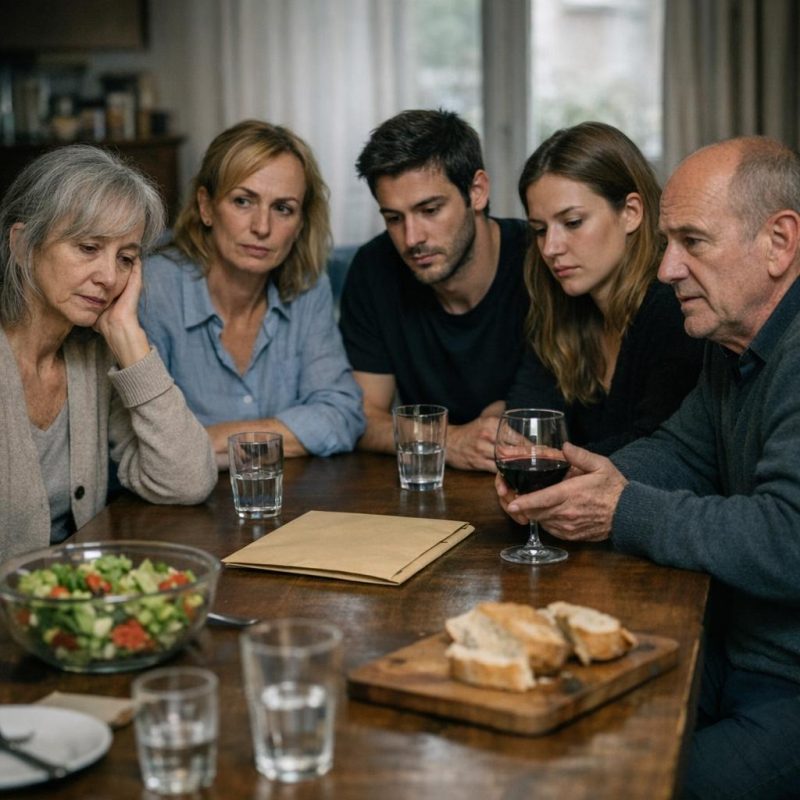 Image by RM AI
The Fraud
Linda's hands didn't shake as she spoke. Mine did. She told us about 1988, about a real estate investment scheme Frank had sold to her father. About how her entire family's savings—her parents' retirement, her grandmother's nest egg, money set aside for her younger brother's college—had vanished into a development project that never existed. She described her father's face when he realized it was gone. How her mother had to go back to work at sixty-three. How her brother never did finish his degree. Frank had walked away from their marriage three months later, she said, taking what little remained in their joint accounts. I sat there listening, and I kept waiting for Frank to explode, to defend himself, to call her a liar. But he just sat there, perfectly still, his face like stone. 'That's why you divorced him?' Sarah asked, her voice small. Linda nodded. 'That's what I told everyone. That he'd cheated, that we'd grown apart. The truth was too humiliating.' I looked at Frank. At this man who had told me for four decades that Linda was unstable, that she'd been vindictive during the divorce, that she'd tried to destroy his reputation out of spite. I looked at the man who had played victim of a 'bitter divorce' for decades and felt the foundation of my marriage crack.
 Image by RM AI
The Retired Accountant
My mind was racing backward through forty years. Frank had always described himself as a careful man, a numbers guy who'd worked in accounting before taking early retirement at fifty. He'd told me he'd been conservative with investments, cautious with money, that his modest pension and savings were enough for us because he'd planned carefully. I'd believed every word. Why wouldn't I? He balanced our checkbook. He managed our retirement accounts. He'd put both kids through college without loans. But now Linda was sitting at my dinner table telling me he'd destroyed her family through fraud, and Frank wasn't denying it. He was just sitting there, jaw tight, watching her like a chess player watches an opponent. Mark started to say something—probably to defend his father—but Linda held up her hand. 'I'm not finished,' she said. She reached into the manila envelope and pulled out a single sheet of paper, some kind of official document with signatures and dates. She pushed it across the table. I picked it up. It was a consulting contract dated fifteen years ago, signed by someone named Frederick Brennan. The address was in Delaware. The company name meant nothing to me. I stared at Frank, remembering every story he had told me about his quiet career and early retirement. Linda pushed the first document across the table—a consulting contract with a name I didn't recognize.
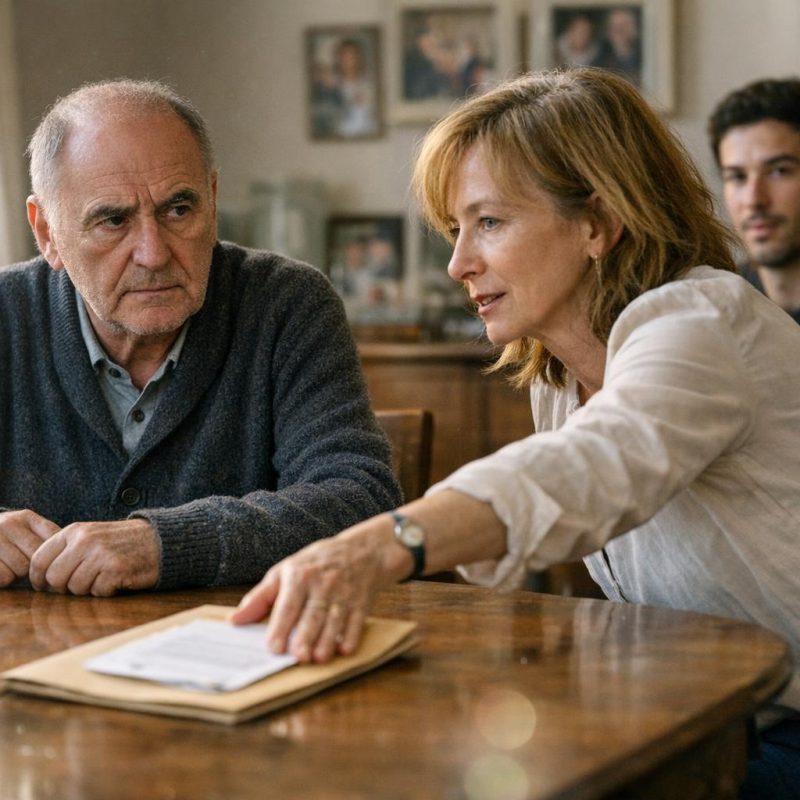 Image by RM AI
Twenty Years of Lies
Linda laid out more papers, one by one, like she was dealing cards. Consulting agreements. Corporate filings. Bank statements with that name—Frederick Brennan—printed at the top. All dated within the last twenty years. All during Frank's supposed retirement. 'He never stopped,' Linda said, her voice flat and factual. 'He just got smarter about it. Different name, different corporate structures, always moving money before anyone could trace it.' I felt like the room was tilting. Sarah had gone pale. Mark was shaking his head, saying 'No, no, this doesn't make sense,' but his voice had lost its certainty. Frank's consulting work, he'd told me. The occasional project that brought in extra income. 'Just helping old colleagues,' he'd say. 'Nothing major.' I'd never questioned it. Why would I? He came home every evening. We took vacations. We had a normal life. But normal was a performance, apparently. A forty-year magic show where I'd been the willing audience, never looking behind the curtain. Linda revealed that Frank had continued his 'consulting work' under a different identity for the last twenty years. I felt the room tilt as I realized the man beside me was a complete stranger.
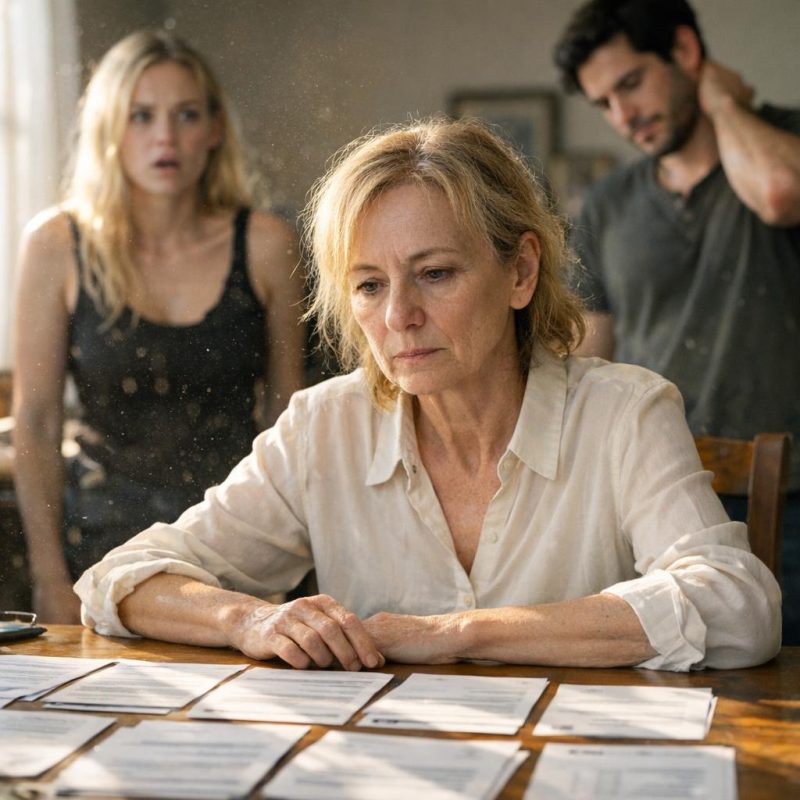 Image by RM AI
Frank Stands
That's when Frank moved. He'd been so still for so long that the sudden motion made me flinch. He stood up slowly, deliberately, his chair scraping against the hardwood floor. And something in his face had changed completely. The fear I'd seen that morning was gone. What replaced it was cold, calculating, almost reptilian. He looked at Linda the way you'd look at someone who'd just made a critical mistake in a negotiation. 'You're telling quite a story, Linda,' he said, his voice steady now, all tremor gone. 'Very compelling. Very dramatic.' He placed both hands flat on the table, leaning forward slightly. 'But you're forgetting something.' Mark was staring at his father like he'd never seen him before. Sarah had tears on her cheeks. I couldn't move, couldn't breathe. Frank's eyes never left Linda's face. 'You're forgetting the most important part of the story,' he said. The smile that crossed his face wasn't quite human. He looked at Linda and told her she was forgetting the most important part of the story.
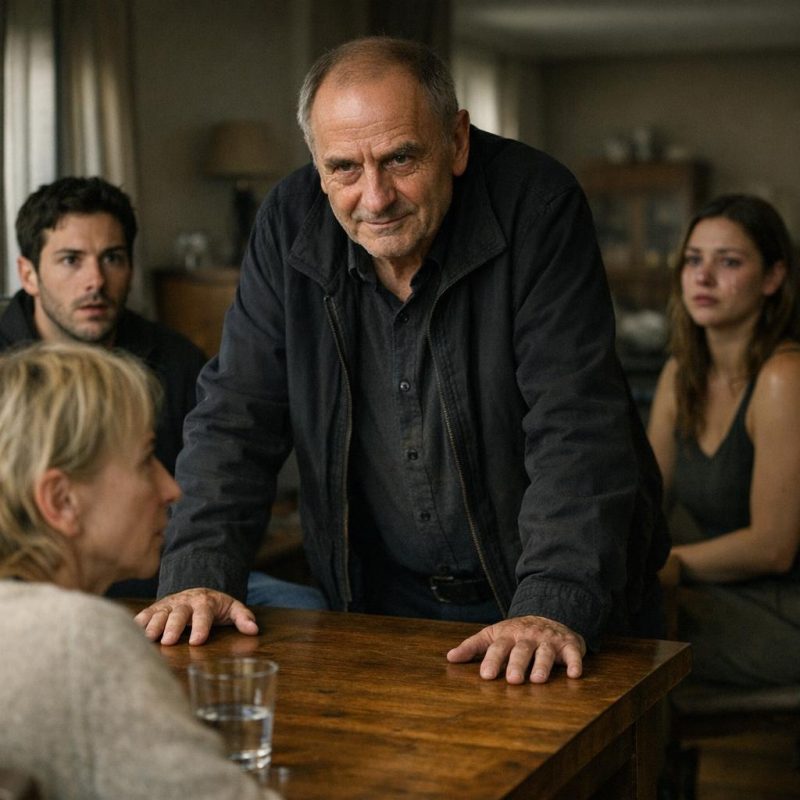 Image by RM AI
The Silent Partner
Linda's expression didn't change, but I saw her fingers tighten on the edge of the table. Frank straightened up, and when he spoke, his voice was almost gentle. Almost amused. 'Tell them why you really stayed quiet all these years, Linda. Tell them about the accounts.' She closed her eyes briefly. 'Frank, don't—' 'Tell them about Singapore. About the Caymans. About the very generous percentage you've been collecting every quarter for thirty-five years.' The room went silent. I looked between them, understanding dawning like nausea. 'You think she came here out of guilt?' Frank laughed, actually laughed. 'She came because she's dying and she wants to renegotiate. She wants a bigger cut for her medical bills, for whatever she's leaving behind.' Linda's face had gone gray. She didn't deny it. Sarah made a small sound, almost a whimper. Frank revealed that Linda had stayed quiet all these years because she was his silent partner, controlling offshore accounts. They weren't enemies coming to some dramatic confrontation. They weren't victim and victimizer sitting at my dinner table. They weren't enemies—they were co-conspirators fighting over money.
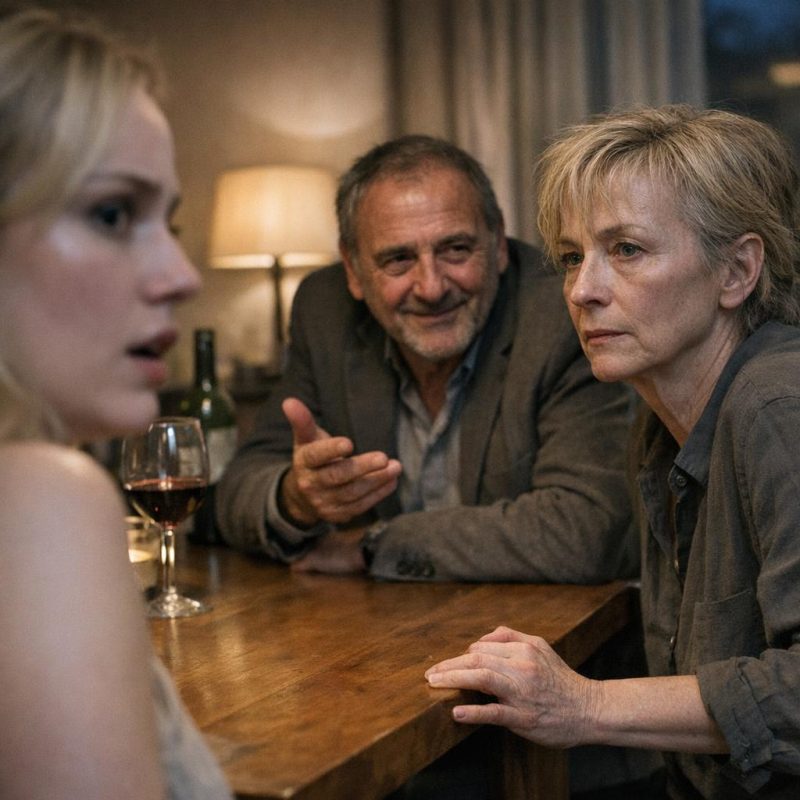 Image by RM AI
Sarah's Laughter
That's when Sarah started laughing. Not a nervous giggle or a shocked outburst—a deep, genuine laugh that came from somewhere in her belly. It was so unexpected, so wildly inappropriate for what we'd just heard, that everyone at the table went silent. Frank stopped mid-sentence. Linda's head snapped up. Mark's hand froze halfway to his water glass. I stared at my daughter, wondering if she'd finally cracked under the weight of this nightmare. 'Sarah?' I managed to say. She kept laughing, wiping her eyes, shaking her head like she'd just heard the punchline to a joke we'd all missed. 'Oh God,' she said between breaths. 'Oh, this is perfect. This is absolutely perfect.' Her hand moved to her bag—that expensive leather tote I'd admired when she arrived. I thought maybe she was getting a tissue, trying to compose herself. But her expression changed as her fingers found what they were searching for. The laughter died in her throat, replaced by something calm and cold that I'd never seen on my daughter's face before. She reached into her bag and pulled out something that made my blood run cold.
 Image by RM AI
The Badge
It was a badge. Federal. Financial Crimes Division. Sarah set it on the table between the wine glasses and the half-eaten roast, and I stopped breathing. The gold shield caught the light from the chandelier Frank had insisted we buy in Prague. 'Sarah Jenkins, Financial Crimes Investigator,' she said, her voice steady now, professional. 'And before anyone asks, no, I haven't been working in human resources for the past five years.' The room tilted. I gripped the edge of my chair because I thought I might actually fall out of it. Five years. Five years of Sunday dinners where she'd complained about her HR job, about difficult employees and corporate politics. Five years of me asking if she was happy in that work, if she wanted to consider other options. 'Mom,' she said, looking directly at me with an expression that was apologetic and determined at the same time, 'I'm sorry. I couldn't tell you.' Frank had gone very still. Linda was staring at the badge like it was a snake. Mark finally moved, leaning back in his chair with his arms crossed. She hadn't been working in human resources for five years—she had been investigating her own father.
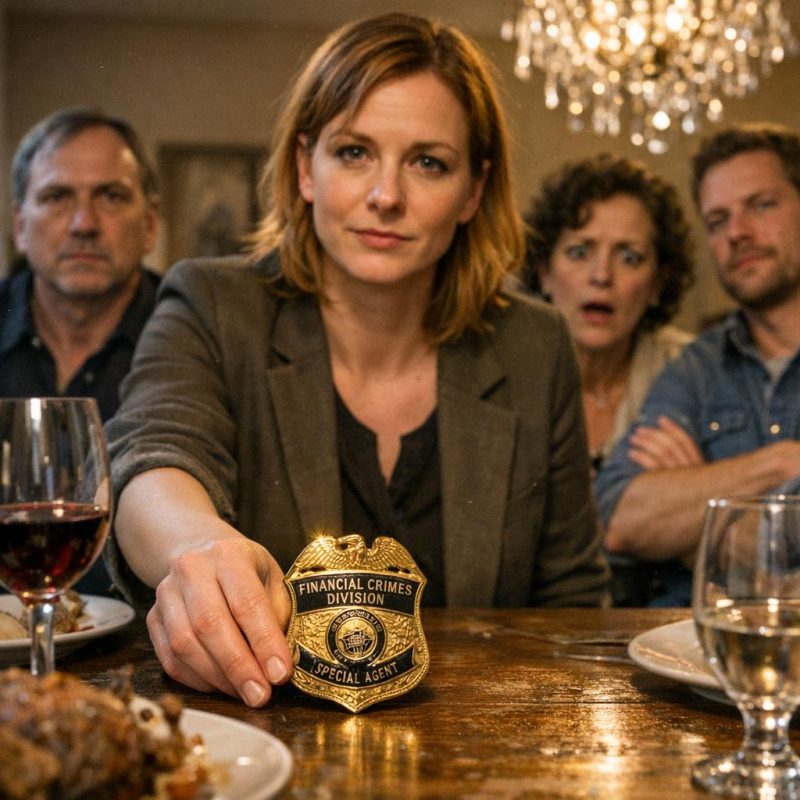 Image by RM AI
 Image by RM AI
The Sting
Sarah explained it calmly, like she was giving a presentation at work. She'd known about Frank's activities for years—inconsistencies in his stories, unexplained income, the way Linda's name kept appearing in financial documents she'd accidentally discovered. She couldn't prove it alone, so she'd gone to the authorities, trained, become the investigator on his case. And Linda? Linda's terminal diagnosis had been real, but Sarah had used it. She'd contacted Linda six months ago, suggested that maybe it was time to 'make things right,' knowing that Linda would interpret that as an opportunity to renegotiate her cut before she died. 'I knew you'd both show up here eventually,' Sarah said, looking between Frank and Linda. 'I knew your mutual greed would lead to exactly this kind of confrontation. I just needed you both in the same room, saying it out loud.' My hands were shaking. I pressed them flat against my thighs under the table. My husband was a fraud. His ex-wife was his criminal partner. And my daughter—my Sarah—had been playing them both. I sat frozen, realizing my husband was a fraud, his ex-wife was his partner, and my daughter was arresting them both.
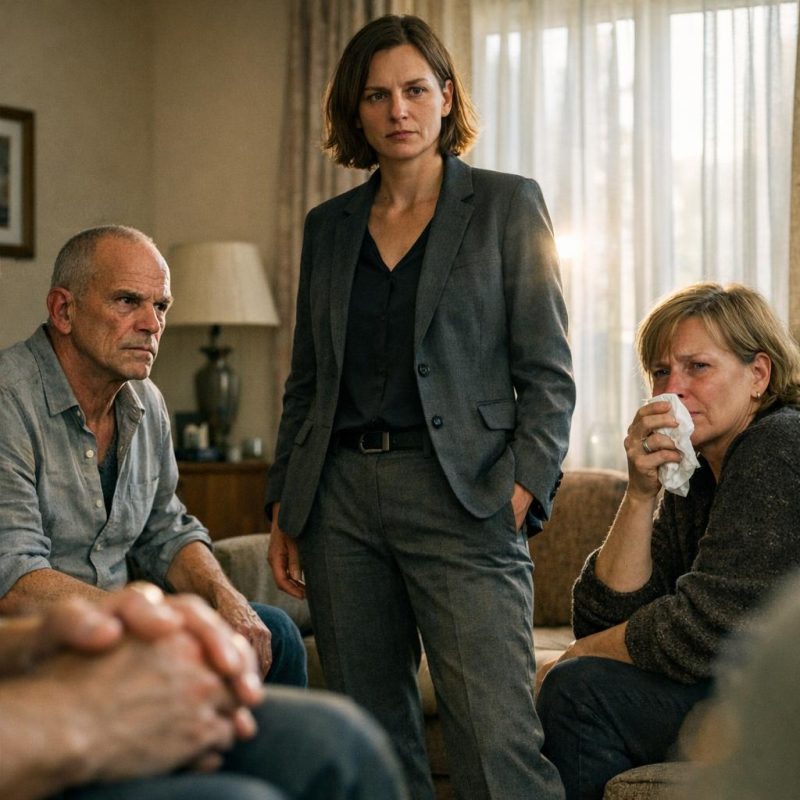 Image by RM AI
Image by RM AI
The Seized House
That's when Sarah turned to me, and I saw tears in her eyes for the first time that night. 'Mom, I need to tell you something else.' Her voice cracked slightly. 'The house. Our house. It's already been seized by the authorities. As of this morning.' The words didn't make sense at first. Seized. Our home. The place where I'd raised her, where I'd hung wallpaper in the nursery when I was eight months pregnant, where I'd refinished the floors myself one summer while Frank was traveling. 'Everything?' I whispered. 'The house, the accounts in Dad's name, the cars. Anything purchased with fraudulent funds.' She reached across the table like she wanted to take my hand, but I pulled back. I couldn't handle being touched right now. 'I'm so sorry. I tried to time this differently, but Linda forced my hand by showing up tonight.' Forty years. Forty years of building a life, choosing furniture, planting a garden, painting and repainting rooms as my tastes changed. All of it tainted. All of it built on lies and stolen money. Everything I had built for forty years was being taken away, but Sarah said she had secured something for me.
 Image by RM AI
Whistleblower Status
'You have whistleblower status, Mom,' Sarah said quickly, urgently, like she needed me to understand this part. 'I filed the paperwork months ago. You're protected. You won't face charges, and you'll be entitled to a portion of the recovered assets.' Whistleblower status. Like I was part of this. Like I'd known something, seen something, when really I'd just been living my life, trusting my husband. 'I knew you were innocent,' Sarah continued. 'I've had access to every account, every transaction. Your name isn't on anything illegal. You never knew.' She was right. I hadn't known. But somehow that made it worse—that I'd been so blind, so trusting, so stupid. Outside, I heard sirens. Distant at first, then closer. Frank heard them too. His face had gone white. Linda just sat there, looking tired and old and defeated. Mark still hadn't said a word, just watched everything unfold like he was witnessing a car crash in slow motion. The sirens got louder, and I understood. As police sirens approached, I realized my daughter had been protecting me all along.
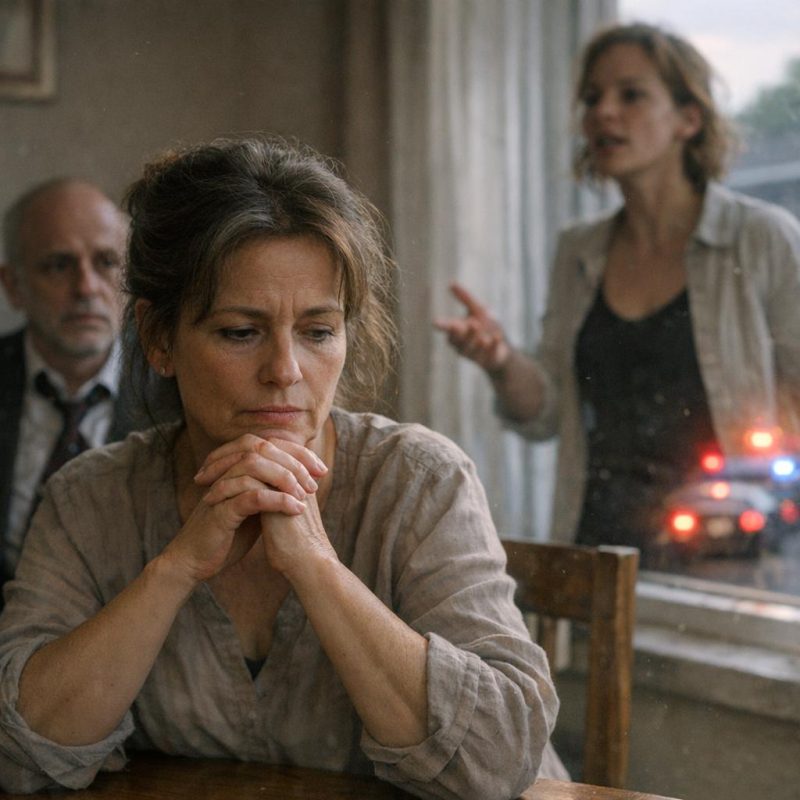 Image by RM AI
Image by RM AI
The Handcuffs
The police came through my front door—the door I'd painted sea-foam blue last spring—with badges and handcuffs and voices that were professionally calm but absolutely final. Sarah stood up and became someone I didn't recognize, directing officers, citing statute numbers, her voice stripped of anything that sounded like my daughter. I watched her read Frank his rights. My husband. The man who'd held my hand through labor, who'd taught Sarah to ride a bike, who'd rubbed my feet every Sunday night for forty years. He didn't look at me as they cuffed him. Linda got the same treatment, and she went quietly, almost gratefully, like she'd been waiting for this moment. Mark finally moved from his chair and stood beside me, his hand hovering near my shoulder but not quite touching. 'Mrs. Jenkins,' one of the officers said to me, 'you're not being charged with anything. You're free to remain here tonight, but you'll need to vacate by Friday.' I nodded because I couldn't speak. Sarah gave me one last look before she led them out—apologetic, determined, heartbroken. I watched my daughter lead her father and Linda away in handcuffs as Mark stood beside me in stunned silence, and all I could see was the butter knife from that morning's breakfast still sitting on the table, a reminder of when my world was intact.
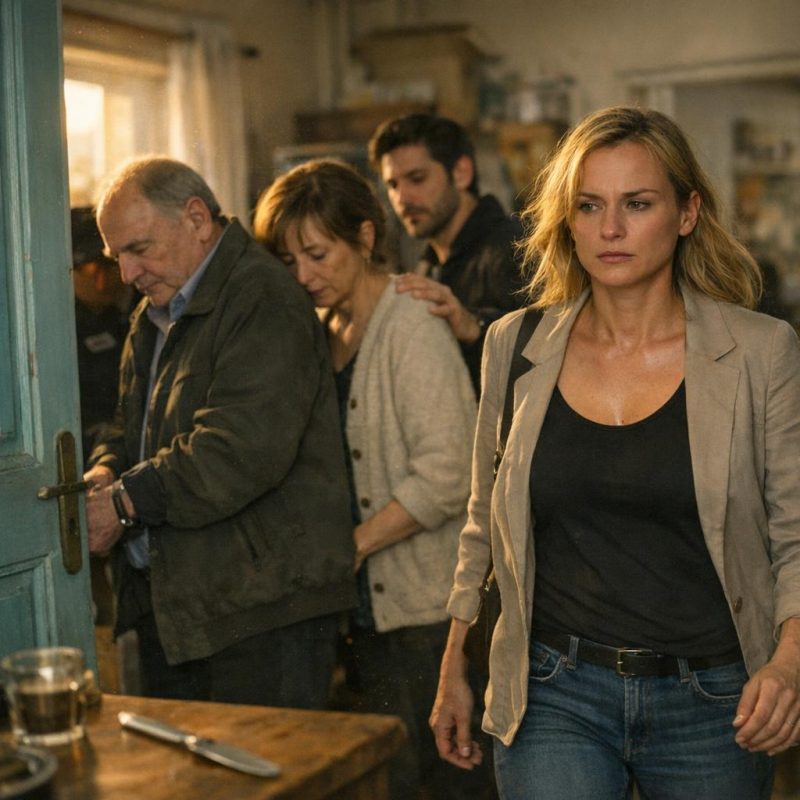 Image by RM AI
The Empty House
After everyone left—the police, Frank, Linda, even Mark and Sarah—the house felt enormous and empty. I walked through the rooms like a stranger, touching things I'd touched a thousand times before: the bannister I'd stripped and refinished, the kitchen counter where I'd rolled out Christmas cookies with Sarah when she was small, the living room mantle where our wedding photo still sat in its silver frame. Everything looked the same. Nothing was the same. I had until Friday. Three days to pack up a life, to decide what belonged to me versus what had been purchased with stolen money. Did the coffee maker count? The towels? That ridiculous expensive blender Frank had insisted we needed? I couldn't think about it. Couldn't process what to take, what to leave, where I would even go. I ended up in Frank's study, a room I rarely entered because it was 'his space.' The mahogany desk. The leather chair. The bookshelves filled with volumes on finance and economics that I'd always assumed he actually read. And then I saw it—a drawer in the desk, small and built into the side panel. In Frank's study, I found a locked drawer I had never noticed before.
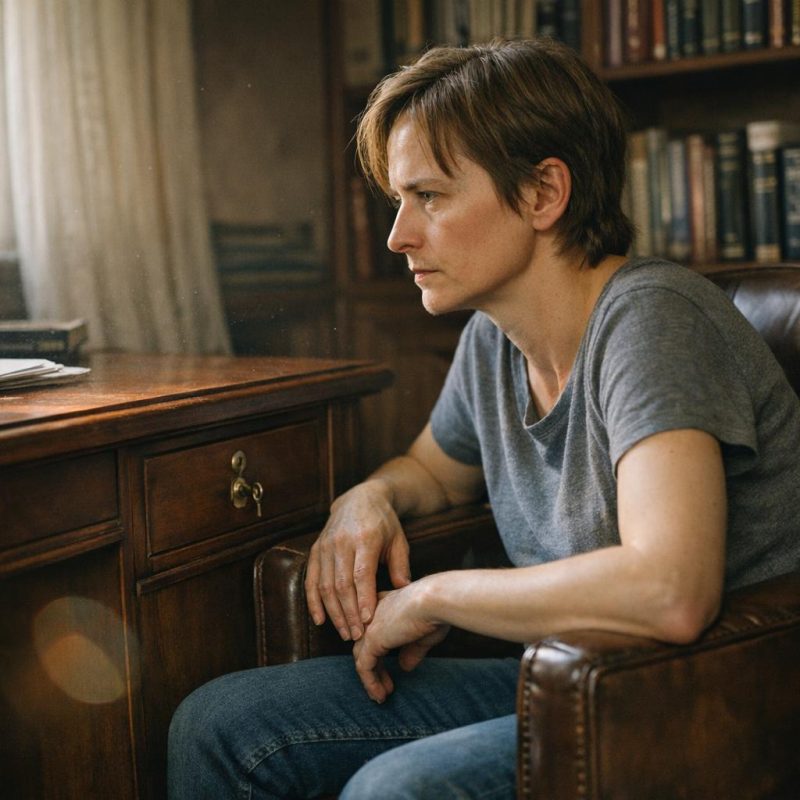 Image by RM AI
The Locked Drawer
I grabbed a letter opener from the desk organizer—silver, monogrammed, a gift from his employees ten years ago. The lock was small, decorative really, and it broke on the second try. Inside the drawer were file folders, meticulously organized. Bank statements. Dozens of them. But not in Frank's name. Not in our name. James Morrison. Robert Chen. David Williams. Each folder contained statements from banks I'd never heard of, in countries I'd barely heard of. I spread them across the desk, my hands shaking as I scanned the balances. Six million in one account. Four million in another. Eight million. Twelve million. I kept adding them up in my head, kept losing count, kept having to start over because the numbers were so absurd. We'd lived comfortably. Nice vacations, good restaurants, a solid retirement plan. Or so I'd thought. But this? This was a different level entirely. Frank hadn't just been hiding money—he'd been hoarding it, stashing it away in accounts under fake names while I'd clipped coupons and waited for sales at the grocery store. The balances made our comfortable lifestyle look modest in comparison—Frank had hidden millions.
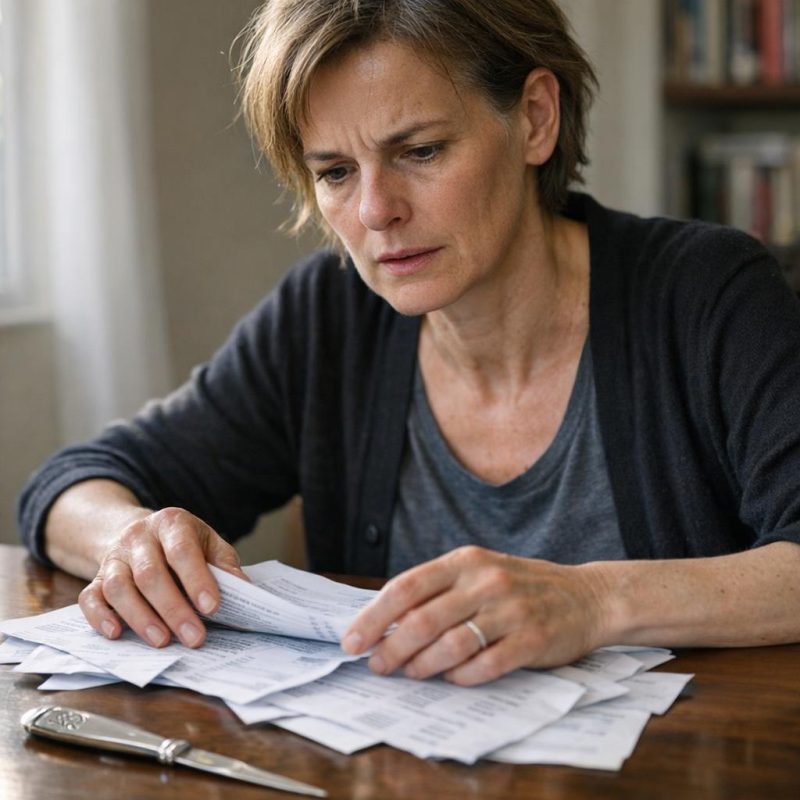 Image by RM AI
Image by RM AI
Mark's Call
The phone rang at midnight, three days after Linda's dinner revelation. I'd been sitting in the dark living room, unable to sleep, staring at nothing. Mark's name lit up the screen. My son—always so controlled, so measured—sounded like he was choking. 'Mom,' he said, and that one word carried forty years of trust. 'Mom, did you know? Any of it?' I closed my eyes, gripping the phone so hard my knuckles went white. 'No,' I told him. 'I swear to you, Mark, I knew nothing.' The silence that followed felt like drowning. Then I heard it—a sound I hadn't heard since he was seven years old and his childhood dog died. My successful, composed son was sobbing. Not the quiet tears of an adult trying to maintain dignity, but raw, ugly crying that came from somewhere deep and broken. 'I believed in him,' Mark gasped between breaths. 'I wanted to be like him.' I sat there listening to my child break down crying for the first time since he was a child, and I couldn't even hold him because he was three states away, dealing with the fact that his father was a fraud.
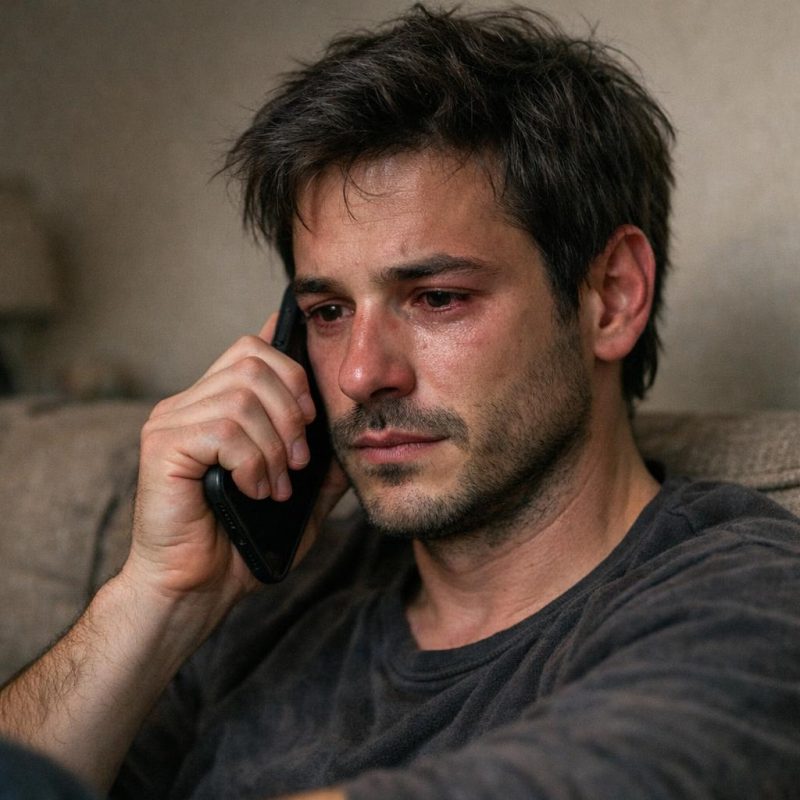 Image by RM AI
The First Night Alone
I couldn't sleep in our bed. Just the thought of lying on those sheets, under that duvet we'd picked out together at Macy's fifteen years ago, made my skin crawl. The guest room became my refuge—neutral territory, untouched by the weight of forty years of lies. The mattress was firmer than I was used to, and the room smelled faintly of the lavender sachets I'd tucked into the closet for guests who rarely came. I lay there staring at the ceiling, watching shadows move across the plaster as cars passed outside. Sleep felt impossible. Every time I closed my eyes, I saw Linda's face across the dinner table, saw those bank statements spread across Frank's desk. At 3am, exhausted but wired, my brain started replaying the dinner in fragmented loops. Linda's voice. Her exact words. And then something caught—something she'd said when Sarah was questioning her about the offshore accounts. The phrasing was wrong somehow, the tense was off. At 3am, I suddenly remembered something Linda had said at dinner that didn't make sense.
 Image by RM AI
Linda's Slip
Linda had said 'our arrangement' when Sarah pressed her about the money. Not 'our old arrangement' or 'what we used to do.' Just 'our arrangement,' present tense, like it was still happening. I sat up in the guest bed, my heart racing as I replayed the conversation. She'd been talking about the offshore accounts, about how they'd moved money through shell corporations, and she'd slipped into that phrase so naturally. Like muscle memory. If they'd really been divorced for decades, if this partnership had truly ended thirty-seven years ago, wouldn't she have used past tense? Wouldn't she have distanced herself from it? I grabbed my phone off the nightstand, scrolling back through my fragmented memories of the evening, trying to reconstruct her exact words. The more I thought about it, the more it gnawed at me. Linda hadn't come to our house to clear her conscience or warn me out of some belated sense of decency. She'd come for a reason, but what? If they were still partners, why would Linda risk everything by coming to dinner?
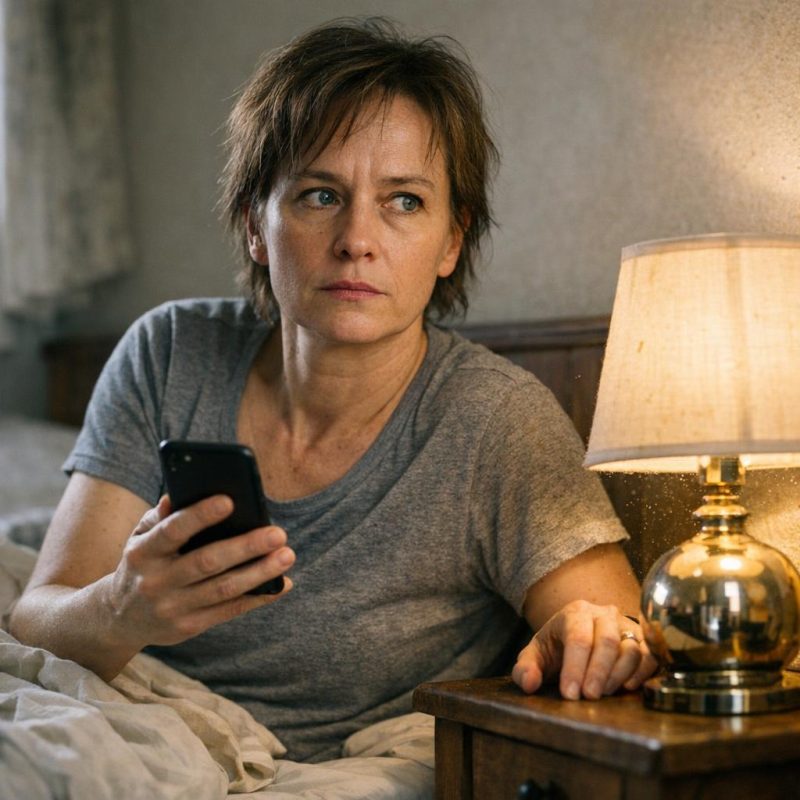 Image by RM AI
Sarah's Visit
Sarah showed up at dawn with coffee and empty boxes. I heard her key in the lock—I'd given her one years ago for emergencies—and found her standing in the kitchen with that careful, gentle expression that broke my heart. Not the federal investigator I'd seen at dinner, all sharp edges and controlled fury. Just my daughter, eyes red from crying. 'I'm here to help you pack,' she said quietly. We worked in silence at first, wrapping dishes in newspaper, folding clothes into boxes. She handled my things with such tenderness, like each item mattered. Around noon, as we were taping up a box of photo albums, she stopped. 'Mom, I need to say something.' Her voice cracked. 'I'm sorry I didn't tell you sooner. I'm so sorry you had to find out like this.' I looked at my daughter—this brilliant, determined woman who'd sacrificed so much—and suddenly understood. She apologized for not telling me sooner, and I realized she had carried this burden alone for years.
 Image by RM AI
Five Years of Investigation
Sarah explained everything as we packed the kitchen. She'd started investigating five years ago, not because of some grand suspicion, but because the numbers didn't add up. 'Dad's pension versus our expenses,' she said, carefully wrapping my grandmother's teacups. 'When I was helping you with your taxes that year, I noticed discrepancies. Small things at first. Then I couldn't stop seeing them.' She'd been fresh out of graduate school, trying to figure out her career path. The questions about her father had led her to forensic accounting, then to financial crimes investigation. Every choice, every step of her professional life had been built around this. 'I became a federal investigator because of him,' she said, not looking at me. 'I thought if I got good enough, if I learned the system inside and out, I could find proof. Real proof that would hold up in court.' She had built her entire career around bringing her father to justice, sacrificing normal family relationships.
 Image by RM AI
The Surveillance Photos
Sarah pulled out a manila envelope from her bag. 'You need to see these,' she said, spreading surveillance photos across the dining room table. Frank and Linda. Sitting at a café I'd never been to, somewhere I didn't recognize. The timestamp on the first photo was from two years ago. Then another, dated six weeks later. Then another. And another. 'Every month,' Sarah said quietly. 'Sometimes more frequently. They've been meeting regularly for at least two years, probably longer.' I stared at the images. Frank looked relaxed, smiling, leaning across the table like he was sharing a joke. Linda was laughing in one photo, serious and focused in another. This wasn't the body language of former partners with ancient history. This was current. Active. Ongoing. 'The café is in Riverside,' Sarah continued. 'Twenty miles from here. Far enough that he'd never run into anyone you knew.' My hands shook as I touched the photos. They had been having coffee every month at a café twenty miles away—our reconciliation story was another lie.
 Image by RM AI
Image by RM AI
The Motel
Sarah drove me to the Riverside Motor Lodge, a squat building with faded paint and a flickering vacancy sign. 'It's temporary,' she assured me. 'Just until the legal process is sorted out and we can figure out what assets you're entitled to.' The room smelled like industrial cleaning solution and old carpet. One double bed, a dresser with a broken drawer pull, a bathroom with fixtures from the 1980s. Sarah helped me carry in my single suitcase—everything I'd packed fit into one bag. 'I'll cover the rent,' she said. 'Don't worry about that.' After she left, I sat on the edge of the bed and unpacked. Four outfits. Toiletries. My phone charger. The photo of Mark and Sarah as children that I'd grabbed from my nightstand. That was it. That was all I had. As I unpacked my single suitcase, I realized I was starting over at sixty-two with nothing but whistleblower protection.
 Image by RM AI
The First Interview
The federal building was all glass and steel, cold and impersonal. Two investigators—a woman named Agent Morrison and a younger man who never introduced himself—led me to a windowless conference room. They recorded everything. Six hours of questions, each one more detailed than the last. Did I know about the offshore accounts? No. Had Frank ever mentioned Linda in the past decade? Not that I remembered. Did I notice unusual financial activity? No. Had I ever traveled with Frank for business? Sometimes, but I never attended his meetings. They took notes in duplicate, cross-referenced my answers, asked the same questions from different angles. Agent Morrison was kind but relentless. 'Mrs. Henderson, in all these years, did you ever suspect anything?' I sat there, exhausted, thinking about forty years of marriage. About trust and normalcy and the life I'd believed was real. When they asked if I had ever suspected anything, I realized the answer was no—and that made me feel foolish.
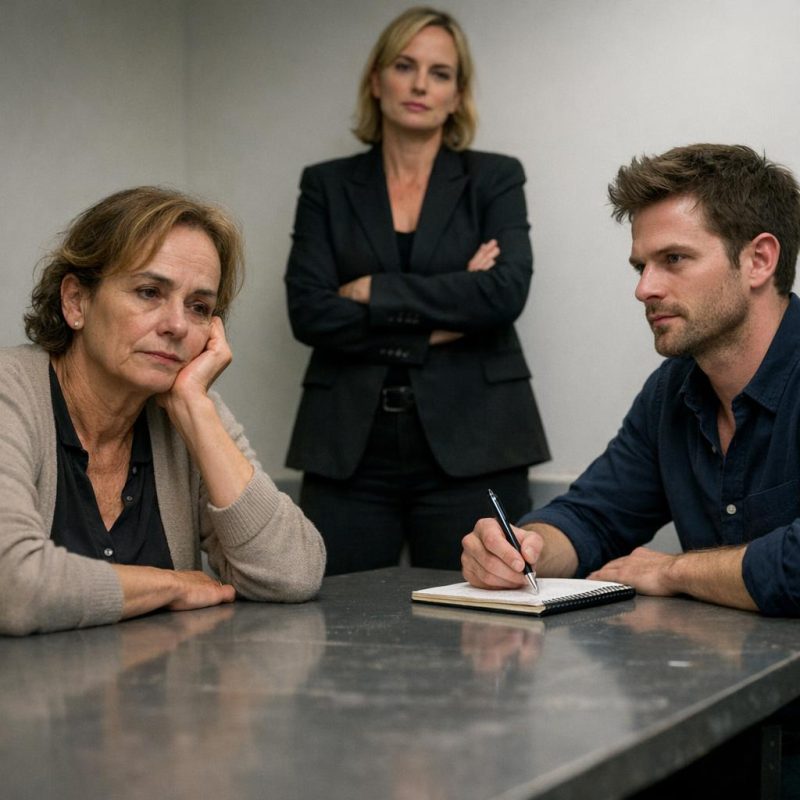 Image by RM AI
Frank's Phone Call
The motel phone rang at 9:47 PM, three days after the federal building. I almost didn't answer—who even knew I was staying here? But something made me pick up. 'Carol, please don't hang up.' Frank's voice hit me like a physical blow. He sounded hoarse, exhausted in a way I'd never heard before. 'I need to see you. I can explain everything, I swear to God I can explain.' My hand shook so badly the receiver rattled against my ear. 'They're allowing me one visit per week,' he continued, words tumbling out fast like he was afraid I'd disconnect. 'Just come once. Please. Forty years has to count for something.' I wanted to scream at him. Wanted to demand answers right there, through the phone line. But my throat had closed up completely. 'Carol? Are you there? Carol, I love you. I've always loved you. This whole thing, it's not what you think. Linda twisted everything, she—' I set the receiver down gently, cutting him off mid-sentence. My hands were shaking so hard I could barely replace it in the cradle. The thing is, he sounded genuinely desperate—and some terrible part of me wanted to believe him.
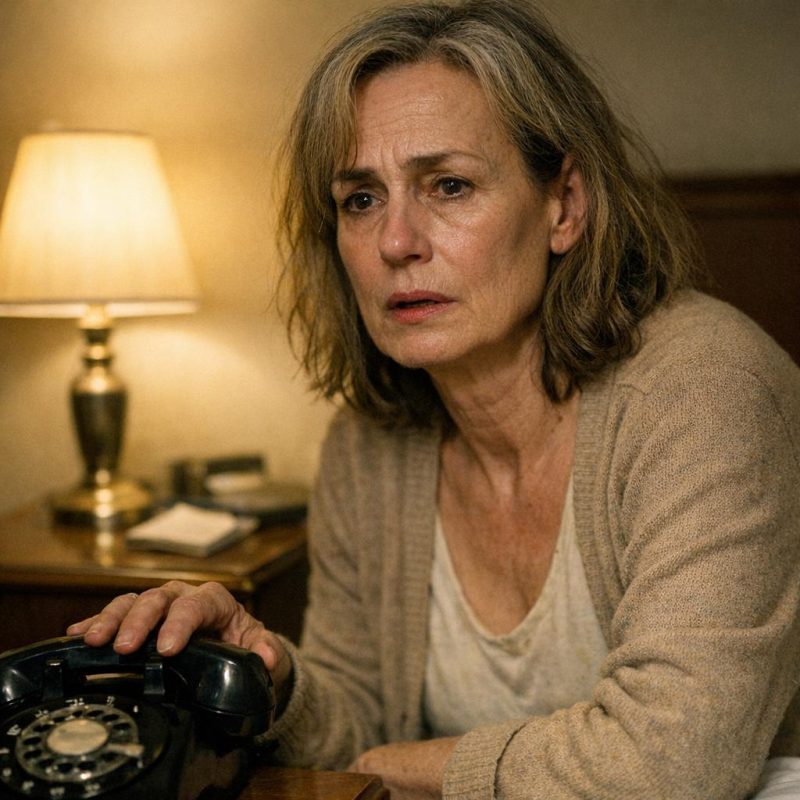 Image by RM AI
Linda's Letter
The motel clerk handed me an envelope four days later with a knowing look that made my skin crawl. It was thick, cream-colored stationery, my name written in elegant cursive across the front. No return address, but I recognized the handwriting from those photographs Sarah had shown me—documents Linda had signed decades ago. My hands went cold. I carried it back to my room like it might explode, set it on the nightstand next to the lamp with the broken shade. The envelope just sat there, seeming to pulse with menace. I made coffee. Stared at it. Made more coffee. Took a shower. It was still there when I got out, still waiting. How had she even found me here? I'd paid cash, used my maiden name when I checked in. The weight of being watched, tracked, studied—it made me feel sick. I finally picked it up again around midnight, turned it over in my hands. The flap wasn't sealed, just tucked in. Inside, I could see the edge of handwritten pages. She wrote that there were things Sarah didn't know, things I needed to hear before the trial, and that the complete truth was more complicated than anyone had told me.
 Image by RM AI
Should I Read It?
I kept Linda's letter in my purse for two entire days, unopened. I'd take it out, hold it, then put it back. The weight of it felt obscene, like carrying around evidence of my own stupidity. Every time I thought about reading it, my stomach would twist. What new horror could possibly be waiting in those pages? What other betrayal hadn't been revealed yet? I'd survived Frank's arrest, Sarah's investigation, the federal interrogation—how much more could one person be expected to absorb? On the third morning, I finally couldn't stand it anymore. My hands shook as I tore open the envelope, pulled out three handwritten pages in that same elegant script. The paper was expensive, heavy stock, like she'd taken time to make this presentation perfect. I smoothed the first page flat on the motel desk, my heart hammering. The opening sentence seemed to jump off the page, each word distinct and terrible. 'Frank is not the man you think he is, but neither am I.' I stared at those words until they started to blur, feeling the ground shift under me once again.
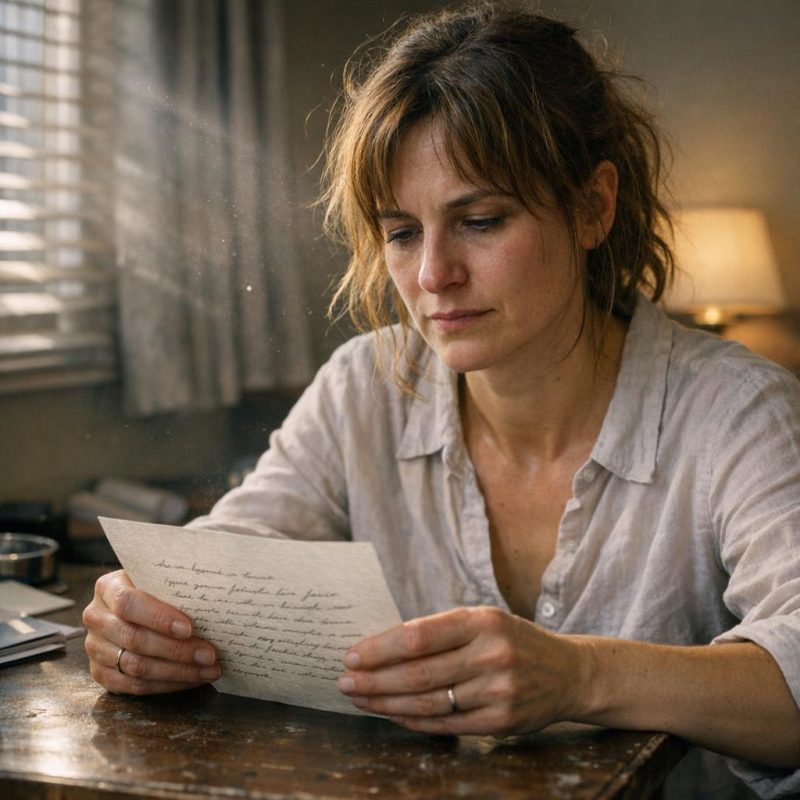 Image by RM AI
Linda's Version
Linda's letter painted a completely different picture than Sarah's investigation had. She claimed she'd only partnered with Frank initially to track money that was rightfully her family's—money her father had invested with Frank's firm decades ago, before Frank and I were even married. According to her version, Frank had been systematically stealing from client accounts for over thirty years, not twenty. She wrote that she'd discovered the theft by accident, that she'd confronted Frank, and that he'd convinced her to help him 'restructure' the funds. She made herself sound naive, manipulated, almost innocent. 'I thought I was recovering what belonged to my family,' she wrote. 'By the time I understood the scope of what he'd done, I was already implicated.' The kicker came in the second page. She claimed she'd been feeding information to federal authorities for three years—long before Sarah had ever started her investigation. Three years. Sarah had told me she'd been working this case for five years total, building it from scratch. The math didn't work. Someone's timeline was wrong, and I had no idea whose. My head pounded as I read the pages again, trying to find the truth hidden somewhere in Linda's careful words.
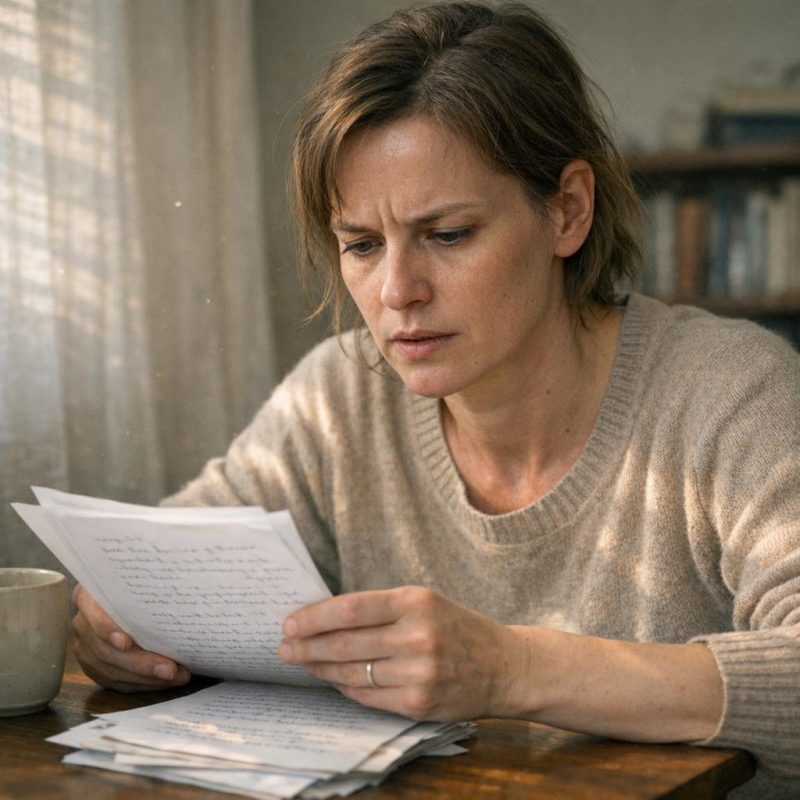 Image by RM AI
Who Do I Believe?
I spread everything out on the motel bed like I was working a puzzle. Linda's letter on the left. My notes from conversations with Sarah on the right. The timeline Sarah had described: five years of investigation, two years of surveillance, three years since she'd first suspected Frank's involvement. Linda's timeline: three years of cooperation with the FBI, four years since she'd 'discovered' the theft, thirty-plus years of Frank's criminal activity. The numbers contradicted each other everywhere I looked. If Linda had been cooperating for three years, why hadn't Sarah mentioned that? If Sarah had been investigating for five years, how did Linda only find out four years ago? I tried calling the timeline Agent Morrison had mentioned during my interrogation, but my memory was fuzzy—I'd been so overwhelmed that day, so much information coming at me at once. I made a chart on motel stationery, cross-referencing dates, trying to find where the stories aligned. They didn't. Not anywhere. One of them was lying—or maybe they both were, each protecting their own version of events. And I was stuck in the middle with no way to verify anything, no way to know which woman was telling me the truth and which one was using me for some purpose I couldn't even begin to understand.
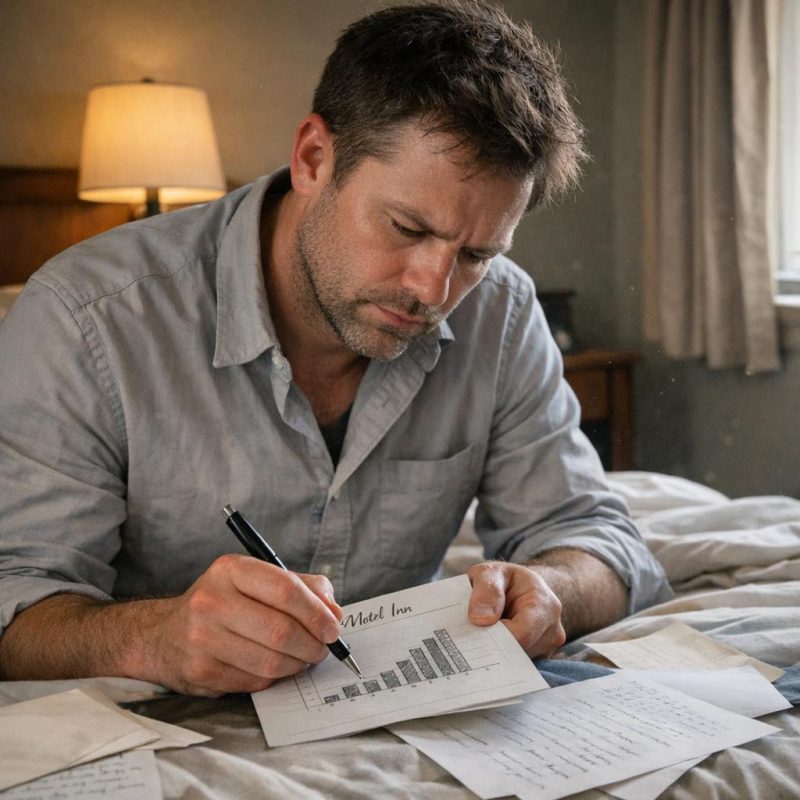 Image by RM AI
Confronting Sarah
I called Sarah from the motel parking lot, standing outside in the cold because I needed air, needed space. She answered on the first ring. 'Mom? Are you okay?' 'I need to ask you something,' I said, not bothering with pleasantries. 'And I need the truth, Sarah. I can't handle any more surprises.' I heard her take a breath. 'Of course. What is it?' 'Linda sent me a letter. She claims she's been cooperating with the FBI for three years. That she approached them long before you started your investigation. Is that true?' The silence stretched so long I thought the call had dropped. 'Sarah?' 'It's... complicated,' she finally said. 'That's not an answer.' 'Mom, I can't discuss active investigation details over the phone. You know that.' 'Don't give me that bureaucratic bullshit,' I snapped, surprising myself. 'Did Linda contact authorities before you did or not?' Another pause, longer this time. I could hear her breathing, could practically feel her choosing her words carefully. 'There's context you need to understand—' 'Just answer the question.' But Sarah's long pause before answering told me more than her words ever could—she was hiding something, and I was done being kept in the dark.
 Image by RM AI
Sarah's Admission
Sarah showed up at my motel room an hour later. She looked exhausted, her suit wrinkled, dark circles under her eyes. 'You're right,' she said before I could even let her fully inside. 'Linda did approach the FBI years ago. About four years ago, actually. Before I was officially assigned to this case.' I sat down on the bed, feeling dizzy. 'So she was telling the truth.' 'Partially,' Sarah said carefully. 'She made contact, yes. But the Bureau deemed her unreliable because she was clearly involved in the scheme herself. Her information was self-serving—she was trying to negotiate immunity by offering up Frank. They didn't trust her motives and they couldn't verify her claims independently.' She sat down in the desk chair, rubbed her face. 'When I started building my case two years later, I discovered Linda's earlier contact. I used it. I re-approached her, convinced her to wear a wire, to document everything. She thought she was playing me, getting a better deal. I knew she was compromised from the start.' I stared at my daughter. 'So she's both an informant and a suspect?' 'Exactly,' Sarah said. 'She helped build the case, but she's also facing charges. She was using the FBI, and I was using her right back.'
 Image by RM AI
The Trial Date
The official notice came in a manila envelope, certified mail, delivered to the motel even though I still didn't understand how anyone knew I was here. United States District Court, Northern District. The trial was scheduled to begin in six weeks—October fourteenth. I read through the paperwork with shaking hands, legal language that barely made sense. United States v. Franklin Henderson and Linda Marquez. Counts of wire fraud, money laundering, conspiracy, obstruction. The sentences they were facing added up to decades. My eyes caught on a line near the bottom of the second page. Potential witnesses for the prosecution. My name was listed there, right between Sarah's and someone named Robert Chen who I'd never heard of. I would have to testify. Would have to sit in a witness box and answer questions while Frank watched from the defense table. Would have to speak under oath about my marriage, my life, everything I'd believed was real. The thought made me physically ill. I ran to the bathroom and threw up, then sat on the cold tile floor with my back against the tub. In six weeks, I would have to face Frank in court—and I still had no idea what I was going to say.
 Image by RM AI
Mark's Distance
Mark stopped taking my calls after the third day. It went straight to voicemail every time, and my texts sat there with one gray checkmark—delivered but unread. I tried not to panic, told myself he just needed space, but by the end of the week I was desperate enough to call Sarah. She answered on the second ring, her voice careful. 'He's struggling, Carol,' she said. 'He keeps saying his whole childhood was a lie. That every baseball game Dad attended, every college visit, every family dinner—it was all funded by stolen money.' I could hear something in the background, maybe traffic. 'He feels like he doesn't know who he is anymore,' Sarah continued. 'Like if Dad was pretending all those years, then maybe Mark was pretending too, just by being Dad's son.' I tried to argue that Mark was his own person, that Frank's crimes didn't define him, but Sarah just sighed. 'I know that. You know that. But Mark can't see it right now. He's too ashamed.' After we hung up, I sat in the motel room and realized the truth with sickening clarity. I had lost my husband, my home, and now I was losing my son to his shame and confusion.
 Image by RM AI
The Victim List
Sarah showed up at the motel two days later with a manila folder I didn't want to see. 'The prosecution sent this over,' she said, setting it on the small table by the window. 'They want you to understand the scope before you testify.' Inside were forty-three names, printed in neat columns with dates and dollar amounts beside each one. The Patterson family: $127,000. The Kowalskis: $89,000. The Hendersons: $156,000. I stared at the numbers until they blurred. Thirty years of fraud, methodically documented. Retirement accounts drained. College funds emptied. Life savings redirected into accounts I'd never known existed. Sarah stood by the window, her arms crossed. 'Some of these people lost everything,' she said quietly. 'A few had to postpone retirement by a decade. One couple lost their house.' I kept reading down the list, my hands shaking, until I reached the H's. And that's when my breath caught. The Hendersons—Jim and Patricia Henderson. The Kowalskis—Tom and Susan. The Richardsons—Mike and Ellen. I recognized three names immediately, people we had invited to dinner parties and holiday gatherings.
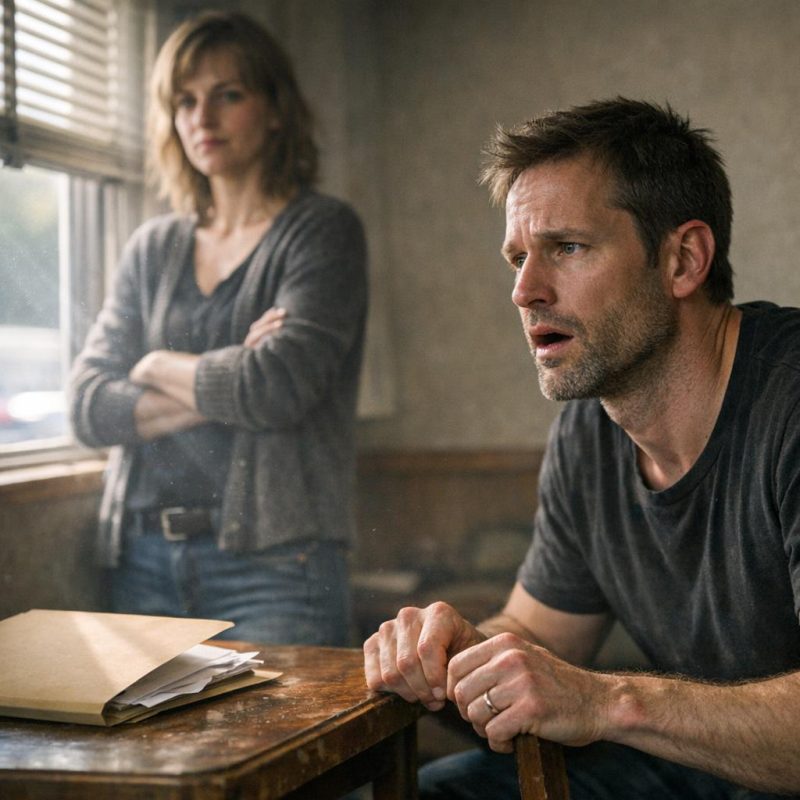 Image by RM AI
Image by RM AI
The Dinner Parties
I remembered hosting the Hendersons three years ago, late October, one of those perfect fall evenings. Patricia had brought a pumpkin pie she'd made from scratch, and Jim kept making terrible dad jokes that had Frank laughing so hard he'd nearly choked on his wine. We'd sat on the back patio until almost midnight, the string lights glowing overhead, talking about their plans to buy an RV and drive cross-country after Jim retired. Patricia had been so excited, showing us pictures on her phone of all the national parks they wanted to visit. Frank had raised his glass in a toast: 'To new adventures and well-earned rest.' I'd thought it was sweet at the time, the way he smiled at them. Now I understood what that smile really meant. He'd already taken $156,000 from them by then. Had probably taken more after that night. While we laughed and drank wine and made plans for Christmas dinner, Frank knew the Hendersons would never see that RV, never take that trip. Every memory of my marriage—every dinner party, every holiday, every quiet evening on the patio—was now contaminated with the knowledge of what Frank had been doing.
 Image by RM AI
Frank's Second Call
The second call from Frank came late on a Thursday night, the motel phone jolting me awake at eleven-thirty. I almost didn't answer, but something made me pick up. 'Carol, please don't hang up,' he said immediately, his voice rushed and desperate. 'I know you don't want to hear from me. I know I have no right to ask anything. But I need to see you.' I stayed silent, my heart pounding. 'I'm signing paperwork tomorrow,' he continued. 'Everything I have left—the remaining investment accounts, the life insurance policy, my half of the pension—I'm signing it all over to you. No strings. But I need you to come here first. Just once. Please.' The manipulation was so obvious it was almost insulting. He was dangling financial security in front of me like bait, trying to buy a visit, trying to control me even from behind bars. I should have hung up immediately. Should have told him to rot in that cell alone. But here's the thing nobody tells you about betrayal: even when you know someone is lying, part of you still wants answers only they can provide.
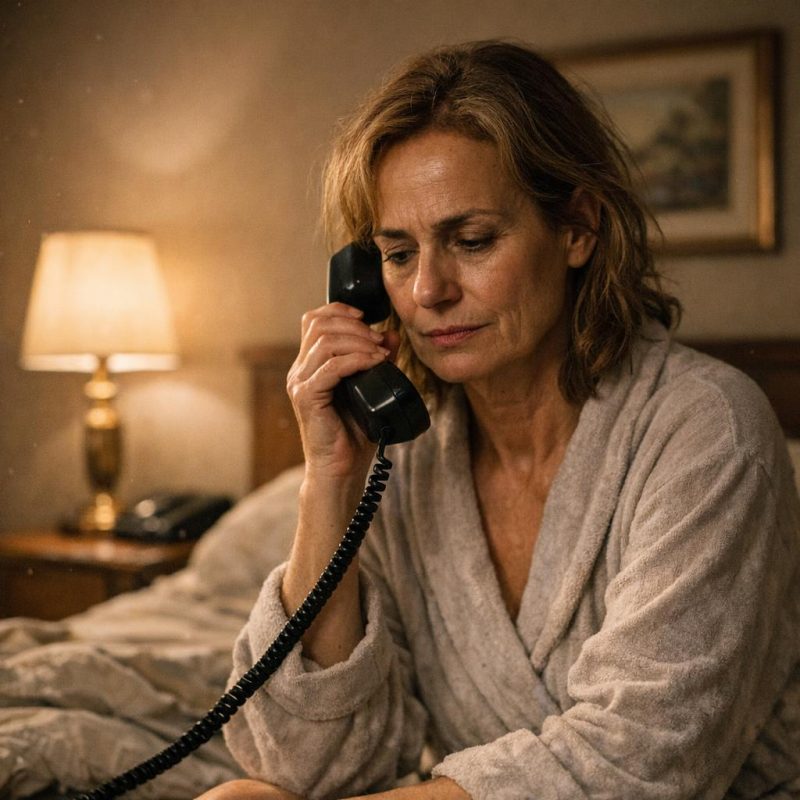 Image by RM AI
The Visit Decision
I called the detention facility the next morning and scheduled a visit for Monday afternoon. Sarah found out somehow—probably through her FBI contacts—and showed up at my motel room that evening looking furious. 'This is a mistake,' she said, pacing in the narrow space between the bed and the dresser. 'He's going to lie to you. He's going to try to manipulate you into saying something that helps his defense.' I knew she was right, but I couldn't explain the need that had kept me awake all night. It wasn't about the money or the assets he'd promised to sign over. It wasn't even about understanding the scope of his crimes. After forty years of marriage, of sharing a bed and a life and a history, I needed something more fundamental than facts. I needed to look Frank in the eye one last time and ask him the question that haunted me every night in this sterile motel room: Did you ever love me?
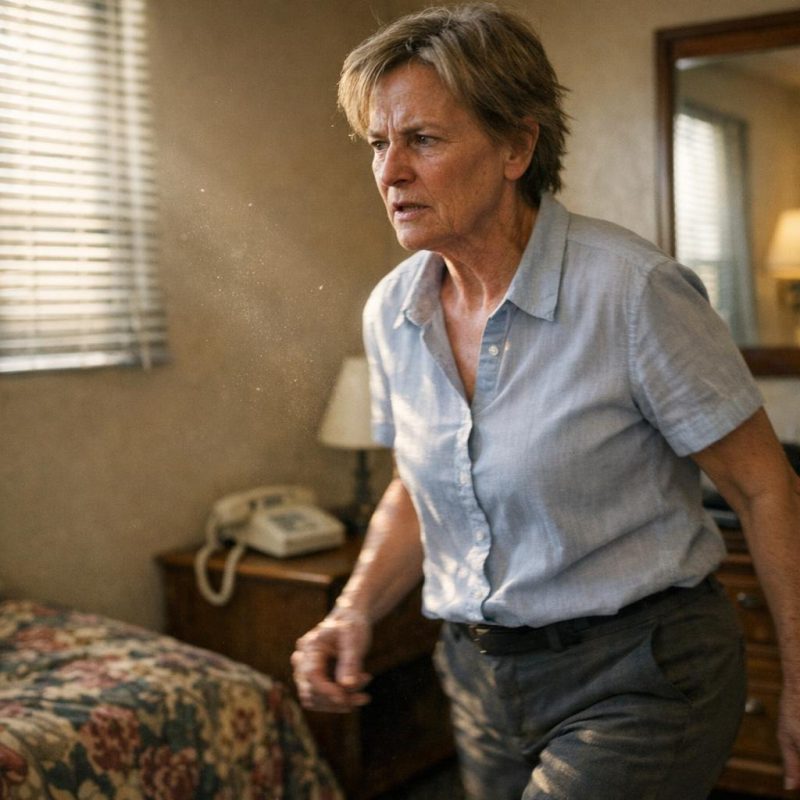 Image by RM AI
Face to Face
The visitation room was smaller than I'd expected, fluorescent lights buzzing overhead, everything painted in shades of institutional beige. Frank sat at a metal table on the other side of a plexiglass partition, looking like he'd aged a decade in the six weeks since I'd seen him. His hair had gone completely gray. His face was thinner, hollow around the eyes. And his hands—they were still trembling, worse than before, shaking so badly he had to clasp them together on the table just to keep them steady. He picked up the phone on his side, and I picked up mine. 'Thank you for coming,' he said, his voice cracking. 'Carol, I—' 'Don't,' I interrupted. 'Don't thank me. Don't pretend this is a normal visit.' He nodded, swallowing hard. I could see his Adam's apple bob in his throat. I'd planned a whole speech on the drive over, carefully rehearsed questions, but all of it evaporated the moment I looked at him. 'Did you ever love me?' I asked, my voice barely above a whisper. Frank's eyes filled with tears. 'That's what I need to explain,' he said. 'Everything you think you know—everything Sarah told you, everything you've read in the reports—it's all backwards.'
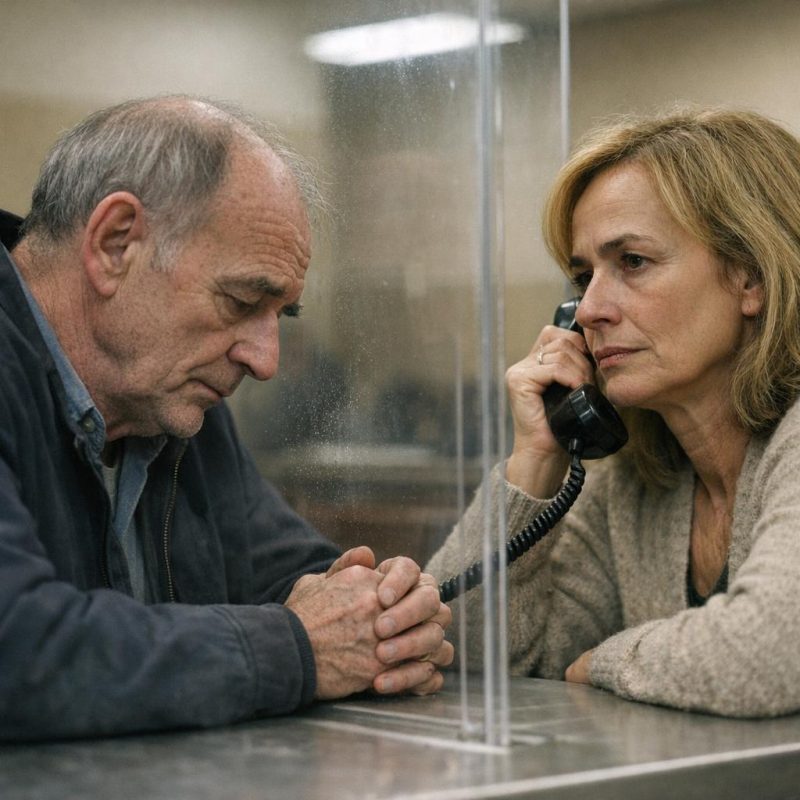 Image by RM AI
Frank's Story
Frank leaned forward, his hands still pressed together to stop the shaking. 'Linda masterminded all of it,' he said. 'Every account, every transfer, every victim. She set up the shell companies before I even knew they existed. By the time I figured out what was happening, we were already five years in.' I watched his face as he talked, looking for the tells I thought I knew after forty years—the way his left eye twitched when he lied, the way he touched his ear when he was nervous. But I saw nothing. Just desperate sincerity. 'I wanted to stop,' he continued. 'Wanted to go to the police. But Linda said if I did, she'd frame you. Said she'd plant evidence that you knew everything, that you'd helped set up the accounts, that you'd signed documents.' His voice dropped. 'She had your signature, Carol. From that power of attorney I asked you to sign ten years ago, remember? For the refinance?' I did remember. I'd signed without reading it, trusting him completely. 'Linda said she could make it look like you were a knowing participant,' Frank said. 'Said you'd go to prison too. And the kids—they'd grow up with both parents behind bars. So I kept quiet. Kept participating. Did everything she wanted to protect you and Mark and Sarah.'
 Image by RM AI
The Threat That Never Was
Something in his story didn't sit right, a detail that nagged at me even as I wanted to believe him. 'Why didn't you tell me?' I asked, gripping the phone tighter. 'If Linda was threatening me, why didn't you warn me? We could have gone to the police together, gotten protection, something.' Frank opened his mouth, then closed it. Tried again. 'I couldn't risk it. If Linda found out I'd told you—' 'How would she find out?' I pressed. 'We talked every night, Frank. For forty years. You're telling me you couldn't find one moment, one private conversation, to warn me I was being used as leverage?' He looked away, his jaw working. 'It's complicated. You don't understand how she operated.' But that was the problem—I was starting to understand too much. Frank had an answer for everything, a justification for every choice, a villain to blame for every crime. Just like Linda had blamed him. Just like Sarah had explained it all with federal evidence and conspiracy theories. I stood up, my legs shaky. 'I have to go,' I said. Walking out of that detention facility into the cold October air, I realized all three of them—Frank, Linda, and Sarah—had their own versions of truth, and I had no idea which one to believe.
 Image by RM AI
The Evidence Locker
Sarah called me at the motel on a Thursday morning, her voice brighter than I'd heard in weeks. 'Mom, they found something,' she said. 'Encrypted files on Frank's personal server. The forensic team says they're locked tight, but once they crack them, we'll have everything. Definitive proof of what really happened.' I sat on the edge of the bed, phone pressed to my ear, wanting so badly to feel relief. 'How long?' I asked. Sarah paused. 'They need three more weeks. Maybe less if they catch a break, but they want to be thorough. This has to be airtight.' Three more weeks. I looked around the dingy motel room that had become my entire world—the water-stained ceiling, the ancient TV, the single window overlooking the parking lot. Three more weeks of this limbo, this not-knowing. 'What kind of files?' I pressed. 'Financial records? Communications?' 'They won't tell me until they decrypt them,' Sarah said. 'But Mom, this is it. This is the evidence that will prove everything definitively.' I wanted to believe her. God, I wanted to believe someone. But I'd been promised truth before, and all I'd gotten were more questions. The forensic team needed three more weeks to crack the encryption, and I would have to wait for the truth.
 Image by RM AI
The Waiting
Those three weeks crawled by like years. I barely left the motel room except to buy groceries from the corner store and take walks around the block when the walls felt like they were closing in. Mostly, I sat on that sagging mattress and replayed every conversation in my mind—Frank's explanations, Linda's accusations, Sarah's assurances. I wrote things down in a notebook, trying to make sense of the competing stories. What had Frank said about the Luxembourg accounts? When exactly had Linda claimed she'd gone to the FBI? Which details had Sarah confirmed, and which had she dismissed? I started noticing something strange as I went through my notes. Every piece of evidence Sarah had shown me pointed directly at Frank or Linda. The financial documents implicated Frank. The witness statements contradicted Linda. But Sarah had never shown me anything that complicated her own narrative, never admitted uncertainty about any detail. She'd been so confident from the beginning, so sure of who the villains were. And as the days passed and I analyzed every interaction we'd had since that dinner, I realized something that made my stomach drop. I started to notice that Sarah had been carefully controlling what information I received and when.
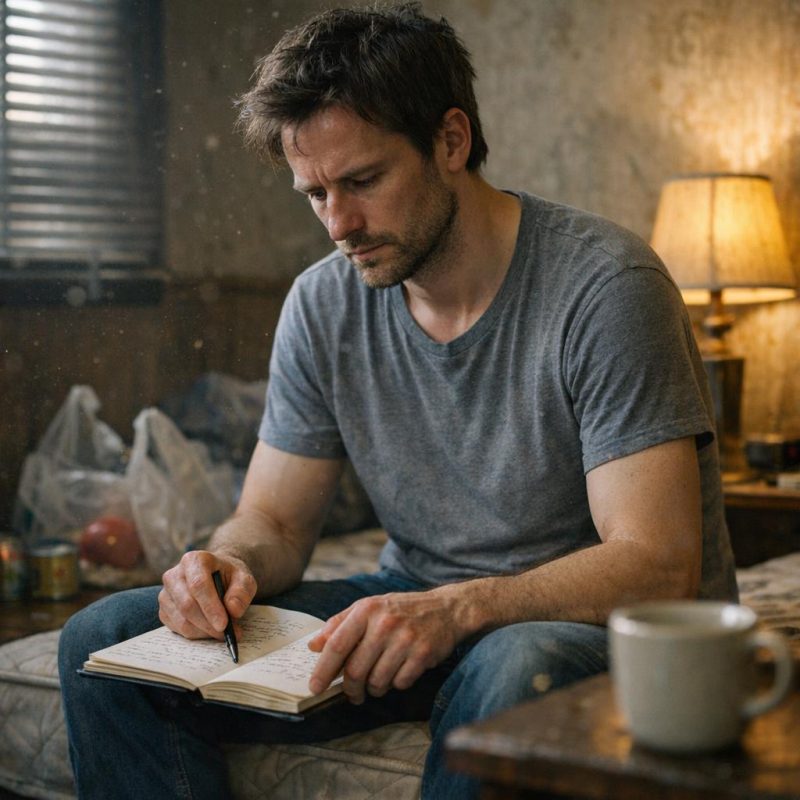 Image by RM AI
The Pattern
It hit me on day seventeen of waiting. I was going through my notebook again, looking at the timeline of revelations Sarah had walked me through, and I saw it clearly for the first time. She'd shown me Frank's financial irregularities but never explained how she'd obtained records that should have required a warrant. She'd told me about Linda's cooperation deal but never let me see the actual agreement. She'd presented witness statements that contradicted Linda's story but never mentioned any witnesses who might contradict Frank's version. Every single piece of evidence had been selected, curated, presented in a specific order to lead me to a specific conclusion. A good investigator would show you everything, even the messy bits that didn't fit the theory. Sarah had only shown me the pieces that fit her story. I sat there on the motel bed, my hands shaking as I held the notebook. What if this wasn't just an investigation? What if my daughter wasn't discovering the truth—what if she was constructing it? The thought felt insane, disloyal, impossible. But once it entered my mind, I couldn't shake it. What if my daughter was not just investigating—what if she was orchestrating?
 Image by RM AI
Checking the Timeline
I couldn't sleep that night, so I did what I should have done weeks ago. I took three sheets of paper and wrote out every timeline I'd been given. On the first page: Sarah's investigation. She'd said she started looking into Frank's finances two years ago, found irregularities, contacted federal authorities eighteen months ago. On the second page: Linda's cooperation. According to Frank, Linda had approached prosecutors three years ago, been working with them ever since, and only contacted me now as part of her deal. On the third page: Frank's version. He claimed Linda had been threatening him for years, that she'd manufactured evidence, that everything blew up when she couldn't extort him anymore. I laid the three pages side by side on the bed and stared at them until my eyes burned. The dates didn't match. Linda couldn't have been cooperating for three years if Sarah had only contacted federal authorities eighteen months ago—unless they were working with different agencies, which seemed unlikely. Frank's timeline of Linda's threats contradicted both other versions entirely. None of them aligned. Not even close. And sitting there at two in the morning, I realized something that made my blood run cold. The only way all three timelines could coexist was if someone had been manipulating the entire situation from the beginning.
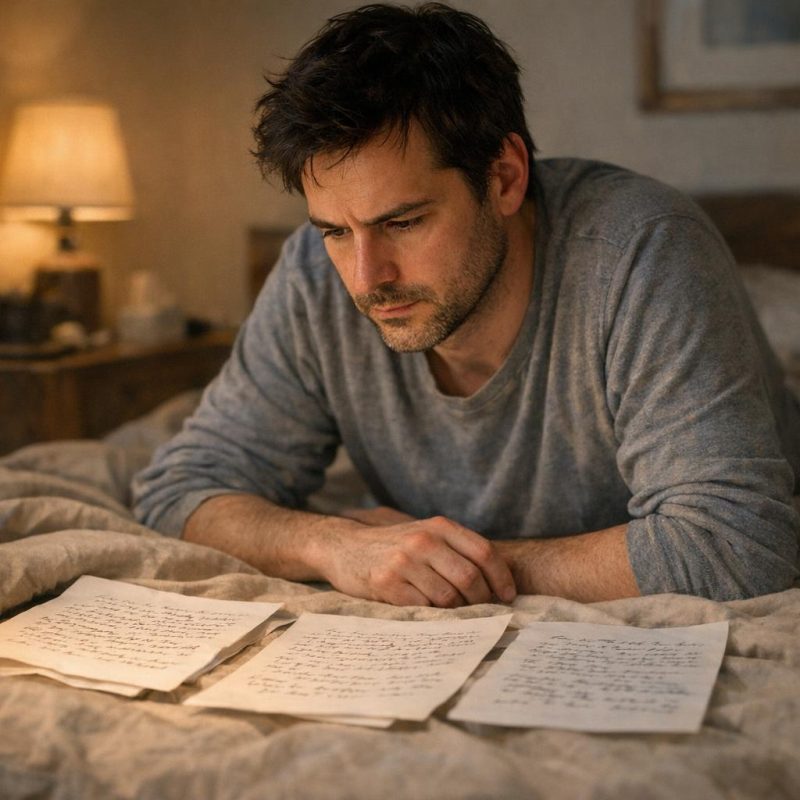 Image by RM AI
Linda's Second Letter
The letter arrived on day twenty-one, slipped under my motel room door while I was in the shower. I found it when I came out, a plain white envelope with my name written in that same slanted handwriting. I'd recognize Linda's script anywhere. My hands were still damp as I opened it, and this time there was no long explanation, no dramatic revelation. Just one question, written in the center of the page: 'Has Sarah told you about the trust fund?' That was it. Nothing else. I read it five times, looking for hidden meaning, but the question was straightforward. What trust fund? I thought back through every conversation with Sarah, every financial detail she'd shared. She'd told me about Frank's offshore accounts, his shell companies, his irregular transfers. She'd shown me evidence of financial crimes going back years. But she'd never mentioned a trust fund. And suddenly, I started thinking about Sarah's life—the nice apartment in the city, the flexibility to take time off from her consulting work to pursue this investigation, the expensive lawyer she'd mentioned retaining 'just in case.' Where had that money come from? I'd assumed she was successful in her career, but I'd never actually asked. I had no idea what trust fund Linda meant, and suddenly Sarah's financial independence seemed suspicious.
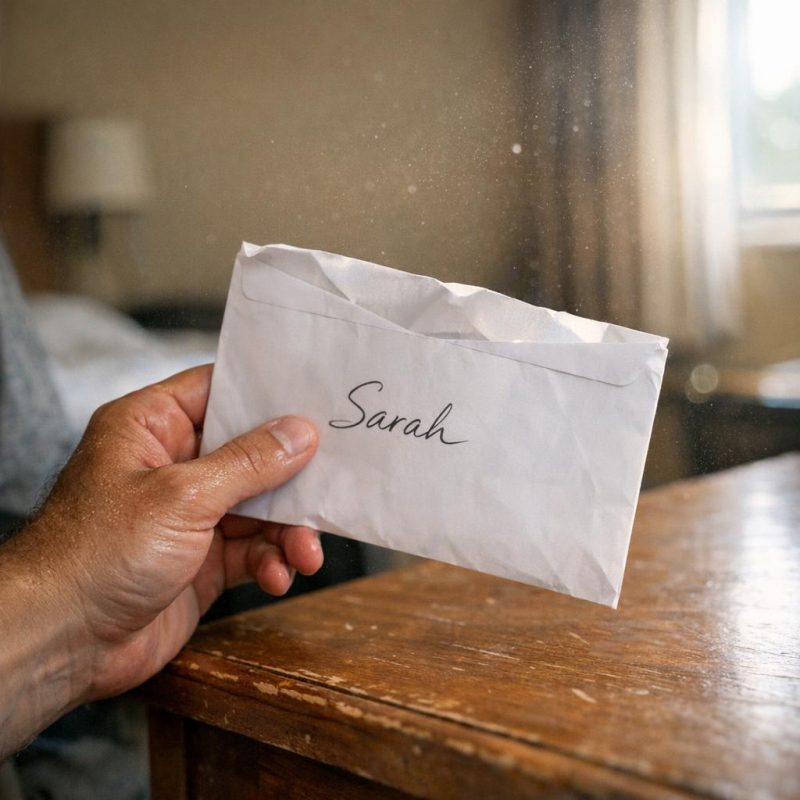 Image by RM AI
The Trust Fund Question
I didn't want to believe it, but I couldn't ignore the question. So I did what anyone would do in 2019—I googled my own daughter. I searched for Sarah's name plus 'trust fund,' then tried variations with 'beneficiary' and 'estate planning.' Nothing came up at first, just her professional LinkedIn and some old social media posts. Then I tried the county records database, the one I'd learned to navigate during my brief attempt to research Frank's properties. I typed in Sarah's full name and filtered for financial filings. And there it was. A trust fund document filed seven years ago, when Sarah was twenty-six. I clicked on the PDF with shaking hands and scrolled through the legal language I barely understood. Grantor, beneficiary, terms of distribution. My eyes caught on a number that made me gasp out loud. Two million dollars. Sarah had a trust fund worth two million dollars, established when she was fresh out of graduate school, and I'd never known about it. I scrolled down to find the source, the explanation, something that would make this make sense. The trust had been funded with two million dollars, and the benefactor was listed as 'Anonymous Donor.'
 Image by RM AI
The Encryption Is Broken
Sarah called the next morning, and I almost didn't answer. I stared at her name on my phone screen for three rings, my heart hammering, before I finally picked up. 'Mom, they did it,' she said, her voice electric with excitement. 'The encryption is broken. The files are accessible. I'm looking at them right now, and Mom, it's all here. Everything.' I couldn't speak. My throat had closed up. 'I'm coming to you,' Sarah continued. 'I'm leaving the city now, I'll be there in two hours. I need to explain everything in person. This is bigger than I thought. Bigger than Frank, bigger than Linda. You need to see this.' She sounded so earnest, so convinced, so much like my daughter. But all I could think about was that trust fund document, that anonymous donor, that two million dollars I'd known nothing about. 'Okay,' I managed to say. 'I'll be here.' 'I love you, Mom,' Sarah said. 'I know this has been hell, but it's almost over. I promise.' She hung up and I sat there holding the phone, my hands trembling. I hung up and realized I was afraid of my own daughter—afraid of what her explanation would reveal.
 Image by RM AI
The Orchestrator
Sarah arrived exactly two hours later, carrying her laptop and a thick folder of documents. She looked tired but energized, like someone who'd just solved a puzzle they'd been working on for years. 'Mom,' she said, sitting down across from me at the motel room's small table. 'I need to tell you the truth. The complete truth. Not the version I've been feeding you in pieces.' My stomach dropped. 'What do you mean, feeding me?' Sarah took a deep breath. 'I orchestrated Linda's reappearance. The dinner, the timing, everything. It was part of a multi-year sting operation I've been running with federal prosecutors. Linda didn't just show up out of nowhere—I brought her back into your life specifically to force Frank into a corner.' I couldn't breathe. 'You what?' 'Dad and Linda were partners, Mom. Not just married—partners in a financial fraud scheme that's been running for twenty years. I've been building a case against both of them since I was in graduate school. The trust fund you found? That was part of my cover, seed money from the Justice Department to establish credibility. Linda's cooperation, Frank's arrest, the competing stories—I choreographed all of it to make them turn on each other and create prosecutable evidence.' She opened the laptop, and I saw files, transcripts, recorded conversations. Everything—the dinner, the revelations, the competing stories—had been choreographed by my daughter to force them into a corner.
 Image by RM AI
Five Years of Planning
Sarah opened a folder labeled 'Operation Timeline' and showed me five years of meticulous work. She'd started during her first year of graduate school, when a research project on financial fraud patterns led her to recognize elements in Frank's business dealings. She'd approached federal prosecutors, who assigned her a handler and provided resources. The trust fund I'd discovered? It came from recovered assets in an unrelated fraud case—seized money that had been sitting in federal custody for years, used to establish Sarah's credibility with Frank and Linda. 'I needed them to believe I was complicit,' she explained, her voice steady but strained. 'I needed Dad to think I was following in his footsteps, and Linda to think I could be manipulated into helping them.' She showed me surveillance logs, recorded phone calls, financial documents she'd copied over years of careful access. Every family dinner, every casual conversation, every moment I'd thought was normal—Sarah had been working, gathering evidence, building a case strong enough that they couldn't slip away on technicalities. My daughter had been living a double life for five years, and I'd noticed nothing.
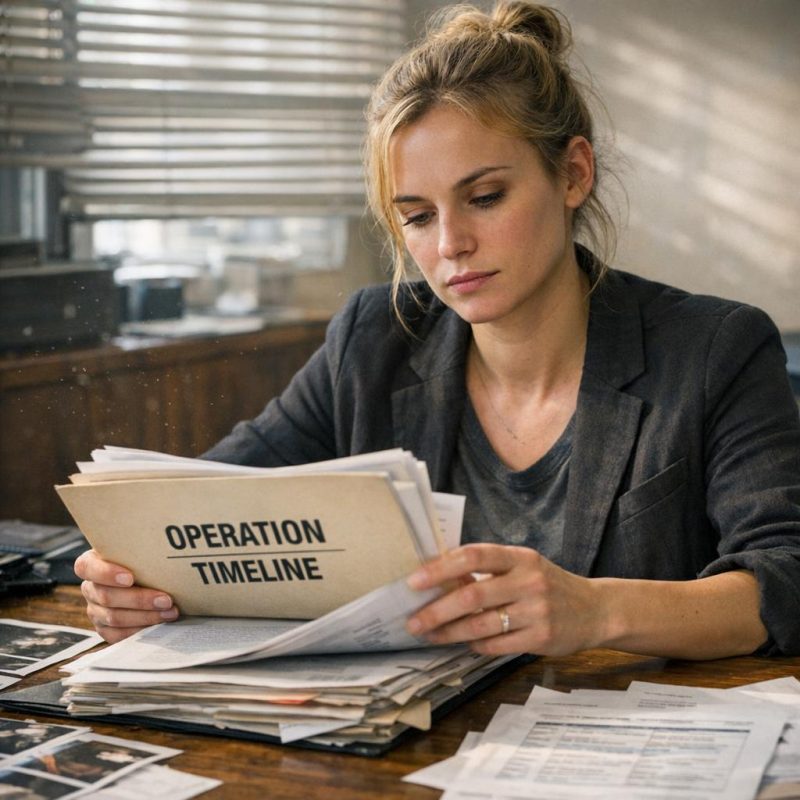 Image by RM AI
Why She Couldn't Tell Me
I looked at Sarah across the small motel table and asked the question that had been tearing at me: 'Why couldn't you tell me?' She started crying—real, gasping tears that shook her whole body. 'Because keeping you in the dark was the only way to protect you legally,' she said, wiping her face with the back of her hand. 'If you'd known about the investigation, you could have been subpoenaed as a hostile witness. Dad's attorneys could have argued you were complicit, or that you'd obstructed justice by not reporting what you knew. I had to keep you innocent—genuinely innocent—so that when this all came out, you'd be protected.' She pulled out a legal memo from her folder, showing me the prosecutor's reasoning. My ignorance had been my shield. If I'd known, I would have been vulnerable to charges myself, or forced to testify against Frank before the case was strong enough. Sarah had sacrificed our relationship, let me think she was Frank's accomplice, endured my anger and confusion—all to keep me safe. 'I had to let you hate me,' she whispered. 'It was the only way.' And suddenly I understood the weight my daughter had been carrying alone.
 Image by RM AI
The Trial Begins
The courtroom felt massive and airless at the same time, all dark wood and fluorescent lighting. I sat three rows behind the prosecution table, Sarah beside me, as the assistant U.S. attorney laid out forty years of systematic fraud. They showed diagrams of shell companies, timelines of fabricated investments, testimonies from forensic accountants who'd traced the money through dozens of accounts. Frank sat at the defense table in a gray suit, his shoulders rigid, and when he turned to look at me during a recess, his eyes were completely empty—like looking at a stranger wearing my husband's face. The prosecution called twenty-three witnesses in the first week alone. I heard about pension funds drained, college savings evaporated, retirement dreams destroyed. Each testimony felt like another stone added to a weight I was carrying, even though I'd done nothing wrong. Then Linda was called to the stand. She walked past me in a navy dress, her hair pulled back, and as she settled into the witness chair, she looked directly at me across the courtroom. Her lips moved silently, forming two words I could read clearly: 'I'm sorry.'
 Image by RM AI
Linda's Testimony
Linda's testimony lasted two full days. She explained how Frank had bankrupted her family's business when they divorced, using legal maneuvers and hidden assets to leave her with nothing. 'I partnered with him out of desperation,' she said, her voice steady but hollow. 'He offered me a way to recover what I'd lost, and I took it. I thought we'd make back what he'd stolen and walk away. But it became something else—something I couldn't stop.' The prosecutor walked her through decades of decisions, each one building on the last, and Linda answered every question without deflection. She described fake investment opportunities, forged documents, the careful construction of trust that made victims feel safe. I watched Frank's face as she spoke, and saw nothing—no anger, no betrayal, just calculation. Near the end of her testimony, the prosecutor asked, 'Do you feel remorse for your actions?' Linda looked down at her hands, then back up at the courtroom. 'I feel remorse every day,' she said. 'But my biggest regret is that I didn't stop this thirty years ago, when I still could have.'
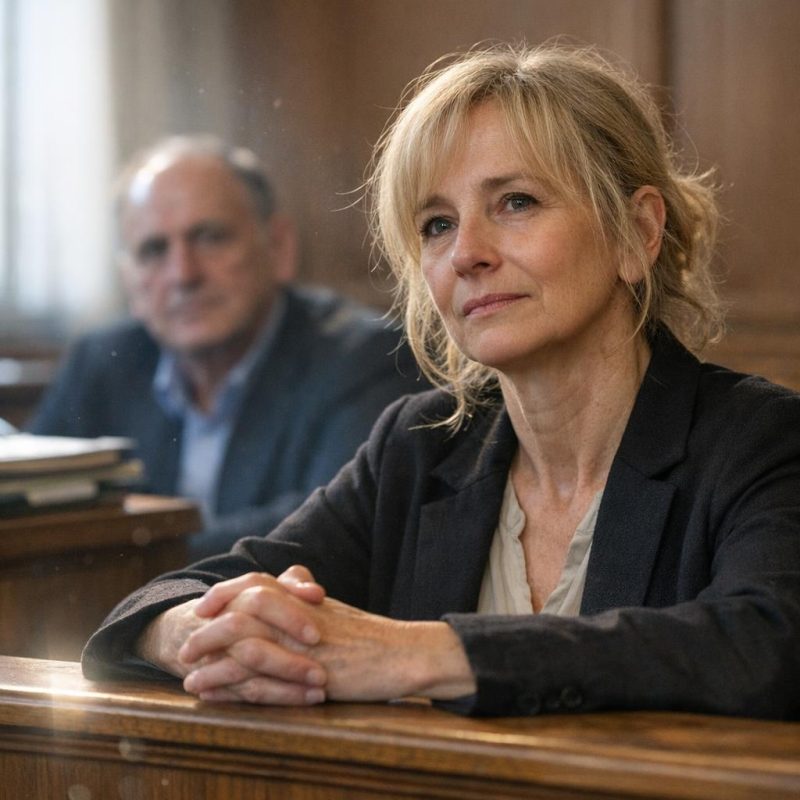 Image by RM AI
Frank's Defense
Frank's defense attorney was a polished man in an expensive suit who tried to paint Frank as Linda's victim—a successful businessman manipulated by a vengeful ex-wife who'd used their shared history against him. He presented character witnesses who described Frank as generous and trustworthy, colleagues who'd never suspected anything wrong. For a moment, sitting in that courtroom, I could almost see the Frank I'd believed in for forty years. Then Sarah took the stand for the prosecution. She presented emails Frank had written, financial records he'd personally signed, recorded phone calls where his voice was unmistakable. She walked the jury through shell companies Frank had created before he ever reconnected with Linda, showing a pattern that predated their partnership by years. The defense attorney tried to shake her testimony on cross-examination, suggesting bias, questioning her methods, but Sarah remained calm and precise. Every answer she gave dismantled another piece of Frank's defense. I watched my husband's lies crumble under the weight of evidence his own daughter had gathered, and all I felt was a profound, echoing numbness.
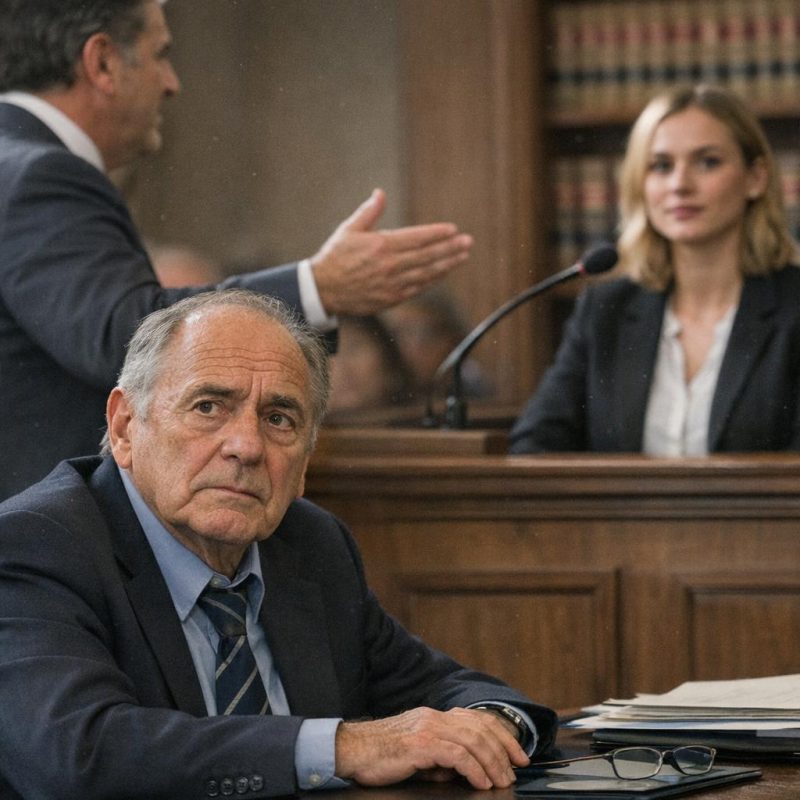 Image by RM AI
My Testimony
When the prosecution called my name, I walked to the witness stand on legs that felt disconnected from my body. I'd been coached by the prosecutor—answer clearly, stick to what I knew, don't speculate—but nothing prepared me for the reality of sitting fifteen feet from Frank and testifying about our marriage. The prosecutor asked about our finances, our lifestyle, what I'd known about Frank's business dealings. I answered truthfully: I'd known almost nothing. I'd trusted him completely. 'Did you ever suspect your husband was defrauding investors?' she asked. 'No,' I said. 'I thought I was married to an honest man.' Then Frank's attorney stood for cross-examination. He asked gentle questions at first, trying to establish that I'd benefited from the fraud, that I'd lived well on stolen money. 'Mrs. Morrison,' he said finally, his voice soft, 'after everything you've heard in this trial, do you still love your husband?' The courtroom went completely silent. I looked at Frank, really looked at him, and saw forty years of my life built on a foundation that had never existed. 'I don't know who he is,' I said.
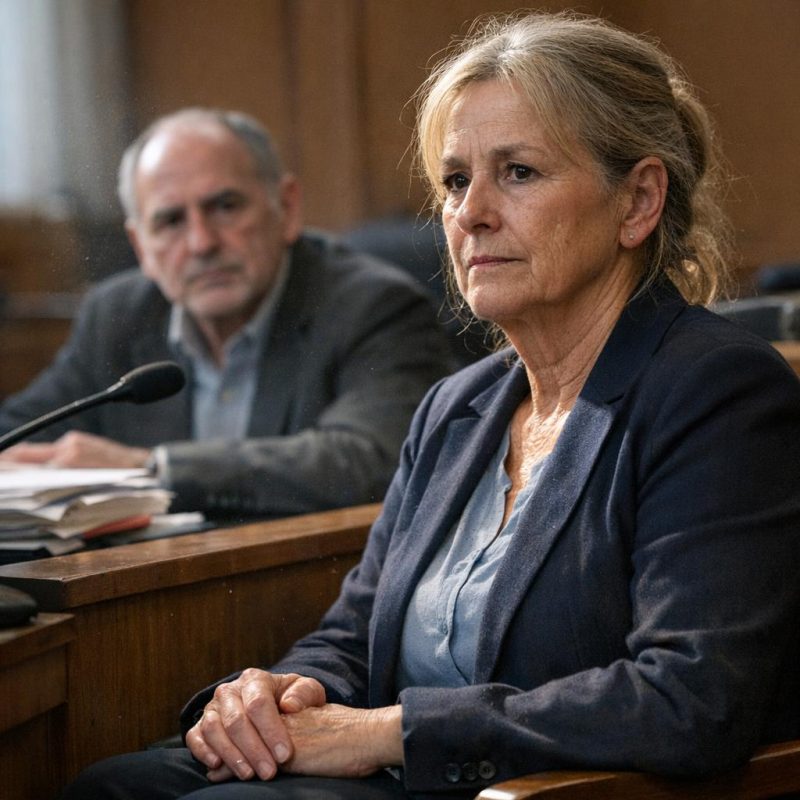 Image by RM AI
The Victim Statements
The victim impact statements began on a Tuesday morning and lasted three full days. Forty-three people stood up and described how Frank and Linda had destroyed their lives. I heard about a woman who lost her mother's inheritance, a couple who couldn't afford their daughter's cancer treatments, a man who'd worked fifty years only to lose his entire pension. Each statement felt like a physical blow, and I sat there taking it, knowing I'd been married to one of the people responsible. Some victims looked at Frank with rage, others with exhausted grief. A few looked at me—not with anger, but with something worse: pity. On the final day, Robert and Margaret Henderson took the stand. They were both in their seventies now, thinner and grayer than I remembered from that awful dinner. Robert described losing their retirement savings, their home, their sense of security. 'We trusted Frank Morrison,' he said, his voice breaking. 'We believed he was investing our future.' When they finished and walked past my row, Margaret met my eyes and gave me the smallest, saddest nod—and I realized they didn't blame me, which somehow made it worse.
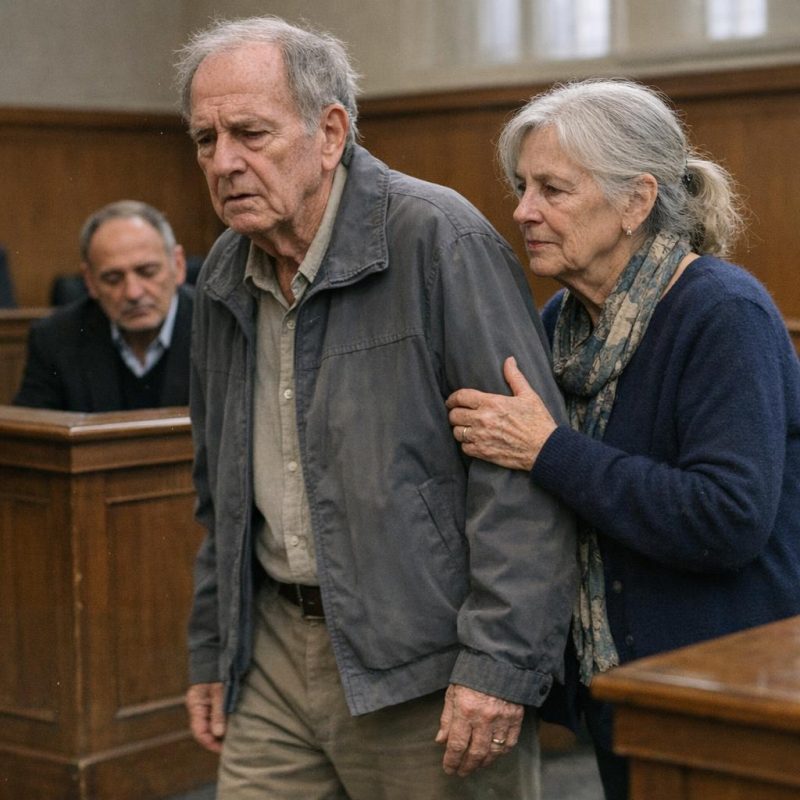 Image by RM AI
The Verdict
The jury deliberated for six hours. When they filed back into the courtroom, I couldn't read their faces. The foreperson stood, and the judge asked for the verdict on count one: wire fraud. 'Guilty.' Count two, securities fraud: 'Guilty.' Count three, money laundering: 'Guilty.' Twenty-three counts, and on every single one, for both Frank and Linda, the answer was guilty. I watched Frank's shoulders collapse inward as the verdict was read, his head dropping forward like someone had cut his strings. Linda sat perfectly still, her face expressionless, but I saw her hands trembling in her lap. Sarah reached over and squeezed my hand, and I realized I was crying without sound, tears just streaming down my face for reasons I couldn't fully name. The judge thanked the jury and scheduled sentencing for two weeks later—federal guidelines suggested twenty to thirty years for Frank, fifteen to twenty for Linda. When the judge dismissed us, I stood up and walked out of the courthouse into bright October sunshine, Sarah beside me, and felt completely unmoored—like I was floating in open water with no land in sight.
 Image by RM AI
Mark Returns
Mark called me three days after the verdict, his voice quiet and hesitant on the phone. 'Mom? Can we—could we maybe get coffee? Just the two of us?' I agreed immediately, trying not to sound too eager, too desperate for this reconciliation I'd been craving. We met at a diner halfway between his apartment and my motel, one of those anonymous chain places with too-bright lighting and laminated menus. When I saw him walk through the door, my breath caught—he looked like he'd aged five years in the months since Linda had shown up at our house. His face was thinner, shadows under his eyes, shoulders hunched forward like he was carrying something impossibly heavy. He slid into the booth across from me and just stared at his hands for a long moment before he spoke. 'I'm sorry,' he said, his voice cracking. 'I'm so sorry, Mom. I abandoned you when you needed me most, and I—I can't even explain why except that I was angry and stupid and scared.' I reached across the table and took his hand, and we both just sat there crying in that fluorescent-lit diner while a waitress pretended not to notice. He told me he needed to apologize for abandoning me, and hearing those words felt like someone had finally let me breathe again after months of holding my breath underwater.
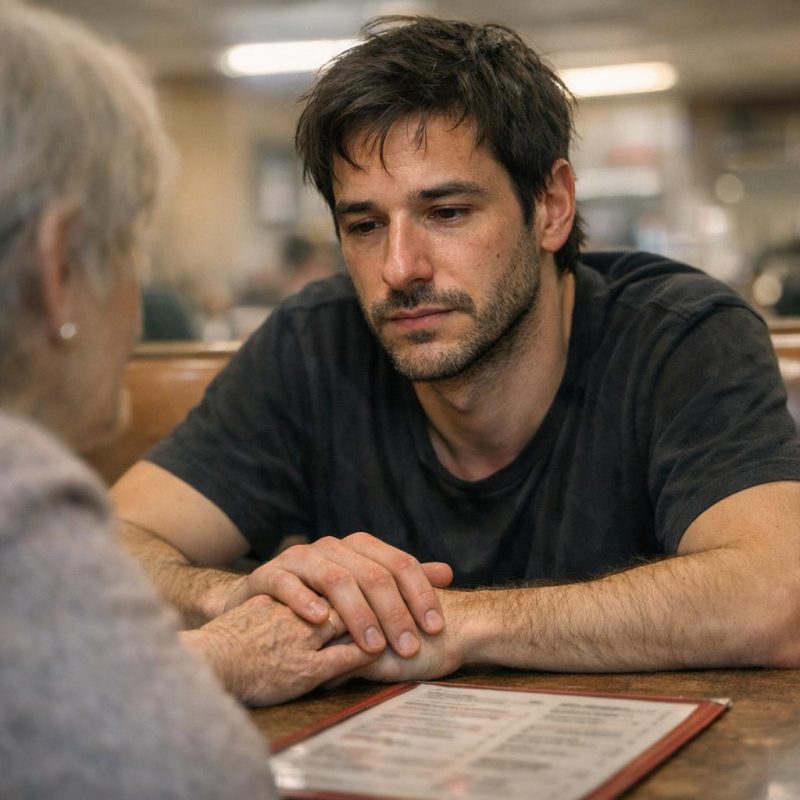 Image by RM AI
Sentencing Day
The sentencing hearing was shorter than I expected. Frank stood before the judge looking like a ghost of the man I'd married, his suit hanging loose on a frame that had shrunk during his months in custody. The judge was methodical, almost clinical, as she outlined the damage: hundreds of families defrauded, retirement accounts drained, lives destroyed. Frank received twenty years. Linda, because of her cooperation and slightly lesser role, received fifteen. I watched them both as the marshals approached—Frank's face crumpled, and he turned to look at me one last time with an expression I couldn't read. Was it apology? Regret? Or just self-pity? Linda remained composed until the cuffs went on, and then something flickered across her face, a micro-expression of panic that vanished as quickly as it appeared. Sarah sat on one side of me, Mark on the other, both of them present and solid and real. As the marshals led Frank and Linda away through a side door, chains clinking, I felt something release in my chest—not joy, not satisfaction, just a profound and overwhelming sense of liberation. Walking out into the November sunlight with my children beside me, I realized I was finally free from a marriage that had been a prison all along, one I'd been locked inside for forty years without even knowing the door was bolted shut.
 Image by RM AI
Starting Over
Sarah found the apartment for me—a small one-bedroom in a complex near her place, nothing fancy but clean and affordable and mine. Mark showed up with his truck on moving day, which was almost funny because I barely had anything to move: two suitcases of clothes, a box of photos I'd salvaged from the house before the seizure, a few books. The apartment had beige carpet and white walls and a kitchenette with exactly four cabinets, and it felt more like home than that showcase house ever had. Mark carried in my boxes while Sarah assembled a small table she'd bought me, the two of them working together with an ease that made my throat tight. 'This is good, Mom,' Sarah said, looking around the bare living room. 'This is a fresh start.' That evening, after they'd left and I was alone with the echo of empty rooms, I started unpacking the kitchen box. My hands found something cold and metal at the bottom—the butter knife from that Thursday morning, the one I'd used to spread jam on toast while Frank invented his fishing trip alibi. I had no memory of packing it, no recollection of even thinking about it, but there it was in my hand, an artifact from the last morning of my old life, somehow carried forward into this new one I was building from nothing.
 Image by RM AI
The Unexpected Gift
Two weeks later, Sarah and Mark came over for dinner in my small apartment—just spaghetti and salad, nothing fancy, but we sat around my little table and talked and laughed, and it felt like something fragile and new taking root. Mark told a story about work, Sarah showed us photos from a weekend trip, and I realized we were building something together that had never really existed before: an honest relationship, one not shadowed by Frank's secrets and manipulations. After they left, I sat alone in my quiet living room and thought about Linda showing up at my door that night, about her calculated revelation and her cold certainty that she was entitled to what Frank had stolen. She'd wanted to destroy me, I knew that now—to burn down my life as revenge for some perceived injustice from decades ago. But sitting there in my small apartment with mismatched furniture and bare walls, I understood something she'd never intended: her 'gift' wasn't the truth about the money or the satisfaction of exposing Frank's crimes. It was freedom from a forty-year lie, liberation from a marriage built on deception, and the chance to finally know who I actually was outside of being Mrs. Frank Richardson. I'd lost my home that night Linda appeared on my doorstep, but I'd finally found the truth, and with it, a chance to build something real.
 Image by RM AI