
The Man I Thought I Knew
My name is Carol, I'm 59, and for most of my marriage I would have told you my husband Tom was predictable in the best way. Thirty years together and I could set my watch by his routines—the way he'd shuffle to get the morning paper in those ancient slippers, how he owned exactly three pairs of shoes and wore them until they literally fell apart. Tom was comfortable in his skin, never one to fuss about appearances or trends. That's why the change was so jarring. It started on a Tuesday when he emerged from our bedroom wearing a freshly ironed button-down just to "pick up some milk." I nearly spilled my coffee. The next day, it was cologne for a hardware store run. By Friday, he was standing straighter, checking his reflection in the hallway mirror before heading out for light bulbs. When I teased him about his sudden makeover, he laughed it off. "Just trying to feel a little sharper these days, Carol," he said with a shrug that seemed rehearsed. I wanted to believe him—after three decades together, you learn not to question every small change. But something in my gut twisted when I noticed how these "errands" were becoming more frequent, always mid-afternoon, always taking longer than they should.
 Image by RM AI
The First Red Flag
I'll never forget the first time I noticed something was off. Tom had always been the kind of man who'd wear mismatched socks without a second thought. So when I walked into our bedroom and found him meticulously pressing a shirt—just to go to the hardware store—I actually laughed out loud. "What's the special occasion?" I teased, leaning against the doorframe. He jumped slightly, as if I'd caught him doing something wrong. "Just felt like looking decent for once," he mumbled, focusing intently on a collar that suddenly required his full attention. Two days later, it was the cologne before a milk run. Not just a splash, mind you, but the expensive bottle our daughter had given him for Christmas that had been gathering dust for months. When he started checking his reflection in the hallway mirror, straightening his posture before heading out for the most mundane errands, I finally asked him directly. "Are you having a midlife crisis or something?" I joked, trying to keep my tone light despite the knot forming in my stomach. Tom laughed, but it didn't reach his eyes. "Just trying to feel a little sharper these days, Carol. Is that a crime?" Something about the way he said it—defensive, rehearsed—made me wish I hadn't asked. After thirty years together, you develop a sixth sense about these things, but sometimes you ignore the warning bells because the alternative is too painful to consider.
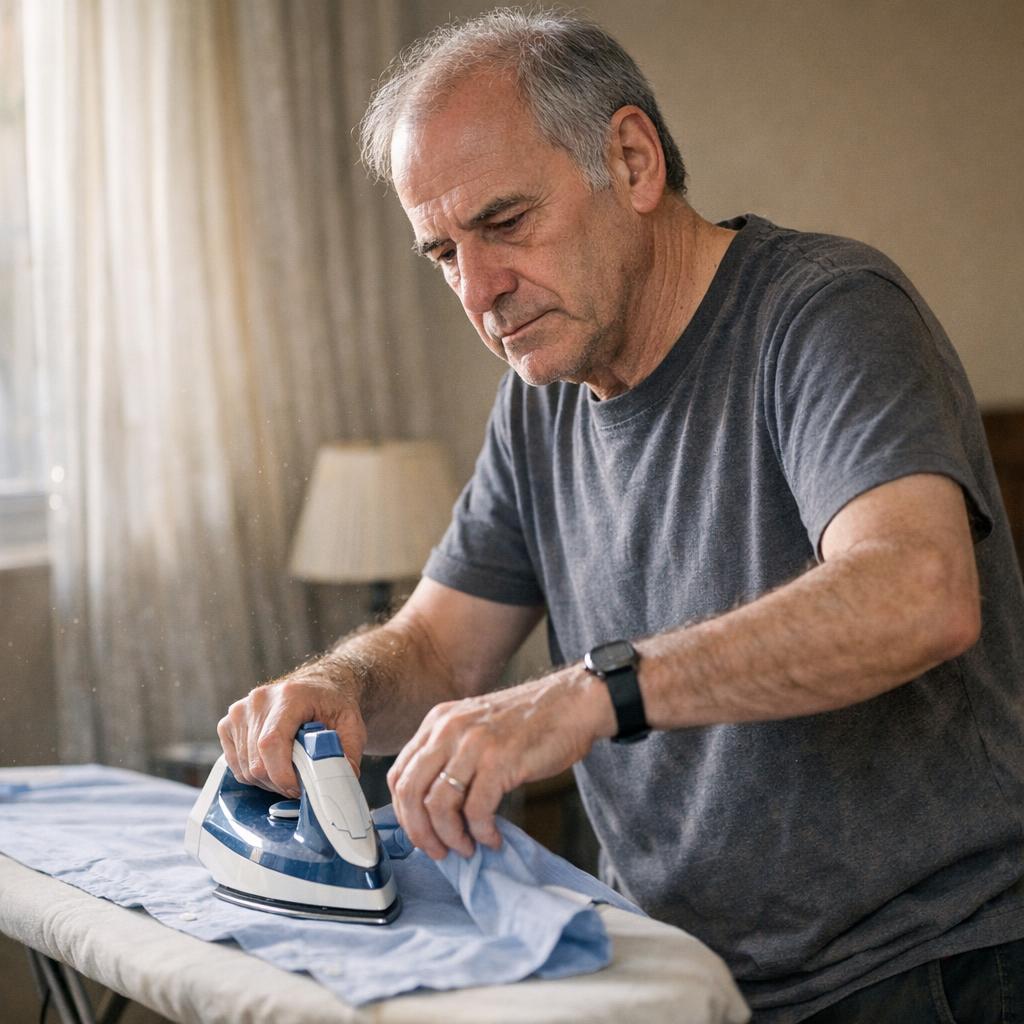 Image by RM AI
Thirty Years of Trust
Thirty years is a long time to build a life with someone. Tom and I had weathered so much together—the lean years when we ate ramen three nights a week, the miscarriage that nearly broke us, his father's slow decline with Alzheimer's. We'd built our marriage on honesty, or so I thought. I still remember our wedding day, how Tom had looked me in the eyes and promised, "No secrets between us, ever." It became our mantra through the decades. When our daughter went through her rebellious phase, we faced it as a team. When my mother needed hospice care, Tom was there every step of the way, holding my hand through the hardest goodbye of my life. So when these little changes started happening—the pressed shirts, the cologne, the mysterious errands—I told myself not to overreact. After thirty years, people are entitled to evolve, right? Marriage isn't about monitoring each other's every move. It's about trust. And I trusted Tom completely. That's what made it so easy to ignore the warning signs, to dismiss that nagging feeling in my gut. Because when you've spent three decades believing in someone, the alternative is unthinkable. Looking back now, I realize how desperately I wanted to believe the foundation we'd built couldn't possibly have cracks I hadn't noticed.
 Image by RM AI
The Pattern Emerges
As April turned to May, I started keeping a mental log of Tom's mysterious outings. Tuesday and Thursday afternoons, like clockwork, he'd announce he needed to run to the store for something we invariably already had plenty of. What used to be thirty-minute trips stretched into two hours, sometimes three. I'd watch the clock, pretending not to notice while folding laundry or preparing dinner. The most unsettling part wasn't the time away—it was the man who returned. Tom would walk through the door humming oldies under his breath, a lightness in his step I hadn't seen in years. But when I'd ask about his day or mention something about our daughter's upcoming visit, his eyes would drift somewhere past my shoulder, his responses delayed and vague. "Hmm? Oh, sure, that sounds fine." More than once, I caught him smiling at his phone, only to quickly lock the screen when I approached. At dinner, he'd be physically present but mentally elsewhere, nodding at all the right moments in our conversation without actually participating. One evening, I deliberately mentioned we should repaint the living room purple with green polka dots, and he absently agreed it was a great idea. That's when I knew something was seriously wrong. The husband I'd known for thirty years would never have missed an opportunity to tease me about such an outlandish suggestion.
 Image by RM AI
The Phone Guard
Then there was the phone. Tom's ancient flip phone had been replaced with a smartphone last Christmas—our daughter's insistence that he "join the 21st century." For months, he'd leave it anywhere—the kitchen counter, coffee table, even forgotten in his jacket pocket overnight. Now suddenly, that phone was attached to him like a vital organ. I first noticed when he started taking it to the bathroom, something he'd previously teased our daughter about doing. "What's so important it can't wait until you're done on the toilet?" he used to joke. The phone stayed face-down beside his dinner plate, and when it buzzed one evening, he nearly knocked over his water glass lunging for it. "Work stuff," he muttered, though he'd been retired for three years. The final straw came when my phone died while I was looking up a recipe. "Can I borrow yours quick?" I asked, hand already reaching toward his device on the counter. The panic that flashed across his face was unmistakable. He hesitated—just a heartbeat too long—before reluctantly sliding it toward me, hovering nearby as I searched, as if I might accidentally stumble upon something I wasn't supposed to see. That night, I lay awake beside him, listening to his even breathing, wondering when exactly my husband had become a stranger with secrets.
 Image by RM AI
Conversations That Go Nowhere
The most painful part of Tom's transformation wasn't the mysterious absences or the sudden interest in his appearance—it was the way he stopped really talking to me. We'd always been the couple who discussed everything, from politics to what color to paint the bathroom. Now, conversations with my husband felt like trying to catch smoke with my bare hands. "How was your day?" I'd ask over dinner, and he'd mumble something about "the usual" while checking his phone under the table. One evening, I brought up our 30th anniversary trip—something we'd been planning for years. "I was thinking Sedona," I said, "remember how we always talked about seeing those red rocks?" Tom nodded, smiled even, but his eyes had that glazed look. "Whatever you want, Carol," he replied, though I could tell he hadn't processed a word. Ten minutes later, he asked what we were discussing as if the entire conversation had evaporated from his mind. I started testing him, mentioning outlandish things—like adopting a pet llama or moving to Antarctica—just to see if he was listening. He wasn't. The man who once remembered every detail of our conversations now couldn't recall what I'd said thirty seconds ago. It was like watching someone I loved slowly fade away while sitting right across from me.
 Image by RM AI
Telling Myself It's Nothing
I spent weeks telling myself it was nothing. 'Maybe he's just going through a phase,' I'd say to my bathroom mirror, as if speaking it aloud would make it true. I called my friend Linda, who's been married even longer than we have. 'Men get weird sometimes,' she assured me over coffee. 'Remember when my Harold suddenly took up jogging at 57? Bought all that expensive gear just to quit three weeks later.' I nodded, desperate to believe her. 'Maybe he's finally listening to all those hints I've dropped about dressing nicer,' I suggested, though Tom had cheerfully ignored my fashion advice for three decades. Linda patted my hand. 'You're overthinking this, Carol. He probably just wants to impress someone at the hardware store. The cute cashier or something.' We both laughed, but my laugh felt hollow. At home, I created elaborate explanations: Tom was preparing for a surprise anniversary trip. He was interviewing for part-time work and didn't want to worry me. He'd joined a community theater group and was embarrassed to tell me. Each theory more ridiculous than the last, but still more palatable than the truth that was slowly forming in the pit of my stomach. The truth I wasn't ready to face, even as I found myself checking his collar for lipstick stains like some cliché from a bad movie.
 Image by RM AI
The Doctor's Appointment
I'd had this doctor's appointment on my calendar for weeks—just a routine check-up, nothing serious. Dr. Patel was running behind schedule as usual, leaving me thumbing through ancient magazines in the waiting room for nearly an hour. By the time he finally saw me, checked my blood pressure (slightly elevated, no surprise there), and lectured me about taking calcium supplements, it was already past three. As I walked to my car, I realized we were out of coffee and bread at home. Since the grocery store was right on my way back and Tom wouldn't be expecting me for another hour, I decided to stop in. It felt strange shopping alone—Tom and I usually did this together on Saturday mornings, one of our little rituals that had survived three decades of marriage. I grabbed a basket and headed for the coffee aisle, mentally calculating how much time I had before I needed to start dinner. That's when I heard a familiar laugh—Tom's laugh—coming from somewhere near the front of the store. My heart did a funny little skip. Tom was supposed to be at his weekly bridge game with the guys from his old office. What was he doing here? And why did that laugh sound so... young?
 Image by RM AI
The Moment Everything Changed
I stood in line at the grocery store, absently flipping through a magazine while waiting my turn. My mind was still on my doctor's appointment—Dr. Patel's warning about my cholesterol levels and the new prescription I'd need to fill. When I finally reached the front, the young cashier looked up at me, her friendly smile freezing for half a second. Her eyes widened with recognition, then confusion. "Oh, you must be Tom's sister!" she said brightly, scanning my items. The words hit me like a physical blow. I've never been mistaken for Tom's sister before. More importantly, I'd never met this woman in my life. My heart plummeted straight into my stomach as I fumbled for words. "I'm... I'm his wife, actually," I managed, my voice sounding distant even to my own ears. The cashier—her nametag read 'Melissa'—immediately flushed crimson. "Oh! I'm so sorry," she stammered, glancing nervously toward the back of the store. "I just... I thought... he mentioned his sister helps him sometimes and I assumed..." She trailed off, suddenly very focused on bagging my groceries. I paid and walked out on shaky legs, my mind racing. Tom didn't have a sister. He was an only child. Which meant he had been telling this woman—this Melissa—elaborate lies. But why? And what else had he told her about his life—about our life?
 Image by RM AI
The Awkward Exchange
I stood there frozen, my grocery items half-scanned, as Melissa's words echoed in my head. 'Tom's sister.' Three syllables that shattered thirty years of trust in an instant. "I'm sorry, what did you say?" I asked, trying to keep my voice steady while my insides turned to ice. Melissa's face went from friendly to horrified in seconds, her eyes darting nervously toward the back of the store like she was searching for an escape route. "Oh my god, I'm so sorry," she stammered, suddenly scanning my items at double speed. "I just... I thought... Tom mentioned his sister sometimes helps him out and..." She trailed off, clearly realizing she'd stepped into something much bigger than a case of mistaken identity. I forced a smile that felt like cracking glass. "That's interesting," I said quietly, "considering Tom is an only child." The color drained from her face as she handed me my receipt with trembling fingers. I walked out to my car on autopilot, placed my groceries in the trunk, and sat behind the wheel for a full five minutes before I could stop shaking enough to drive. The worst part wasn't just discovering the lie—it was realizing how elaborate it must have been, how many conversations had happened for this stranger to think she knew details about my husband's family that didn't even exist.
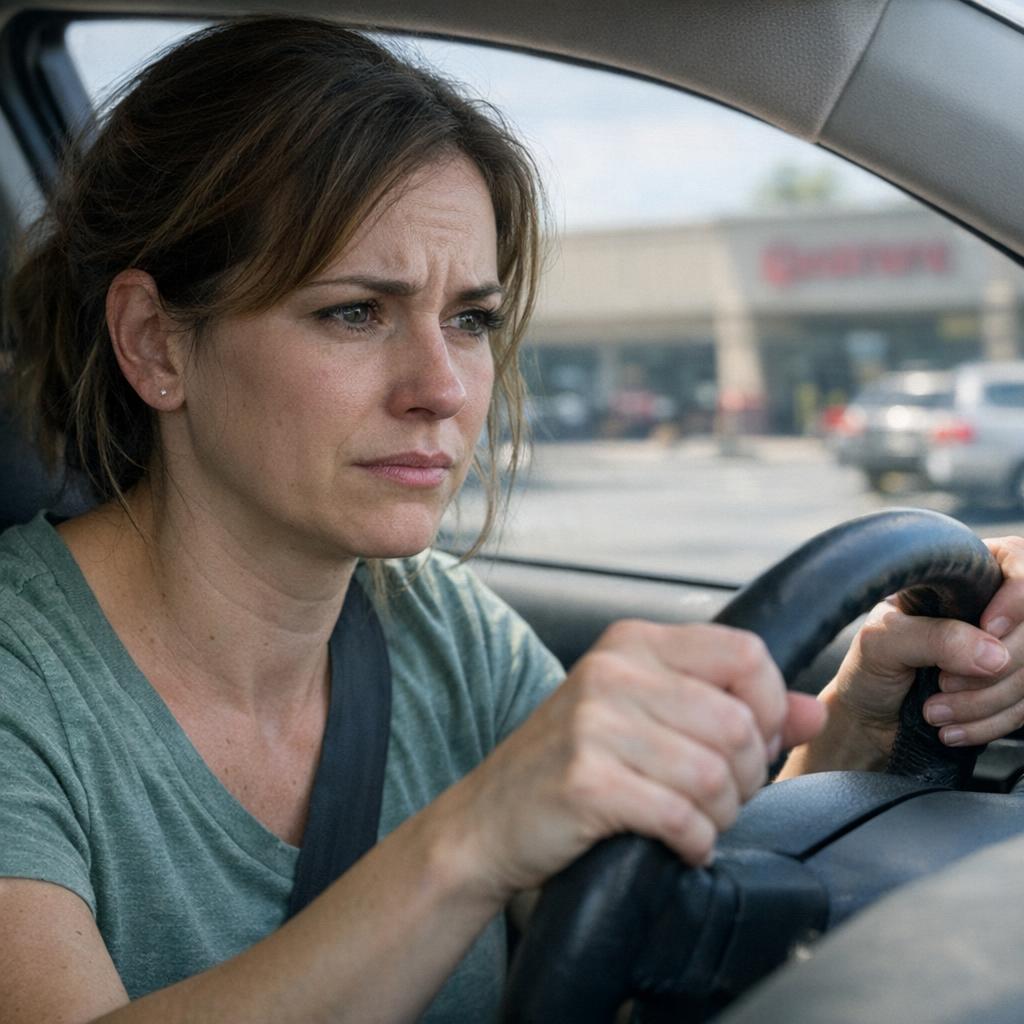 Image by RM AI
The Drive Home
I sat in my car, keys dangling from my trembling fingers, unable to start the engine. The grocery store's fluorescent sign flickered above me like some cosmic warning I'd ignored for too long. 'Tom's sister.' Those two words played on repeat in my mind, each loop making me feel sicker than the last. Tom didn't have a sister. Never had. Which meant he'd been crafting elaborate stories about a family that didn't exist. For what? For who? For her? I gripped the steering wheel until my knuckles turned white, fighting the urge to march back inside and demand answers from this 'Melissa.' Or worse, to call Tom right now and unleash thirty years of betrayal in a parking lot phone call. No. I needed to be smarter than that. My mother always said, 'When you think you've been wronged, gather your evidence before you gather your rage.' So I sat there, watching shoppers push their carts past my window, living their normal Tuesday afternoons while my life crumbled around me. I took a deep breath and finally turned the key. Whatever web of lies Tom had spun, I needed to understand its full pattern before I could begin to unravel it. And something told me this was just the first thread.
 Image by RM AI
Acting Normal
I drove home on autopilot, rehearsing normal in my head like an actress preparing for the performance of her life. By the time I pulled into our driveway, I'd wiped away my tears and fixed my makeup using the rearview mirror. When I walked through the door, Tom was lounging on the couch watching a baseball game. "How was the doctor?" he asked, barely looking up. "Fine," I replied, my voice impressively steady. "Just the usual lecture about calcium." I moved through our kitchen, unpacking groceries, asking about his day as if my world hadn't just imploded. We made dinner together—chicken stir-fry, something we'd cooked hundreds of times—him chopping vegetables while I marinated the meat. The domesticity felt surreal, like I was watching someone else's life through a window. We discussed our daughter's upcoming visit, the neighbor's new fence, whether we needed to replace the dishwasher. When he casually mentioned needing to run to the store tomorrow, I kept my face neutral. "Which one?" I asked, reaching for the soy sauce. I watched him freeze for just a millisecond, knife hovering over the cutting board. "Probably Safeway," he said after a beat too long. "Need anything special?" I shook my head, noting how he'd suddenly become very interested in perfectly dicing that bell pepper. That night, as he slept soundly beside me, I stared at the ceiling and made a decision: tomorrow, I would follow him.
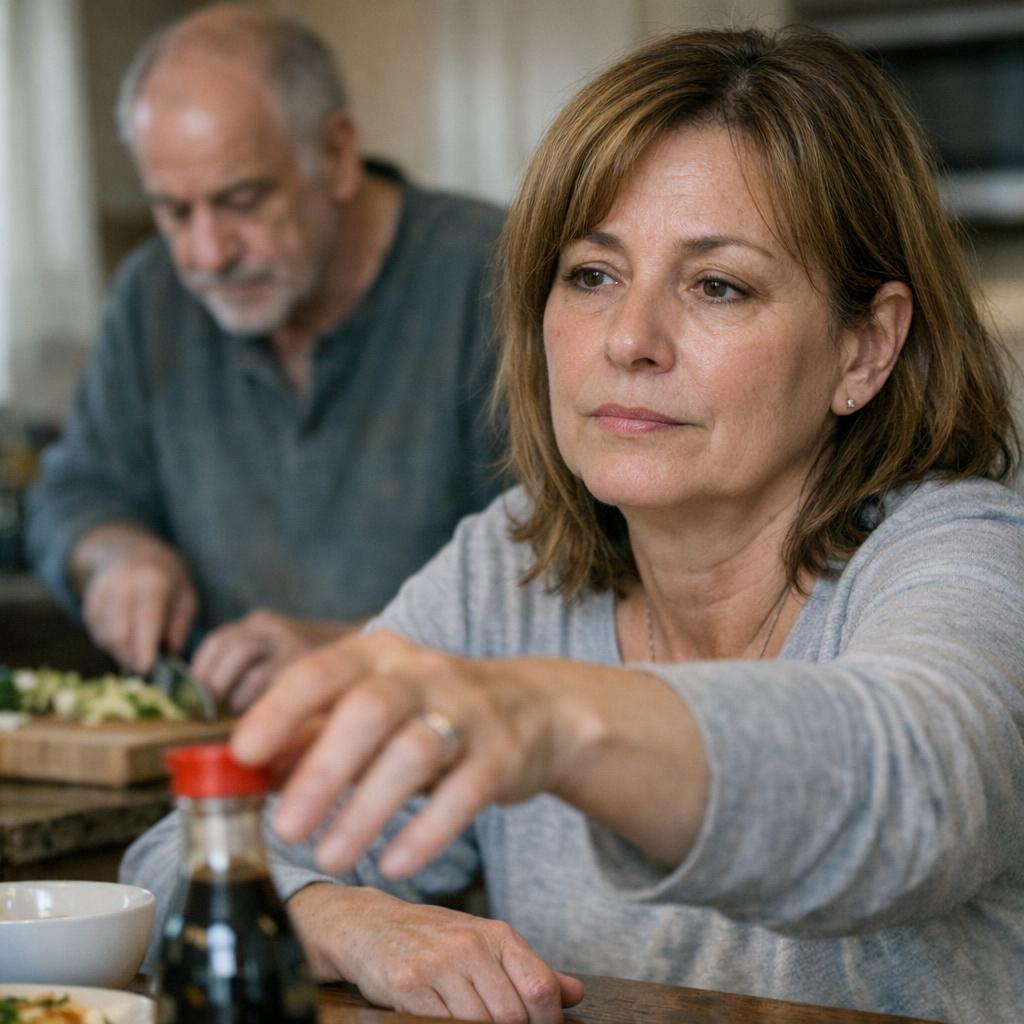 Image by RM AI
The Surveillance Begins
I became a detective in my own marriage. Instead of confronting Tom with what I'd learned at the grocery store, I bought a small leather-bound notebook—the kind you'd use for bird watching or tracking expenses—and began documenting everything. Tuesday, 2:15 PM: 'Going to pick up light bulbs.' Returns 4:45 PM. Thursday, 1:30 PM: 'We need milk.' Home by 4:00 PM. The patterns emerged with painful clarity. Always the same days, always the same excuses, always to Safeway—not our usual store five minutes away, but the one across town near the community college. I started checking the odometer on his car, noting the mileage that matched exactly with trips to that specific store. I even inventoried our pantry before and after his 'errands,' discovering we now had five bottles of olive oil and enough paper towels to survive an apocalypse. One morning, I casually suggested we shop together at our neighborhood store. 'They don't carry the brand of coffee I like,' he said quickly. Funny, I thought, how after thirty years of marriage, he suddenly developed brand loyalty to a specific coffee sold only at the store where Melissa worked. I felt sick doing this—tracking my husband like he was a wayward teenager—but with each entry in my little notebook, the truth became harder to deny. What hurt most wasn't just the lying, but how methodical it was, how he'd created an entire shadow routine right under my nose.
 Image by RM AI
Return to the Scene
I became a woman possessed, driving past that Safeway at different times, parking where I could watch without being seen. Tuesday afternoon, I sat in my car with oversized sunglasses and a baseball cap, feeling ridiculous but determined. Sure enough, at 2:30, Tom strolled through those automatic doors like he owned the place. The staff greeted him by name – not just Melissa, but the deli guy, the manager, even the teenage boy collecting carts. 'Hey Tom!' they called, with a familiarity that made my stomach twist. Thursday was worse. I watched him bypass three empty checkout lanes to wait in Melissa's line, leaning against her counter, making her laugh. She touched his arm – just briefly – but the casual intimacy of it knocked the wind out of me. The following week, I went inside, pretending to shop while keeping Tom in my peripheral vision. He moved through the store with a confidence I hadn't seen in years, stopping to chat with employees, checking inventory on shelves like he worked there. When another cashier joked, 'Tom, we should get you a name tag already!' I nearly dropped my basket. How long had this been going on for him to become such a fixture here? But nothing prepared me for what I saw next.
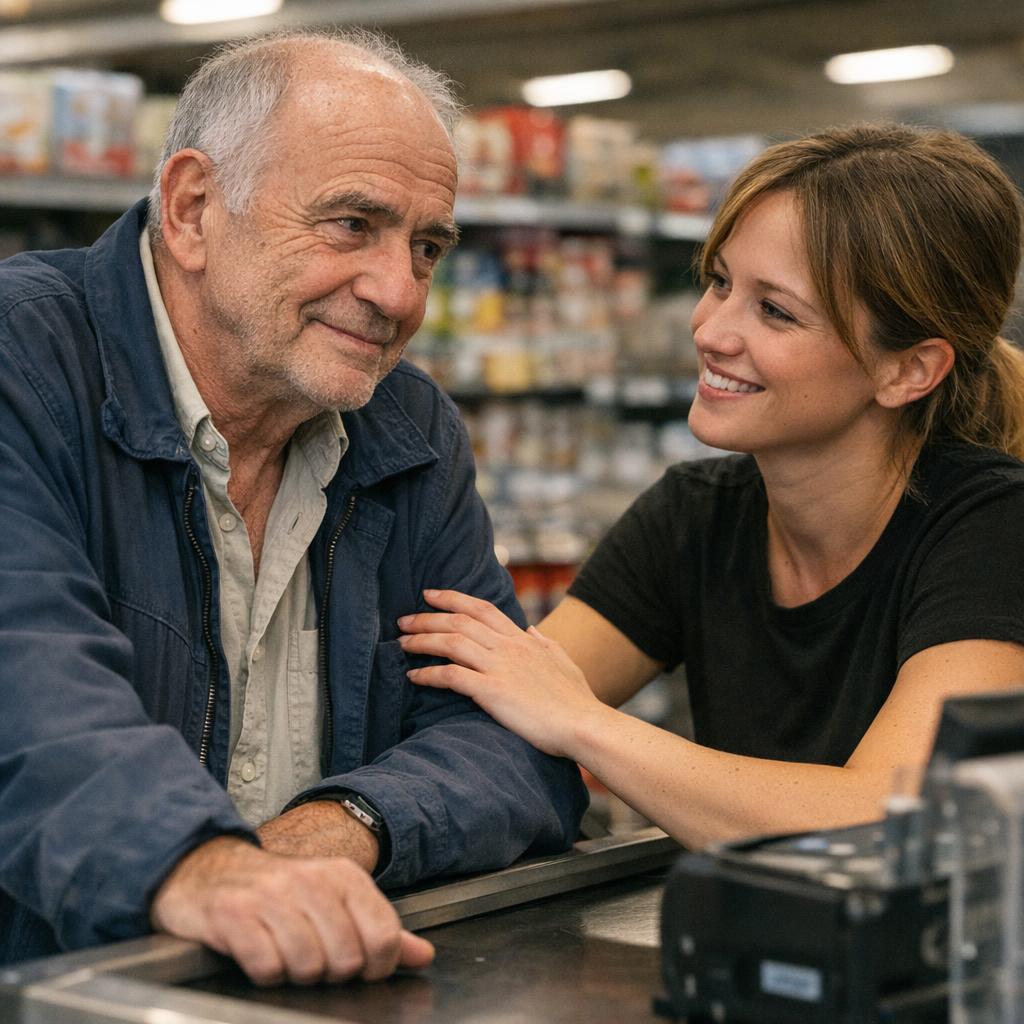 Image by RM AI
The Cashier's Smile
I found myself returning to the store more frequently, always careful to stay hidden behind displays or pretend to shop in distant aisles. That's when I really saw her—Melissa. Young, maybe early thirties, with a warm smile that reached her eyes. What struck me most wasn't her appearance but how she transformed when Tom approached. Her entire face lit up like a Christmas tree, posture straightening, hands suddenly animated as they spoke. Even from a distance, I could see the electricity between them. Tom would deliberately bypass empty checkout lanes to wait in her line, sometimes with just a single item in hand. They'd lean in close, speaking in hushed tones that made my stomach knot. The worst part? Tom's smile. That specific smile—the one with the slight crinkle around his eyes, the one that used to be reserved for me on our best days. Now it belonged to her, freely given while I watched from behind a stack of cereal boxes. One afternoon, I overheard another employee joke that Tom "might as well work there," and Melissa blushed so deeply I thought she might faint. They had inside jokes, shared glances, a whole secret language developed right under fluorescent lights while I sat at home, waiting for him to return with milk we didn't need.
 Image by RM AI
Overheard Conversations
I started shopping at Safeway regularly, becoming a familiar face to the staff who didn't know I was Tom's wife. I'd grab a basket, pull my hair back in a ponytail, and wear sunglasses inside like some ridiculous undercover agent in a Lifetime movie. One Wednesday afternoon, I was examining avocados when I overheard a stocky guy with a manager's badge joking with the deli counter woman. "Tom's back again," he chuckled, nodding toward the front where my husband stood chatting with Melissa. "Man might as well work here with all the time he spends helping out." Helping out? That didn't make sense. I casually wheeled my cart over, selecting a package of sliced turkey. "You guys must have great customer service," I remarked, "I just overheard something about someone helping out?" The manager—his nametag read 'Steve'—smiled proudly. "Oh yeah, Tom's been a godsend. Helps Melissa with the inventory system, scheduling, even talked to corporate about some payroll issues. Guy's a whiz with numbers." My smile felt plastered on as I nodded, my mind racing. Tom wasn't just visiting Melissa—he was inserting himself into her entire work life, becoming indispensable. What hurt most wasn't just the betrayal, but realizing how much energy and attention he was investing in her world while ours withered at home.
 Image by RM AI
The Financial Advisor
I lingered near the customer service desk one afternoon, pretending to fill out a return form while eavesdropping on a conversation between Steve and another employee. 'Tom's been such a help with Melissa's budget situation,' the woman said, organizing brochures. 'She was drowning in credit card debt before he stepped in.' Steve nodded. 'Guy's got a knack for numbers. He even helped her negotiate that raise last month.' My pen froze mid-signature. Tom, my husband of thirty years, had apparently appointed himself financial advisor to a woman half his age. The next day, I casually asked the bakery clerk about 'that nice man who helps everyone.' She smiled. 'Oh, Tom? He's been showing Melissa how to track inventory and manage her schedule. Even went with her to talk to corporate about payroll issues.' Each revelation was another piece of a puzzle I didn't want to complete. Tom wasn't just visiting Melissa or flirting with her—he was embedding himself in her life, becoming her hero, her problem-solver, her knight in shining armor with a calculator instead of a sword. The worst part? These were exactly the skills he'd always used at home, with me, until they gradually disappeared from our marriage. Now I understood why—he'd simply redirected them elsewhere. What I couldn't figure out was how deep this went, and whether there was more than just financial advice being exchanged during those long 'errands.'
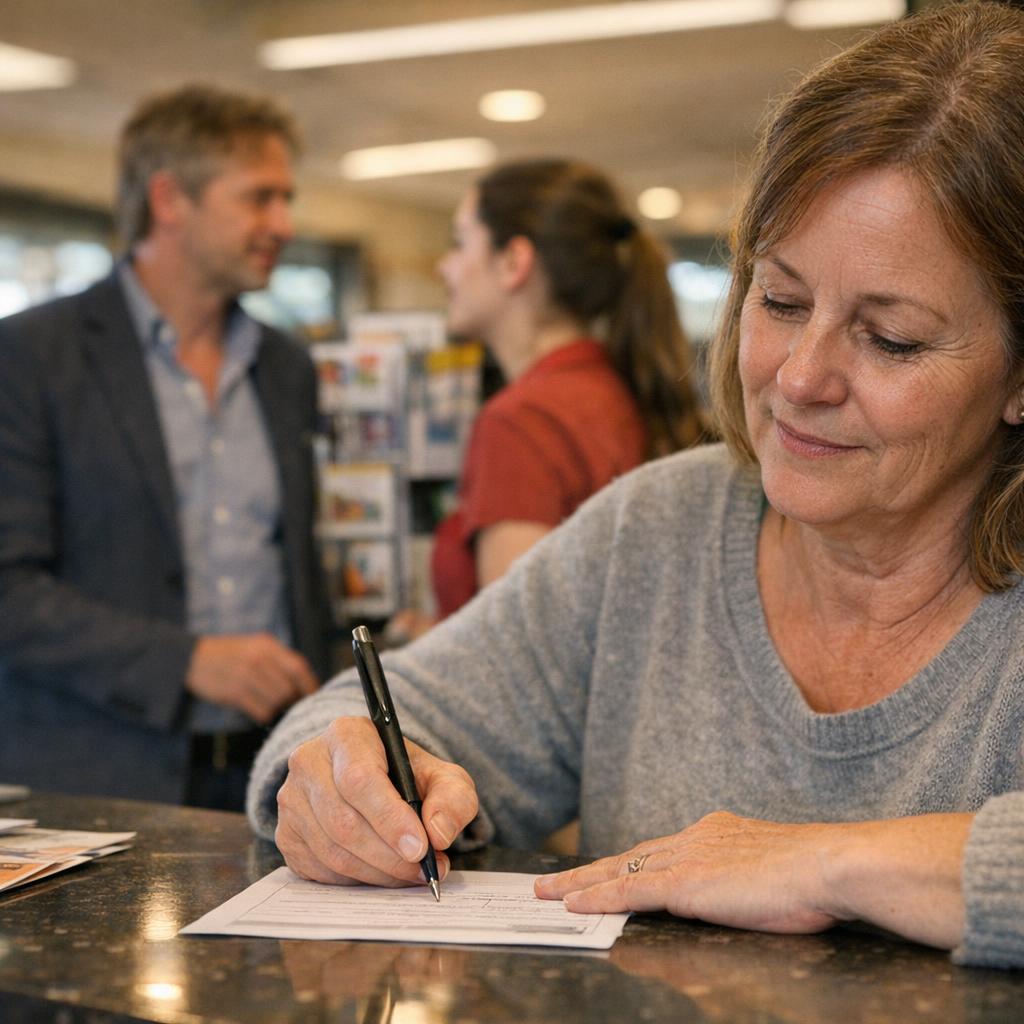 Image by RM AI
The Painful Realization
I sat in my car on a Tuesday afternoon, rain pattering softly against the windshield, creating a soundtrack for the moment my marriage truly fell apart. Through the foggy grocery store windows, I could see Tom and Melissa at her register. No customers in line. Just the two of them, leaning toward each other like flowers seeking sunlight. I watched as he touched her hand—not accidentally, but deliberately—letting his fingers linger on hers while she laughed at something he said. The intimacy was unmistakable. This wasn't just a friendly cashier and a helpful customer. This wasn't just financial advice or inventory management. The way his eyes never left her face, the way she tucked her hair behind her ear when he spoke, the slight tilt of their bodies toward each other—it was the body language of attraction, of connection. Of betrayal. My throat tightened as thirty years of marriage crystallized into this single, devastating tableau. Tom wasn't just helping Melissa with her finances or her job. He was giving her the parts of himself he'd stopped sharing with me years ago—his attention, his laughter, his tenderness. And in that moment, watching them through rain-streaked glass, I finally admitted to myself what I'd been avoiding for weeks: my husband was having an affair right before my eyes, in the most ordinary place imaginable.
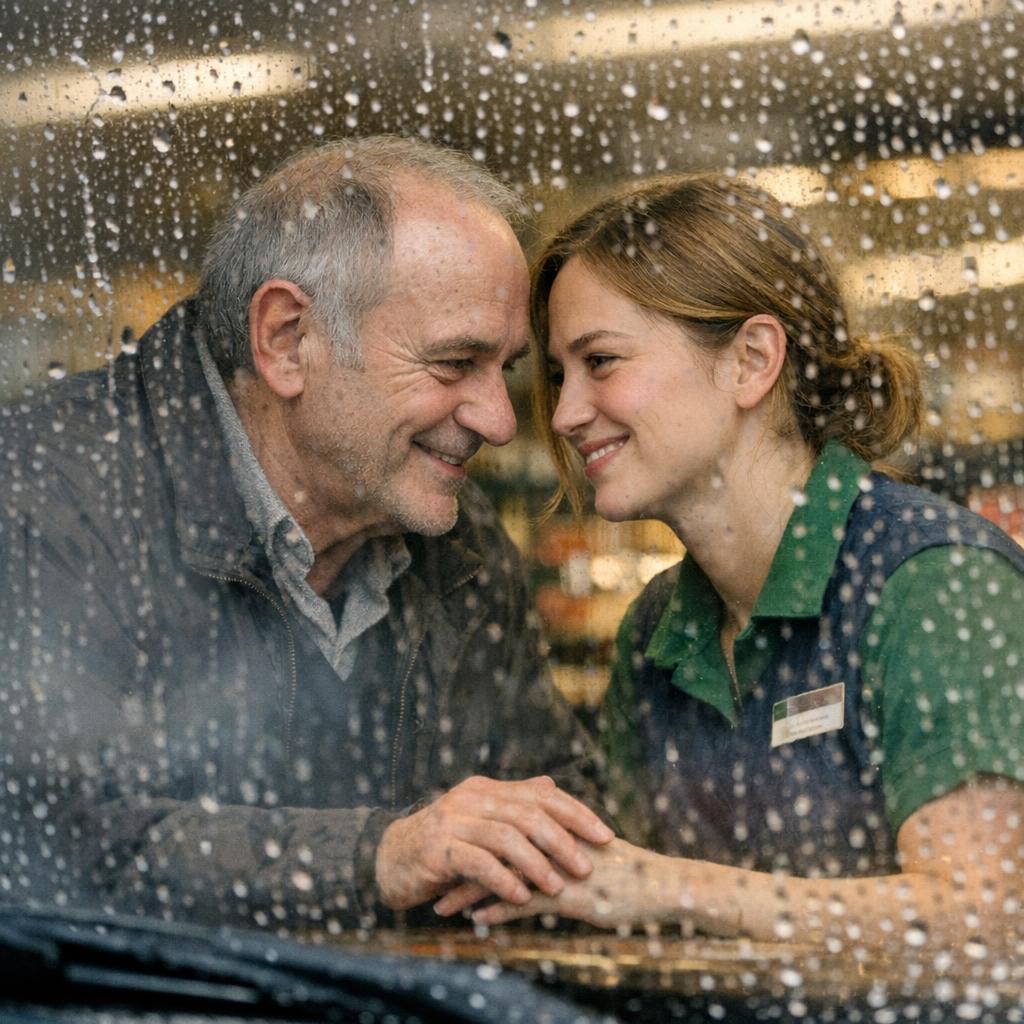 Image by RM AI
Gathering Courage
For days, I wandered through our house like a ghost, going through the motions of normal life while my mind spun with impossible choices. Should I confront Tom directly? Approach Melissa? Or simply pretend I never discovered my husband's elaborate double life? I'd catch myself staring at family photos on the wall—us at Sarah's graduation, our 25th anniversary cruise—wondering if those smiles were as fake as Tom's errands. After a particularly sleepless night, I called my sister Janet, my voice cracking as I asked if she had time to talk. 'Something's wrong, but I can't get into specifics yet,' I told her, twisting my wedding ring around my finger. Janet listened patiently, then reminded me of something I'd forgotten about myself. 'Carol,' she said firmly, 'I've known you for 59 years. You've never been the type to let problems fester. Remember when Dad got sick and everyone was tiptoeing around it? You were the one who made the doctors explain everything in plain English.' She was right. I'd spent my entire life facing difficult truths head-on—why was I hiding from this one? That night, I pulled out my little detective notebook and began formulating a plan. No more lurking behind cereal boxes or sitting in parking lots. It was time to bring this whole charade into the light, even if it meant watching my marriage crumble under its weight.
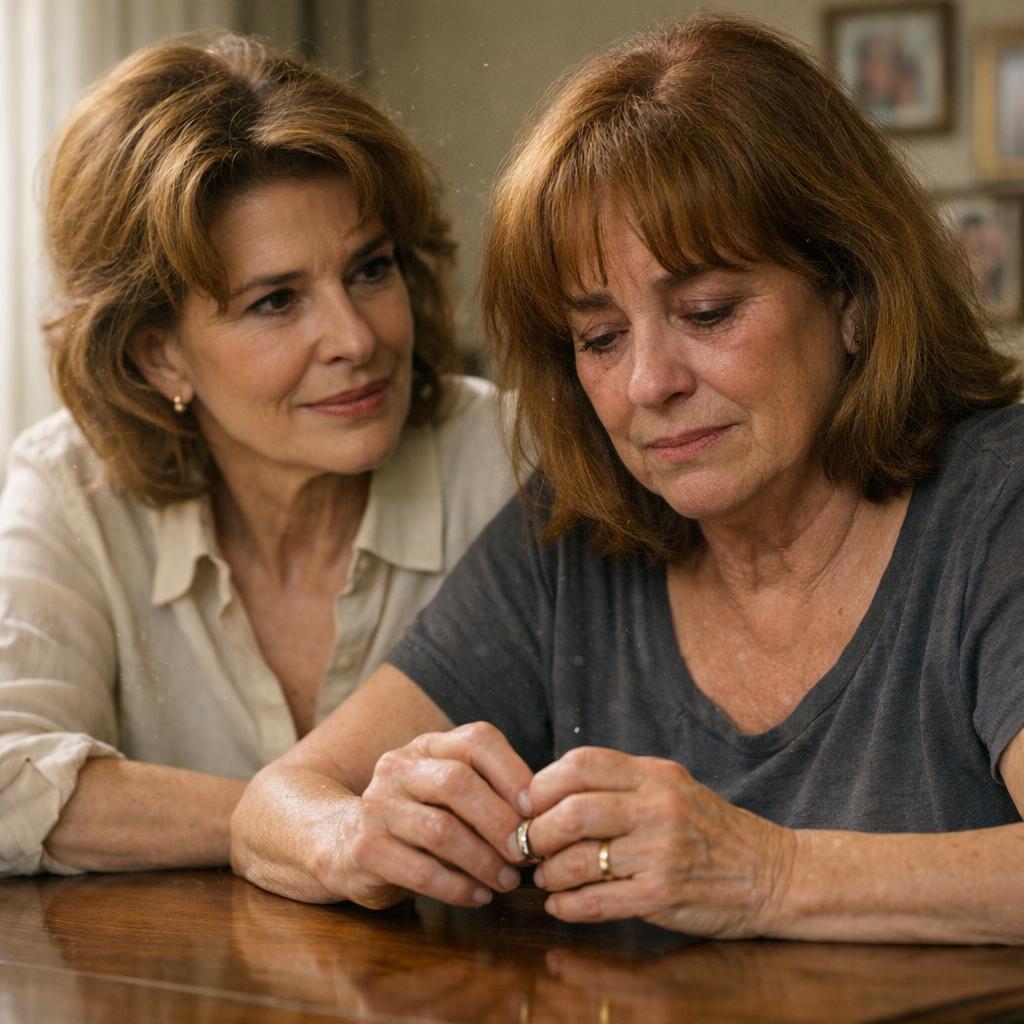 Image by RM AI
The Direct Approach
I waited in my car until 6:15 PM, when Melissa's shift ended. My hands trembled slightly as I watched her exit through the employee door, her purse slung over her shoulder, keys jingling in her hand. I took a deep breath and stepped out, following her to the employee parking lot. "Melissa?" I called out, my voice steadier than I expected. She turned, confusion on her face for a split second before recognition dawned. The color drained from her face so quickly I thought she might faint. "You're... you're..." she stammered, taking a small step backward. "Tom's wife," I finished for her, nodding. "Not his sister." Her eyes widened, darting around as if looking for an escape route. "I just want to talk," I said, keeping my voice deliberately calm. "I'm not here to make a scene." She hesitated, clutching her purse tighter against her chest like a shield. After what felt like an eternity, she nodded slightly. "There's a coffee shop around the corner," she offered, her voice barely above a whisper. As we walked in silence, I realized I was about to hear a version of my marriage I never knew existed – one where I had been completely written out of the story.
 Image by RM AI
Coffee with the Other Woman
The coffee shop buzzed with afternoon chatter, but the small table Melissa and I occupied might as well have been surrounded by a force field of awkward silence. She couldn't meet my eyes, staring instead at her latte while her fingers trembled against the ceramic mug. I'd ordered black coffee—bitter seemed appropriate for the occasion. "I just want to know everything," I said finally, my voice low but firm. "I'm not here to cause a scene. I just need the truth." Melissa's shoulders hunched forward as if she could physically shrink from this conversation. When she finally looked up, her eyes were rimmed with red. "He told me his wife died three years ago," she whispered, each word landing like a slap. "Cancer. He said it was quick, merciful." I felt my breath catch—Tom had killed me off so neatly, so conveniently. "He said you—his sister—helped him through it." She took a shaky breath, then the floodgates opened. "He started coming in about eight months ago. Just friendly at first, then offering advice about my credit card debt. Then helping with work stuff. Then...more." Her voice cracked on that last word, and I knew exactly what "more" meant. As she continued speaking, I realized Tom hadn't just been having an affair—he'd created an entire alternate reality where I didn't exist.
 Image by RM AI
The Widower's Tale
Melissa's hands trembled as she told me her version of my husband's life. 'He said his wife died three years ago from cancer,' she whispered, tears streaming down her face. 'He talked about how hard it was watching you—I mean her—fade away.' I sat there, stunned into silence, as she described how Tom approached her six months ago, first with friendly conversation, then offering financial advice when she mentioned struggling with student loans. 'He seemed so genuine,' she continued, wiping her eyes with a napkin. 'He'd bring me coffee before my shift, help me calculate my budget on breaks. Last month, when my car broke down, he drove me to work for a week.' She explained how Tom had created an entire narrative—the grieving widower finding joy again, the supportive sister (me) who lived nearby and helped him through his darkest days. 'He even showed me pictures of your house, calling it "our place,"' she said, her voice breaking. 'I believed everything because who makes up something like that?' I felt physically ill hearing how meticulously Tom had erased me from his life while simultaneously using our resources to play hero in hers. But nothing prepared me for what she said next.
 Image by RM AI
The Sister Story
The most surreal part of Melissa's confession wasn't learning about the affair—it was hearing myself described as Tom's supportive sister who 'helped him through the grief.' I sat there, coffee growing cold, as she explained how Tom had crafted an entire narrative where I was just a peripheral character in his life story. 'He mentioned his sister did his shopping sometimes,' Melissa said, not meeting my eyes. 'That's why I thought you were her that day at the register.' The casual way she said it made my stomach turn. For thirty years, I'd been his wife, his partner, the person who knew his favorite foods and how he liked his shirts folded. Now I was reduced to a fictional sister-figure who occasionally picked up groceries. It wasn't just the betrayal of the affair that cut so deeply—it was how easily he had erased me, rewritten me into someone less important, less intimate. Someone who could be explained away with a simple lie. 'He even showed me pictures of your house,' Melissa continued, 'calling it the place he and his sister maintained together after his wife passed.' I felt myself disappearing with every word she spoke, becoming less real somehow, as if Tom's lies had the power to actually transform me into this sister-character he'd invented.
 Image by RM AI
The Depth of Deception
As Melissa continued her confession, each new detail felt like another nail in the coffin of my marriage. 'He told me he lives in a small apartment on Maple Street,' she said, her voice barely audible. 'Said he couldn't bear to stay in the house after you—I mean his wife—passed away from cancer.' I gripped my coffee cup so tightly I thought it might shatter. Three years dead of cancer? While I sat across from her, very much alive, the absurdity of it all made me dizzy. 'He still wears his wedding ring,' she continued, tears streaming down her face. 'Said he couldn't bring himself to take it off, that it was his last connection to his wife.' The ring I'd placed on his finger thirty years ago, the one I thought symbolized our unbreakable bond, had become a prop in his elaborate performance. I sat in stunned silence, trying to process how meticulously Tom had constructed this alternate reality—one where I was conveniently deceased, where he was the grieving, loyal widower who just couldn't move on. It wasn't just a lie; it was an entire fabricated universe with its own timeline, its own history, its own rules. And the most terrifying part? How easily he seemed to live in it, moving between his real life with me and this fictional one with her, never missing a beat or slipping up—until that one fateful day at the register.
 Image by RM AI
Her Side of the Story
Melissa's story unfolded between sips of her cooling latte, and I found myself in the bizarre position of feeling sorry for the woman having an affair with my husband. 'I was six months out of a divorce when Tom started coming to my register,' she explained, dabbing at her eyes. 'My ex left me with nothing but debt. I was working double shifts just to make minimum payments.' She described how Tom first offered casual budgeting tips, then gradually became her financial lifeline, helping her negotiate with creditors and create spreadsheets for her expenses. 'He seemed so kind, wanting nothing in return,' she said, her voice cracking. 'At least that's what I thought.' Their relationship had evolved slowly—coffee after her shifts, lunch during her breaks, always with Tom controlling when and where they met. 'He said his sister—you—needed him certain evenings, or that he had appointments related to his wife's estate.' She looked up at me, realization dawning in her eyes. 'God, every excuse was so perfectly crafted. He never slipped up, not once.' The calculated precision of Tom's deception made my skin crawl. This wasn't just an affair; it was a meticulously engineered second life where he played savior to a vulnerable woman while I sat at home, completely unaware that in his other world, I didn't even exist.
 Image by RM AI
The Financial Trail
That night, after my coffee with Melissa, I sat at our home computer while Tom slept upstairs, oblivious to the storm brewing. I logged into our joint bank account—something I hadn't done in months since Tom had always handled our finances. What I found made my stomach drop. Small withdrawals, $50 here, $75 there, labeled vaguely as 'miscellaneous' or 'office supplies.' Grocery charges on days when our refrigerator remained mysteriously empty. Gas station receipts from across town, nowhere near his usual routes. I downloaded three months of statements, highlighting each suspicious transaction until the pages bloomed with yellow marks. Over $2,000 had quietly disappeared—money spent on Melissa under the guise of 'helping someone get on her feet.' Our retirement fund, which we'd carefully built for thirty years, was being siphoned away to finance his fantasy life with a woman who thought I was dead. I printed everything, hands shaking as the pages emerged from the printer. The financial betrayal felt almost worse than the emotional one—this wasn't just about feelings or midlife crisis. This was calculated. Deliberate. And as I stared at the evidence spread across our dining room table, I realized something that chilled me to the bone: Tom hadn't just been careless with our marriage—he'd been systematically funding his double life with our shared future.
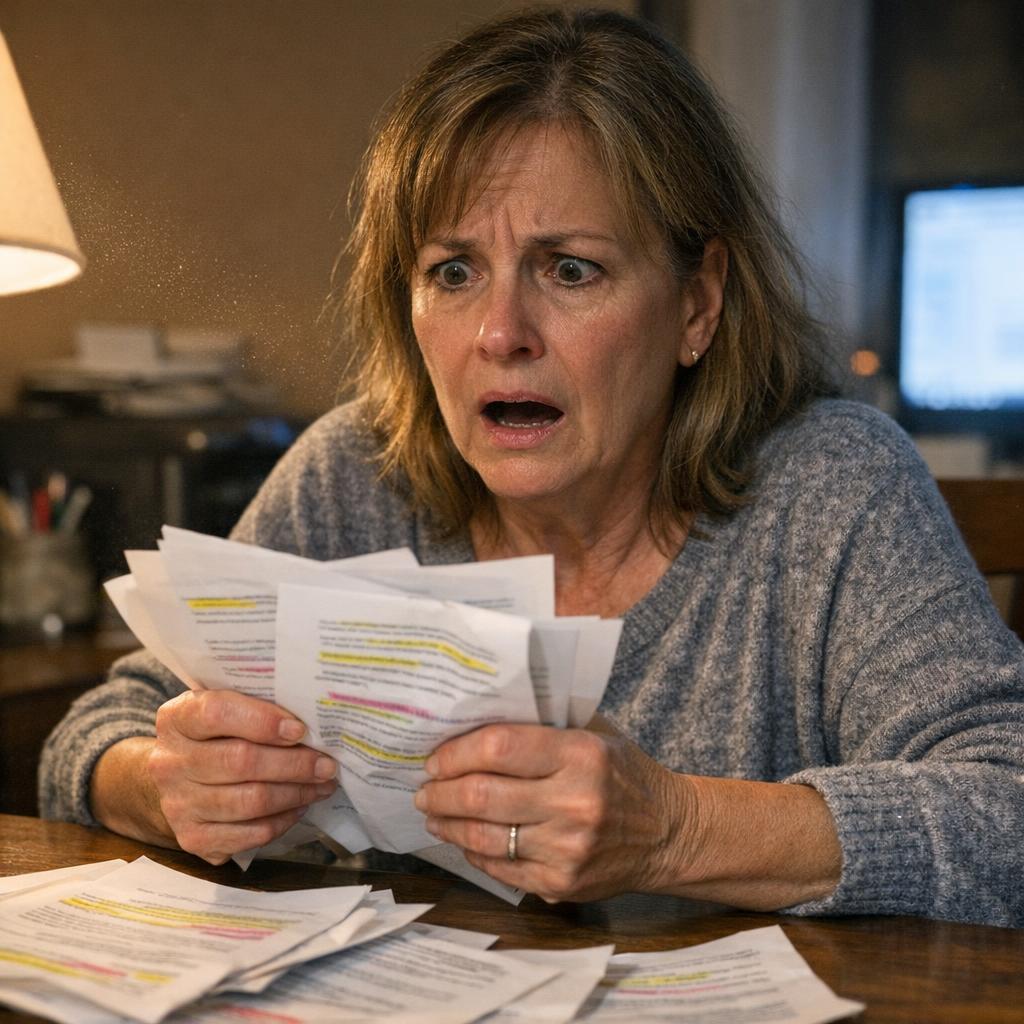 Image by RM AI
The Risk to Our Security
The deeper I dug into our finances, the more horrified I became. What started as $2,000 in questionable transactions ballooned to nearly $5,000 over six months – all withdrawn in small amounts that wouldn't raise immediate red flags. Tom had been systematically draining our retirement security, the nest egg we'd carefully built for thirty years, all to play financial savior to a woman who thought I was dead. I found a hidden folder in his desk labeled 'Tax Receipts 2018' – a year we'd already filed and archived. Inside were store receipts for items I'd never seen: a $350 watch from Macy's, a silver necklace with a heart pendant, restaurant bills from places we never visited together. Each receipt felt like a physical blow. This wasn't just about emotional betrayal anymore; Tom was literally gambling with our future security without my knowledge or consent. At 59, we were supposed to be finalizing retirement plans, not watching our savings disappear into his fantasy life. The most painful discovery was a brochure for a weekend getaway to a coastal bed and breakfast, dated for our upcoming anniversary weekend – the same weekend Tom had told me he needed to attend a 'work conference' that couldn't be rescheduled.
 Image by RM AI
Waiting for the Confrontation
I spent all day Wednesday preparing for the confrontation, moving through our house like a woman possessed. I cleaned obsessively—scrubbing counters, folding laundry, vacuuming—as if putting our physical space in order could somehow restore the chaos of my emotional state. I rehearsed what I would say at least twenty times in the bathroom mirror, watching my face harden and soften with each practice run. 'Stay calm, Carol. Don't scream. Don't cry.' By 5:30, I had Tom's favorite pot roast in the oven, the table set with our everyday dishes—not the good china, because this wasn't a celebration. It was a funeral for our marriage disguised as an ordinary dinner. I placed the printed bank statements and receipts in a manila folder beside my plate, then tucked it under the table cloth. When I heard his key in the lock at 6:15, my heart hammered so violently I thought it might burst through my chest. The familiar sound of him hanging his jacket, setting down his keys—all these mundane actions now felt like the ticking of a time bomb. 'Something smells amazing,' he called out, his voice so normal, so unchanged by the double life he'd been leading. I took a deep breath and smoothed my hands over my skirt, determined to face this moment with the dignity of a woman who refused to be erased from her own life story. What Tom didn't know was that I had already spoken to a lawyer that morning.
 Image by RM AI
The Calm Confrontation
Tom came home at 6:30, right on schedule. He kissed my cheek, commented on the pot roast—'Smells amazing, honey'—and sat down at the table like it was any other Wednesday. I watched him serve himself, making small talk about the weather, about Sarah's upcoming visit, about everything except what was actually happening in our lives. I waited until he was halfway through his second helping, fork laden with carrots, before I spoke the words I'd rehearsed all afternoon. 'I met Melissa today,' I said, my voice surprisingly steady. The transformation was immediate—his fork froze midair, his jaw slackened, and the color drained from his face so completely I could almost see the lie taking physical form. 'Carol, I—' he started, but I held up my hand. No, I wouldn't be interrupted. Not now. I didn't scream or throw plates. Instead, I methodically laid out everything—the cashier's slip-up, the elaborate sister lie, the financial trail, Melissa's tearful confession. 'She thought I was dead, Tom. Cancer, three years ago. Very merciful, apparently.' His eyes darted around the room like a cornered animal, looking for an escape that didn't exist. When I pulled out the bank statements, he seemed to physically shrink in his chair. 'It just got out of hand,' he whispered, but we both knew that was the biggest lie of all.
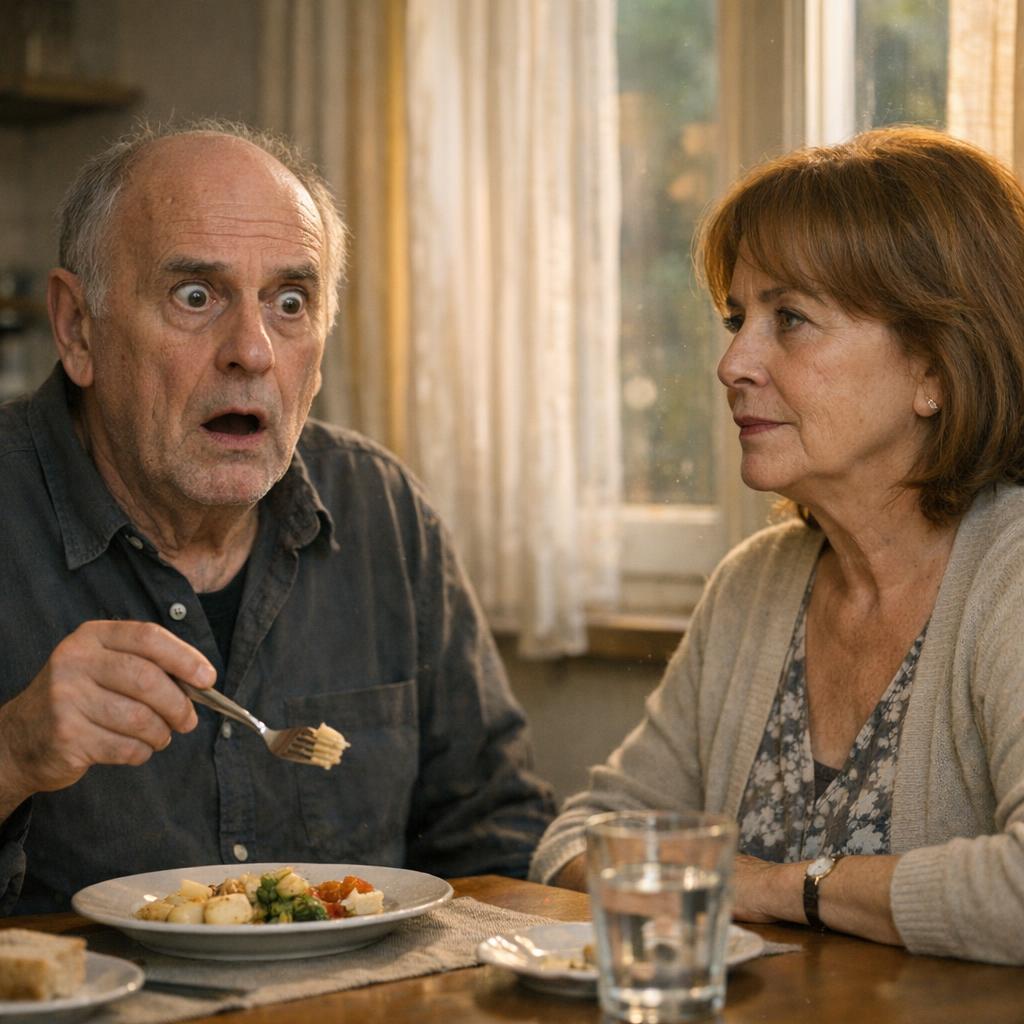 Image by RM AI
His Confidence Drains Away
I watched Tom's face as I laid out each piece of evidence, one by one. The confident man who'd been living a double life for months was crumbling before my eyes. His shoulders hunched forward, his eyes darting between the bank statements and my face, searching for mercy he wouldn't find. 'Carol, please, I can explain,' he attempted, but I held up my hand firmly. 'No, Tom. I'm not finished.' I continued methodically through Melissa's confession, the elaborate cancer story, the sister lie, the money trail. With each revelation, he seemed to physically shrink in his chair, the weight of his deception crushing him. When I finally fell silent, the only sound in our dining room was the ticking of the grandfather clock we'd bought on our 20th anniversary. Tom stared at his half-eaten pot roast, unable to meet my gaze. 'I never meant to hurt you,' he finally whispered, his voice barely audible. 'It just... it made me feel important again.' I almost laughed at the absurdity. 'Important? By erasing me? By killing me off in your stories?' His eyes welled with tears, but I felt nothing. Not anger, not sadness—just a cold clarity I'd never experienced before. 'The affair didn't just "get out of hand," Tom,' I said quietly. 'You built it, lie by lie, day by day.' What he said next would determine whether our thirty years together was worth salvaging at all.
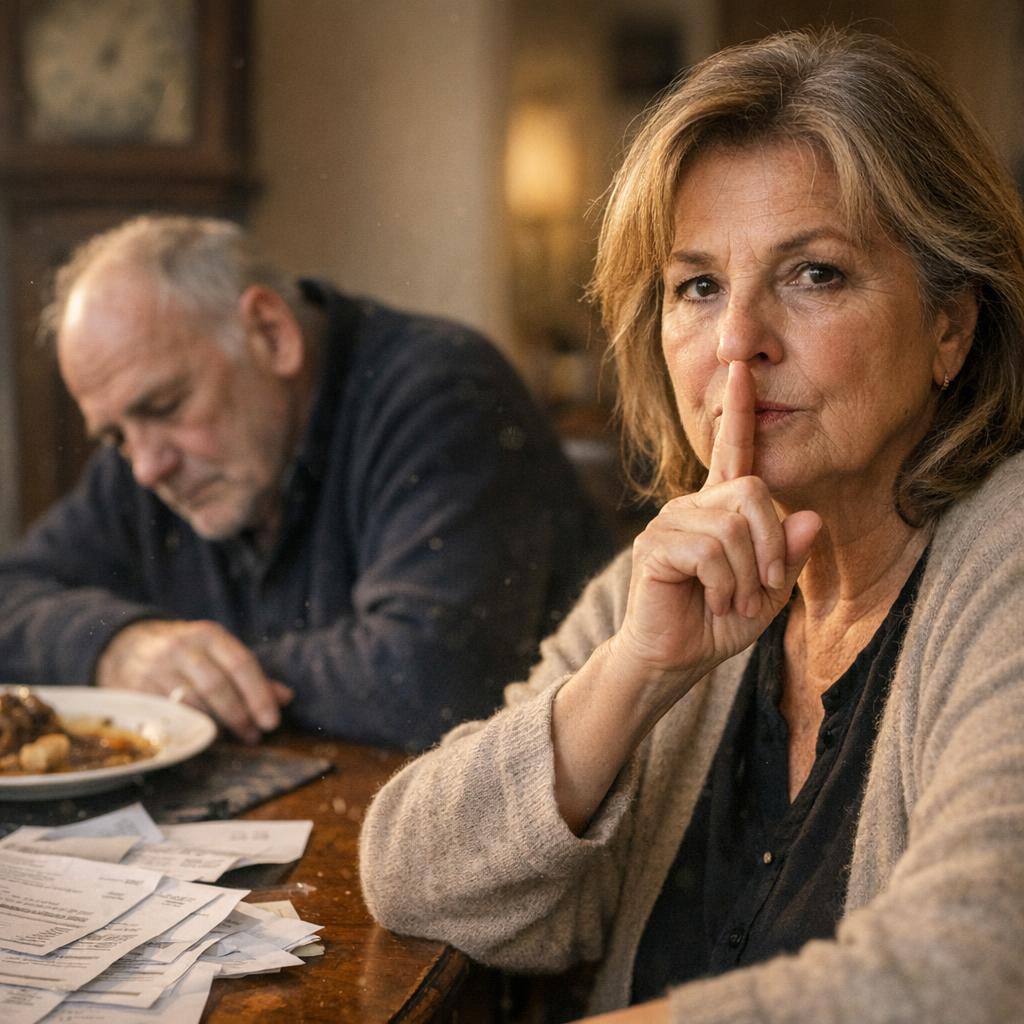 Image by RM AI
The Confession
Tom sat across from me, his hands trembling as he finally spoke the truth. 'It started so innocently,' he whispered, unable to meet my eyes. 'She was struggling with her finances, and I just wanted to help.' But as he continued, the full picture emerged—how being Melissa's hero had filled some void I hadn't even known existed in him. 'When she thought I was a widower, the way she looked at me...' his voice cracked. 'She saw me as this strong, capable man who had survived tragedy. Not just some aging accountant counting down to retirement.' I watched him struggle for words, this stranger wearing my husband's face. 'Being admired by someone who thought you were just my sister made me feel young again, important,' he admitted. 'Like the best version of myself—someone I didn't know how to be at home anymore.' The confession hung between us, heavy with three decades of shared history and one devastating truth: Tom had needed to erase me to feel whole again. What hurt most wasn't just the betrayal, but realizing how invisible I'd become in my own marriage long before Melissa ever entered the picture.
 Image by RM AI
The Excuse
When Tom tried to dismiss everything with 'It just got out of hand,' I felt a surge of anger I didn't know I was capable of. 'No, Tom,' I said, my voice eerily calm. 'Nothing about this "just happened." You calculated every step.' I ticked off each point on my fingers like items on a grocery list. 'You invented a dead wife. You created a fictional sister out of your actual wife. You systematically withdrew money from our retirement.' His face crumpled as I laid it all out, but then he had the audacity to say, 'We never even spent the night together, Carol,' as if that was supposed to make me feel better. As if the physical boundaries of their relationship somehow lessened the emotional devastation he'd caused. 'So I should be grateful?' I asked, watching him squirm. 'Grateful that while you were playing financial savior to a woman who thought I was dead from cancer, you at least came home to sleep in our bed?' He looked down at his hands, unable to meet my eyes. What he didn't understand was that the affair wasn't just about whatever physical lines they had or hadn't crossed—it was about how methodically he had erased me from his narrative to create space for someone new.
 Image by RM AI
The Missing Piece
After the dust settled from our confrontation, I asked the question that had been burning inside me. 'Why didn't you just tell me what you needed, Tom? After thirty years together?' He sat there, shoulders slumped, looking smaller than I'd ever seen him. 'I didn't know how,' he finally whispered, his voice cracking. 'How do you tell someone you feel invisible in your own life? That you wake up every morning wondering if anyone would notice if you just... disappeared?' His words hit me like a physical blow. While I had been feeling erased by his lies, he had been feeling erased by our routine. 'You stopped seeing me years ago, Carol,' he continued, tears welling in his eyes. 'You stopped asking about my day, stopped noticing when I tried something new.' I wanted to argue, to defend myself, but the truth settled between us like dust after an explosion. We had both been ghosts in our marriage, passing through the same rooms without truly seeing each other. The irony wasn't lost on me – I had been furious about being reduced to his sister in Melissa's eyes, while all along, he had felt reduced to nothing more than a provider in mine. The realization left me breathless: we had both been desperately searching for the same thing – to be seen.
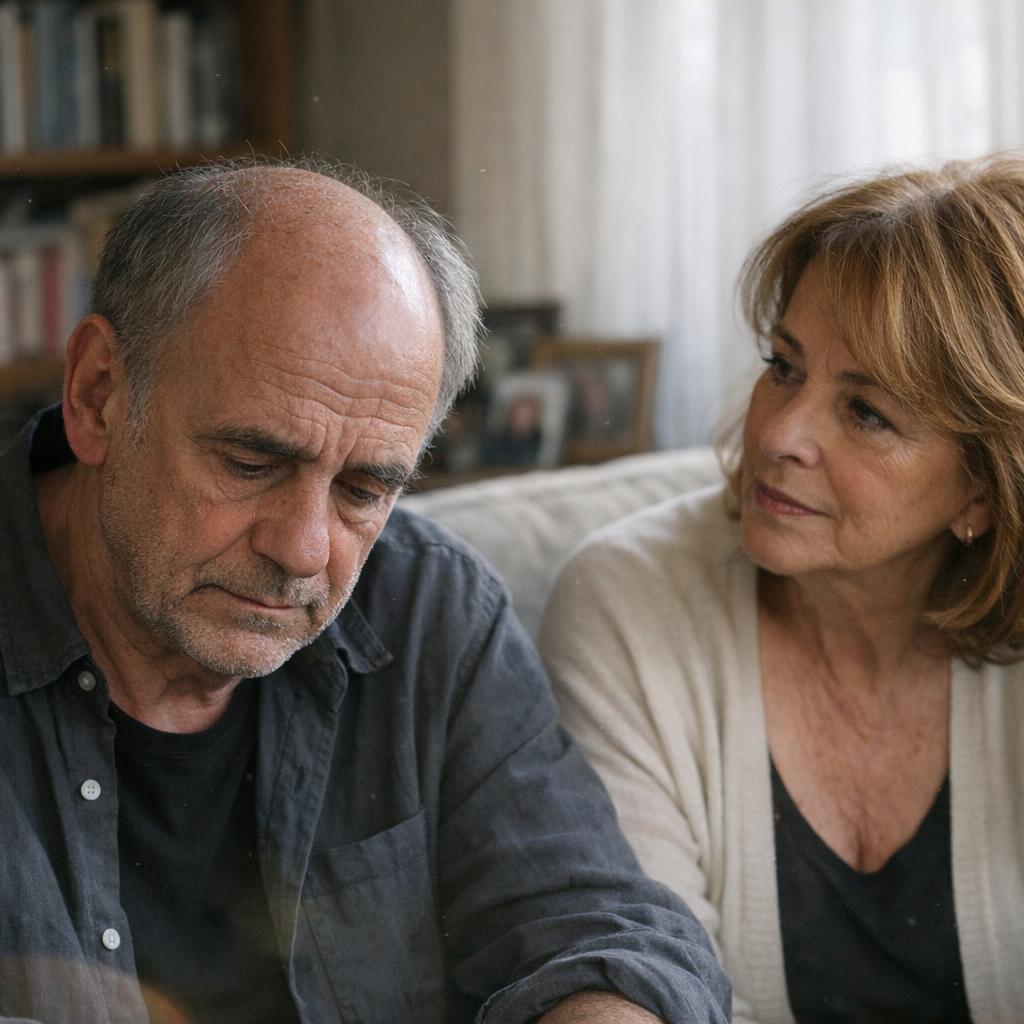 Image by RM AI
The Night Apart
That night, after hours of painful conversation that left us both emotionally drained, I told Tom he needed to sleep in the guest room. 'I just need space,' I said, my voice barely above a whisper. He nodded silently, gathering his pillow and a change of clothes without protest. Now, at 2:17 AM, I'm lying awake in our bed—our bed that suddenly feels massive and cold without him beside me. The ceiling above me has become a movie screen where I'm replaying our entire thirty-year marriage, searching for the warning signs I missed. When did we stop seeing each other? When did I become so comfortable with routine that I stopped noticing him slipping away? Through the wall, I can hear Tom pacing in the guest room, the old floorboards creaking with each restless step. Seven steps one way, turn, seven steps back. The rhythm of his insomnia matches mine. We're separated by just fifteen feet of hallway, but it might as well be an ocean. I wonder if he's replaying our marriage too, or if he's thinking about her. The most terrifying thought isn't that our marriage might end—it's that it might have ended years ago, and we were both too blind to notice until someone else saw value in what I had taken for granted.
 Image by RM AI
The Morning After
I woke up at 5:47 AM after a night of tossing and turning, my eyes gritty from unshed tears. The house was quiet, but I could smell coffee brewing downstairs. When I finally dragged myself to the kitchen, Tom was already there, dressed in yesterday's clothes, looking as exhausted as I felt. He silently handed me a mug, our fingers carefully avoiding contact. 'I think we should talk more,' he said, his voice hoarse. I nodded, clutching the warm ceramic like a lifeline. 'But first,' I said, forcing myself to meet his eyes, 'I need to know if you've contacted Melissa since last night.' The question hung between us, heavy and unavoidable. Tom's gaze dropped to the floor, and he shifted his weight from one foot to the other. One second passed. Then two. Three. His hesitation was an answer in itself, more damning than any words could be. My stomach clenched as I realized that even now, with everything laid bare, with our thirty years hanging by a thread, he couldn't bring himself to make a clean break from the fantasy life he'd created. 'Carol,' he finally whispered, 'it's complicated.' And in that moment, I understood that the hardest part of my journey was just beginning.
 Image by RM AI
The Text Messages
I held out my hand, palm up, my eyes never leaving Tom's face. 'Your phone,' I said, my voice steadier than I felt. He hesitated, shifting his weight from one foot to the other. 'Carol, I...' he started, but I cut him off. 'Now, Tom.' After a moment that stretched like taffy, he pulled his phone from his pocket and placed it in my hand, unlocked. The messages were right there at the top of his screen. 'She knows everything,' he had written at 1:23 AM, while I was staring at our bedroom ceiling. 'What am I going to do?' came Melissa's panicked reply, followed by three more increasingly desperate texts. My stomach clenched as I read Tom's response: 'Don't worry, I'll figure something out. Just give me time.' I looked up from the screen, meeting his eyes, which now couldn't quite meet mine. The realization hit me like a physical blow – even now, with our thirty-year marriage hanging by a thread, he was still trying to manage both relationships, keeping his options carefully open. He wasn't choosing me. He was choosing the possibility of both worlds, the comfort of our history and the excitement of her admiration. 'Figure something out?' I repeated, my voice barely above a whisper. 'Like what, Tom? Another elaborate lie to keep us both in your life?'
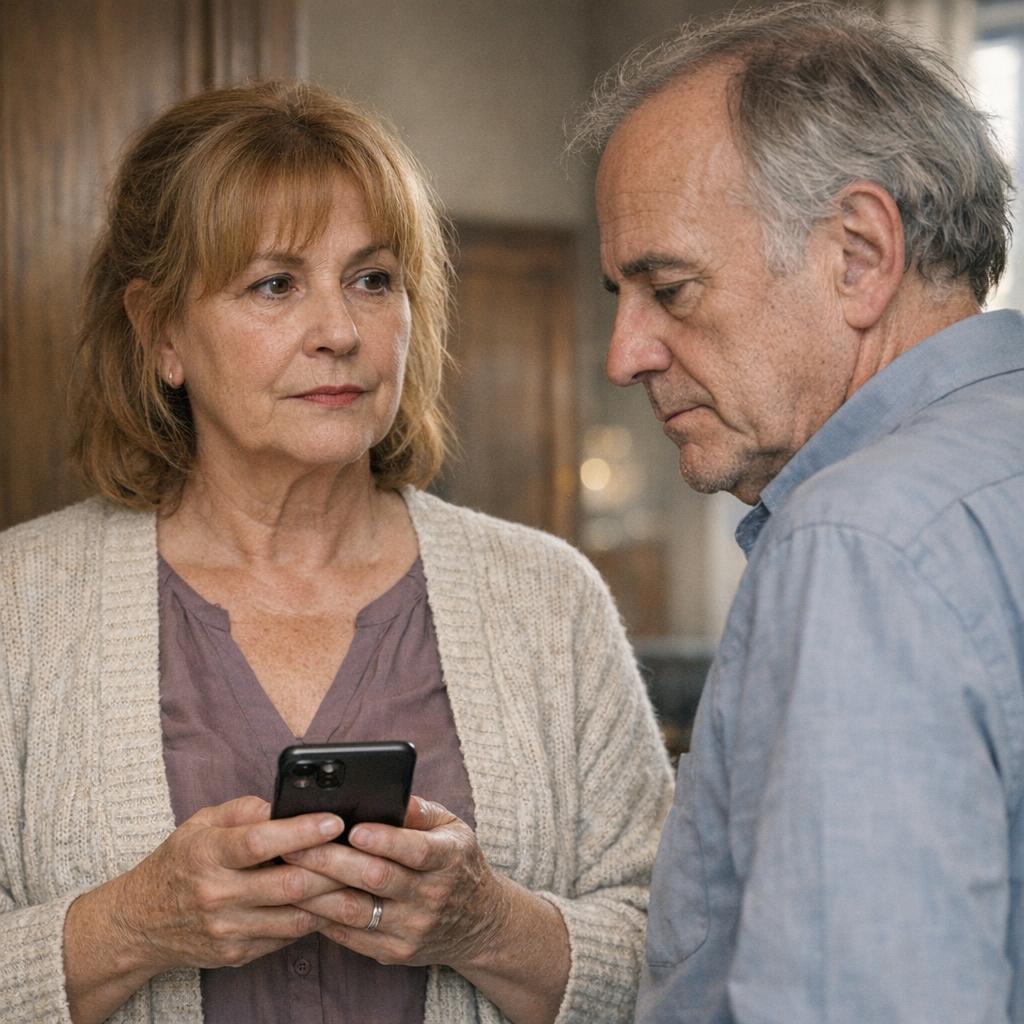 Image by RM AI
The Ultimatum
I stood in our kitchen the next morning, my hands wrapped around a fresh mug of coffee, and delivered the ultimatum I'd rehearsed all night. 'I need you to choose, Tom. Either you commit fully to repairing our marriage, which means cutting all contact with Melissa immediately, or you pack your bags and leave.' His eyes widened slightly, as if he hadn't expected me to draw such a clear line in the sand after thirty years together. 'Carol, it's not that simple,' he started, but I cut him off with a raised hand. 'Actually, it is exactly that simple. I won't be part of some negotiated arrangement where you get to keep both relationships while I pretend not to notice.' He stared into his coffee cup, avoiding my gaze. 'I just need some time to think,' he finally said, his voice barely above a whisper. Those seven words confirmed what I'd suspected all along – he wasn't ready to let her go. Not even after everything that had happened. Not even for me. I felt something inside me harden, like concrete setting around my heart. 'Take all the time you need,' I replied, setting my mug in the sink with a decisive clink. 'But you'll be taking it somewhere else until you decide.' What Tom didn't realize was that his request for time had already given me my answer.
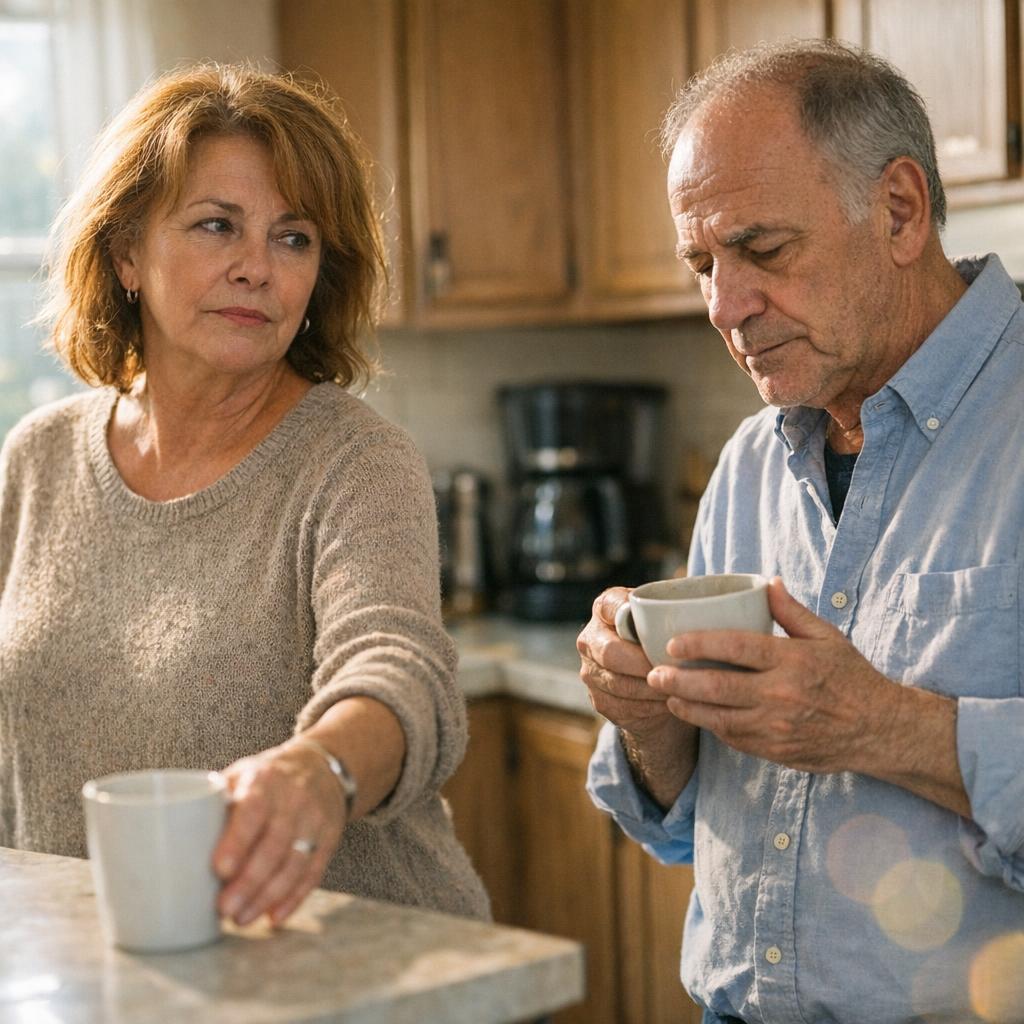 Image by RM AI
The Financial Separation
While Tom was 'taking time to think,' I decided to take action. The next morning, I walked into our bank, shoulders back, head high, and asked to speak with a personal banker. 'I'd like to open a separate account,' I told the young woman who introduced herself as Diane. Her eyes flickered with understanding – she'd seen this before. For thirty years, our finances had been as intertwined as our lives, but it took less than an hour to begin untangling them. I transferred exactly half of our savings into my new account, not a penny more. 'Just protecting myself,' I explained when Diane asked if I wanted to change the passwords on our joint accounts. That afternoon, I met with a financial advisor recommended by my friend Susan, who'd been through her own divorce three years earlier. 'I'm not saying I'm getting divorced,' I clarified, though the folder of retirement account statements in my hands suggested otherwise. The advisor, a woman in her sixties with kind eyes, nodded. 'You're just preparing for all possibilities.' She walked me through what a financial separation might look like – the 401(k)s, the house equity, the tax implications. With each spreadsheet and projection, I felt a strange mix of terror and empowerment. I wasn't just Tom's sister or Tom's wife anymore. I was Carol, age 59, with options. What surprised me most wasn't how efficiently I could dismantle our financial life together – it was how Tom didn't even notice until the bank called him about the 'unusual activity' on our accounts.
 Image by RM AI
The Support System
After three days of keeping everything bottled up, I finally broke down and called Janet and Linda. We met at Janet's house, where I spilled everything over a bottle of wine that disappeared faster than my marriage stability. 'He told her you were DEAD?' Janet practically shouted, her face flushing with anger. Linda, always the practical one, immediately started taking notes. 'First, we document the finances. Then we call my divorce attorney for a consultation.' I flinched at the word 'divorce,' though I'd been thinking it myself. 'I just need space to think,' I admitted, my voice cracking. Janet reached across the table and squeezed my hand. 'Pack a bag. You're staying with me.' When I hesitated, she added, 'Carol, you've spent thirty years taking care of everyone else. Let someone take care of you for once.' That night, I left Tom a note explaining where I'd be, packed enough clothes for a week, and drove to Janet's house with my heart in my throat. As I settled into her guest room, surrounded by family photos that didn't include Tom, I felt something I hadn't expected – relief. For the first time since hearing those fateful words 'You must be Tom's sister,' I could breathe without the weight of his presence. What terrified me wasn't how hard it was to leave – but how easy.
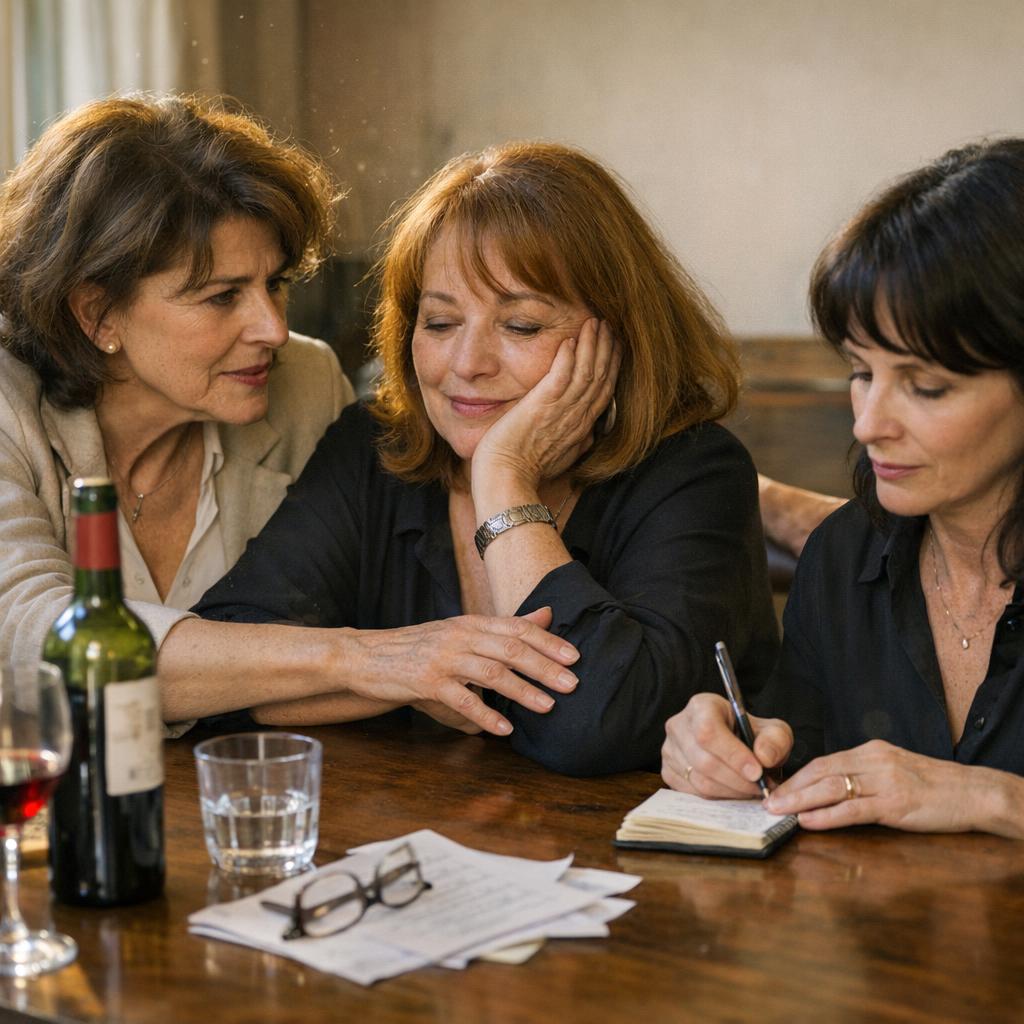 Image by RM AI
The Space to Think
Janet's guest room became my sanctuary. Each morning, I'd wake up and for a split second forget everything – until reality crashed back like a wave. I started taking long walks around her neighborhood, sometimes for hours, just breathing and thinking without Tom's presence clouding my judgment. 'There's no timeline for this, Carol,' Janet would remind me as we sat on her patio each evening, glasses of wine in hand. 'You've spent thirty years putting his needs first. Take all the time you need.' It was during our third night of talking until 2 AM that I finally broke down completely, sobbing into her shoulder like a child. 'I don't even know who I am without him,' I admitted through tears. Janet just held me, not pushing me toward divorce or reconciliation, just creating space for whatever I needed to feel. 'You're Carol,' she said simply. 'You were Carol before him, and you'll be Carol after – whatever "after" looks like.' For the first time since hearing those devastating words at the grocery store, I felt something shift inside me. Not healing exactly, but the beginning of clarity. What terrified me most wasn't deciding whether to stay or go – it was realizing I might choose myself over my marriage, and actually be okay with that decision.
 Image by RM AI
The Desperate Calls
On the fourth day at Janet's, my phone lit up for what felt like the hundredth time with Tom's name. I'd been letting his calls go to voicemail, each one more desperate than the last. 'Carol, please call me back,' or 'I miss you,' or 'We need to talk.' Finally, during my morning coffee on Janet's patio, I answered. 'Carol!' His voice cracked with relief. 'Thank God. I've been so worried.' I said nothing, just listened to him breathe on the other end. 'I've made my choice,' he rushed on. 'It's you. It's always been you. I've cut all contact with Melissa, I swear.' He sounded sincere—the same sincerity I'd heard when he explained away his 'errands' months ago. 'I've blocked her number, deleted her contact. I'll show you everything.' I took a slow sip of coffee, surprised by how calm I felt. 'I need more time, Tom,' I finally said. 'But you've made your choice?' he asked, his voice small. 'No,' I replied honestly. 'I haven't. And I won't be rushed into one.' After we hung up, Janet appeared with a fresh pot of coffee. 'He sounds desperate,' she observed. I nodded, realizing that for the first time in our marriage, Tom's desperation didn't automatically trigger my need to fix things for him.
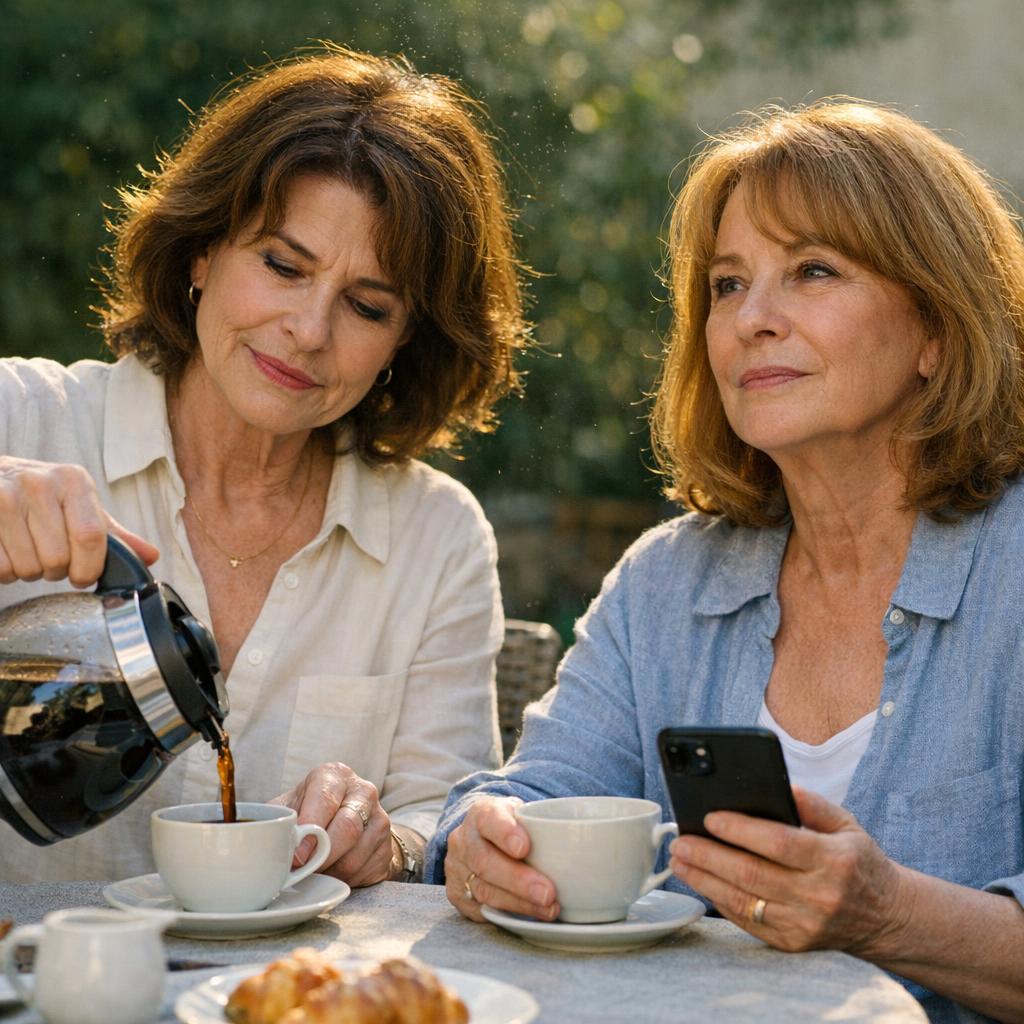 Image by RM AI
The Unexpected Visit
I was sipping tea in Janet's sunroom when the doorbell rang. Janet peeked through the curtains and her face hardened. 'It's a young woman I don't recognize,' she whispered, protective as always. When I joined her at the window, my stomach dropped. Melissa stood on the porch, nervously shifting her weight from one foot to the other, clutching what looked like an envelope. 'I'll send her away,' Janet offered, already moving toward the door with the determination of a guard dog. 'No,' I said, surprising myself. 'I want to hear what she has to say.' Janet looked concerned but nodded. We moved to the garden where the spring air felt appropriate for this surreal confrontation. Melissa couldn't meet my eyes at first, her fingers trembling as she apologized. 'I had no idea you existed—not as his wife, anyway,' she said, her voice barely audible. 'I've blocked Tom's number. I won't see him again.' Then she handed me the envelope. 'These are copies of checks he wrote me, and some text messages I thought you should see.' Her eyes finally met mine, woman to woman. 'I was stupid to believe him, but you deserve to know everything.' As she walked away, I held the envelope, not yet ready to open it, wondering if its contents would finally push me toward a decision I'd been avoiding.
 Image by RM AI
The Text Evidence
I sat at Janet's kitchen table, my hands trembling as I finally opened the envelope Melissa had given me. Inside were printouts of text messages between her and Tom—messages sent after our confrontation, after he'd sworn to me he'd cut all contact. 'We just need to lay low for a while,' he'd written just yesterday. 'Carol's upset, but I'm handling it. I can't imagine my life without you in it.' Another message read: 'Don't worry about the money. I'll figure out a way to help you that won't raise suspicions.' I read each message twice, my coffee growing cold beside me. The strangest part wasn't the betrayal—it was the calm that washed over me as I read his lies. It was like watching the final piece of a puzzle slide into place, completing a picture I'd been struggling to see. Janet watched me from across the table, concern etched on her face. 'Are you okay?' she asked softly. I folded the papers carefully, tucking them back into the envelope. 'Actually, I am,' I replied, surprised by the steadiness in my voice. 'For the first time in months, I know exactly what I need to do.' The weight of uncertainty had vanished, replaced by a clarity so sharp it almost felt like relief. What Tom didn't realize was that his desperate attempt to keep both worlds intact had just made my decision incredibly simple.
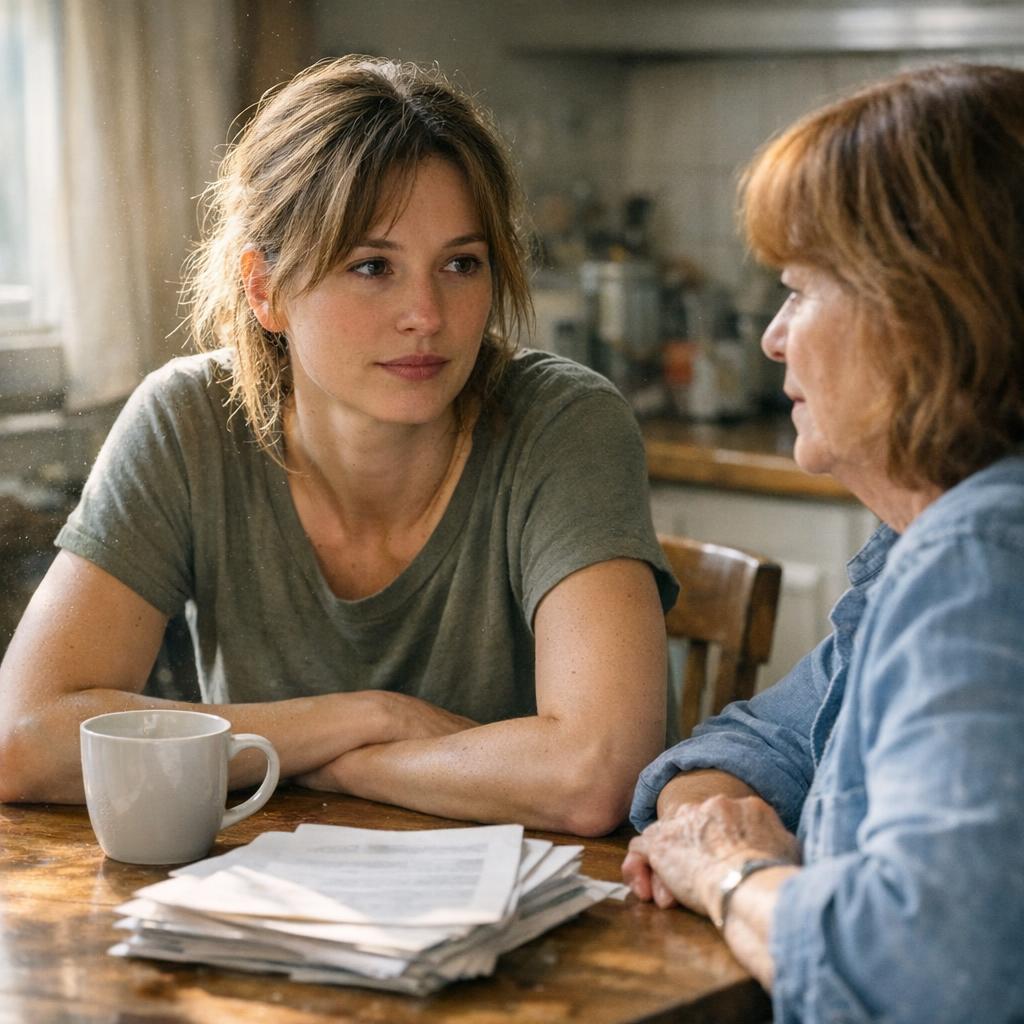 Image by RM AI
The Unexpected Alliance
I invited Melissa to Janet's backyard the next day, a neutral territory for what would be the strangest conversation of my life. We sat across from each other at the patio table, two women connected by the same man's lies. 'He told me you were dead,' she said softly, staring into her untouched tea. 'He said his sister—you—helped him cope with the loss.' I nodded, my throat tight. 'He told me you were just a struggling cashier he was mentoring.' As we talked, the puzzle pieces of Tom's double life fell into place. He'd presented himself as Melissa's financial savior while secretly draining our accounts. He'd told her about our vacation home but claimed it was his late wife's dream fulfilled. 'I feel so stupid,' she whispered, wiping away tears. 'Don't,' I replied, surprising myself with the gentleness in my voice. 'He's had thirty years to perfect his act with me.' By the time the sun began to set, something unexpected had formed between us—not friendship exactly, but a solidarity born from shared deception. We'd both been cast in Tom's elaborate performance without our consent, playing roles we never auditioned for. What neither of us realized then was that our unexpected alliance would soon become Tom's worst nightmare.
 Image by RM AI
The Return Home
After a week at Janet's, I finally drove home, my hands steady on the wheel despite the storm brewing inside me. Tom's car was in the driveway, and I could see him pacing by the window, probably watching for me since I'd texted that I was coming. When I walked through the door, his face lit up with desperate hope. 'Carol, thank God you're home,' he said, moving toward me with arms outstretched. I stepped back, placing my purse on the counter and pulling out Melissa's envelope. 'Before you say anything else, I think you should see these,' I said, my voice calmer than I expected. Tom's expression shifted from relief to confusion as I handed him the screenshots. I watched his face as he read them, the color draining away as his own words stared back at him. 'I can explain,' he started, but his voice cracked. I shook my head slowly. 'You told her you were "handling" me, Tom. Like I'm some problem to manage while you figure out how to keep both of us.' He sank into a kitchen chair, the papers trembling in his hands. 'How did you get these?' he whispered. I crossed my arms, feeling strangely powerful in my pain. 'It turns out your dead wife and your struggling cashier had quite a lot to talk about,' I replied. The look of absolute shock on his face told me he never imagined his two separate worlds could possibly collide.
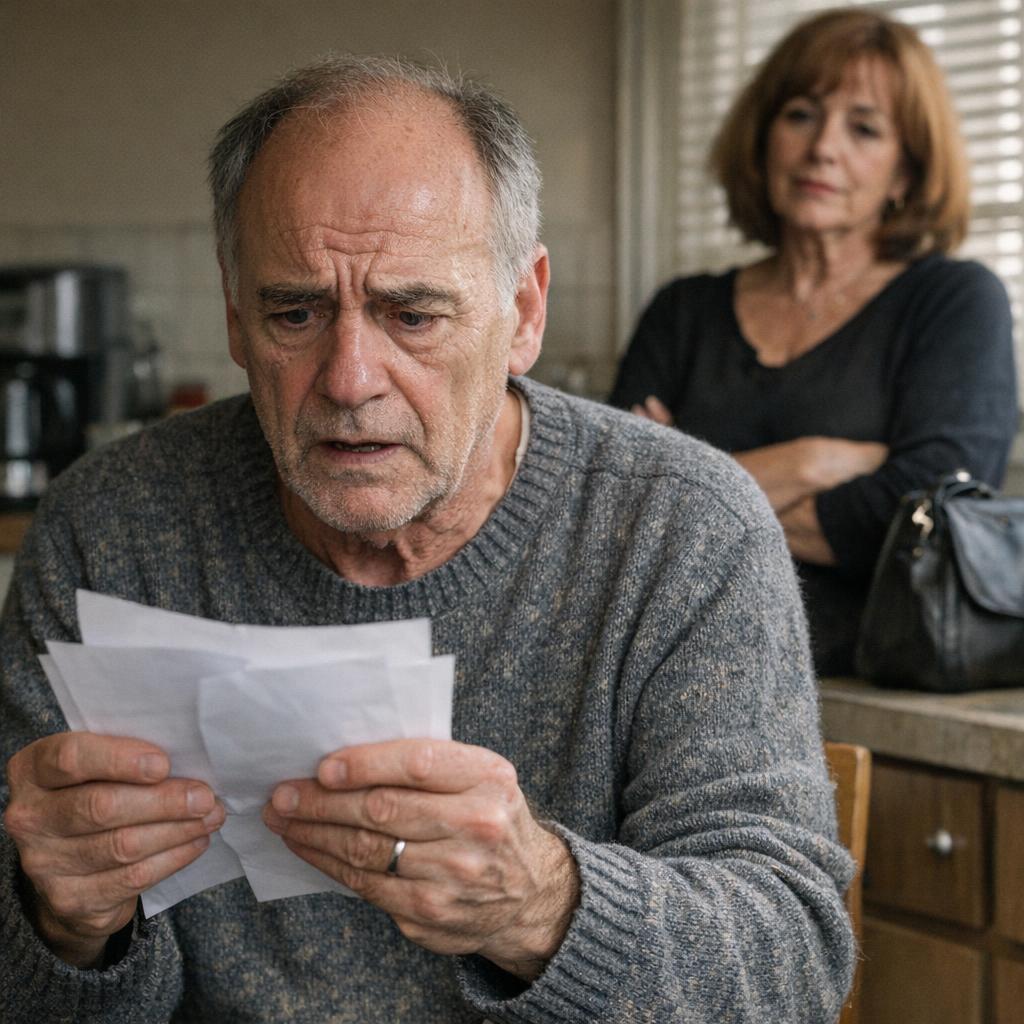 Image by RM AI
The Final Confrontation
Tom's face crumpled like a discarded receipt as he stared at the evidence in his hands. The carefully constructed walls between his two worlds had collapsed completely. 'I... I don't know what to say,' he whispered, his voice breaking. For once, there were no clever explanations, no carefully crafted lies. Just a broken man facing the consequences of his actions. 'I'll do anything, Carol. Therapy, complete transparency, whatever you need.' His eyes, red-rimmed and desperate, searched mine for any sign of forgiveness. I stood there, surprisingly calm, as if watching this scene unfold from somewhere outside myself. 'I need you to leave, Tom,' I said finally, my voice steady. His face fell further. 'Forever?' he asked, the word barely audible. I shook my head slowly. 'I don't know yet. I need space to figure out what I want – not what you want, not what's easiest, but what I truly want for the rest of my life.' As he packed a small suitcase, shoulders slumped in defeat, I realized something profound: for thirty years, I'd measured my worth through Tom's eyes. Now, at 59, I was finally seeing myself through my own.
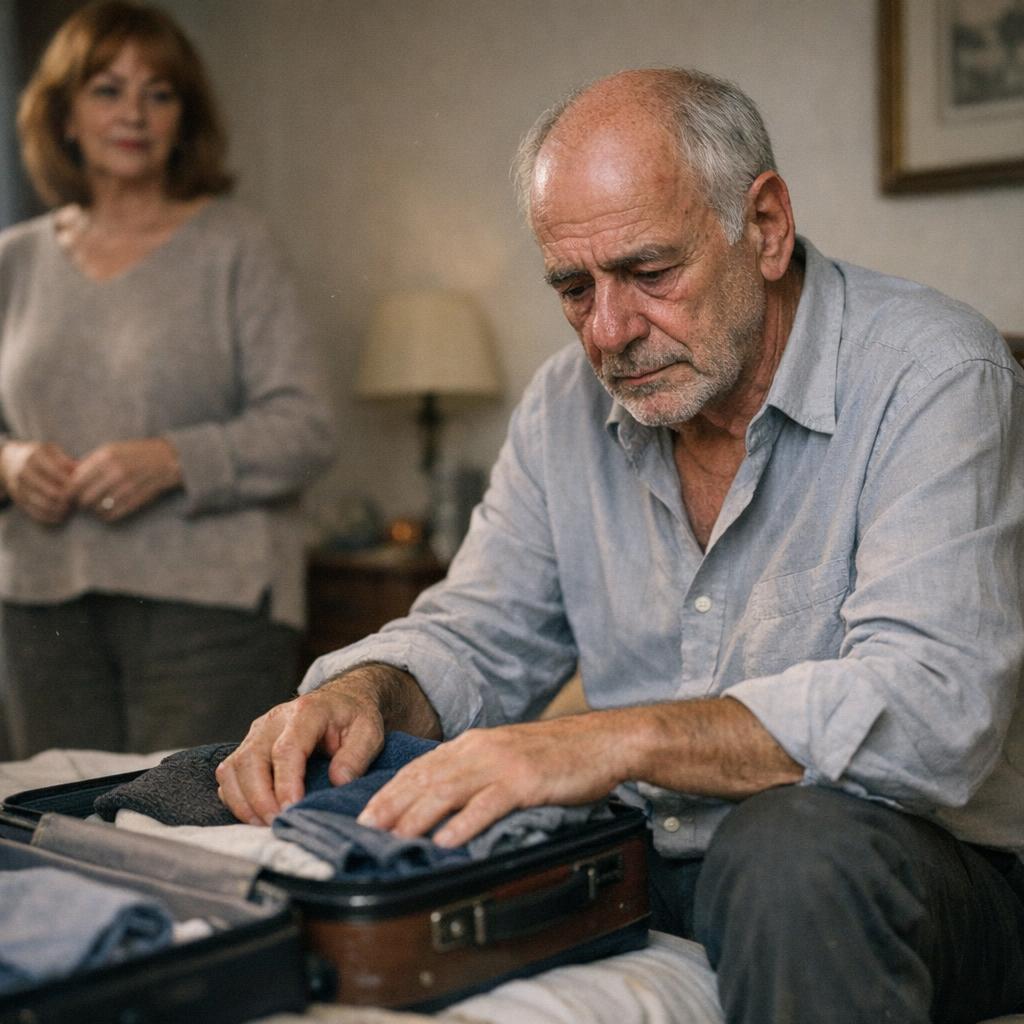 Image by RM AI
The Empty House
The house felt impossibly large after Tom left for his brother's. I stood in our foyer, listening to the silence that seemed to press against my eardrums. Thirty years of marriage, and suddenly I was alone with the echo of my own footsteps. I wandered from room to room like a tourist in my own life, seeing our history in every object—the couch where we'd watched countless movies, the dining table where we'd celebrated anniversaries, the bed where we'd whispered secrets in the dark. Around midnight, I found myself in Tom's closet, running my fingers over his neatly hung shirts, the ones he'd started pressing for his 'errands.' I buried my face in his favorite sweater, inhaling the lingering scent of his cologne, and tried to reconcile the man who'd held me through my mother's funeral with the one who could tell a stranger I was dead. How many times had he stood in this very spot, selecting an outfit to impress Melissa, planning his lies while I was just rooms away? I sank to the floor, surrounded by his things, feeling both relieved by his absence and haunted by his presence. The strangest part wasn't the emptiness of the house—it was realizing that even when Tom had been here, filling these rooms with his voice and movements, there had been an emptiness I hadn't recognized until now.
 Image by RM AI
The Therapy Session
I sat in Dr. Klein's office, fidgeting with the tissue box as she studied me with kind but penetrating eyes. 'So, Carol, tell me why you're here today,' she said, her voice gentle but direct. I took a deep breath. 'I need to understand how I became a ghost in my own marriage.' For the next hour, I poured out everything—the grocery store confrontation, Tom's double life, the text messages. Dr. Klein nodded, occasionally jotting notes. 'What I'm hearing,' she said finally, 'is that over thirty years, you both retreated into comfortable roles. You became the supporter, the fixer, while Tom became the one whose needs were prioritized.' Her words hit me like a physical blow. She was right. I'd gradually stopped asserting my own needs, convinced that Tom's happiness was somehow more important than mine. 'Your homework this week,' she said as our session ended, 'is to make a list of what YOU want for your future—not what would make Tom happy, not what would be easiest for everyone else—but what Carol wants.' I clutched the assignment sheet, feeling both terrified and strangely liberated. 'What if I don't know what I want anymore?' I whispered. Dr. Klein smiled. 'Then that's where we'll start.' As I drove home, I realized the most frightening part wasn't potentially ending my marriage—it was facing the blank page where my desires should be.
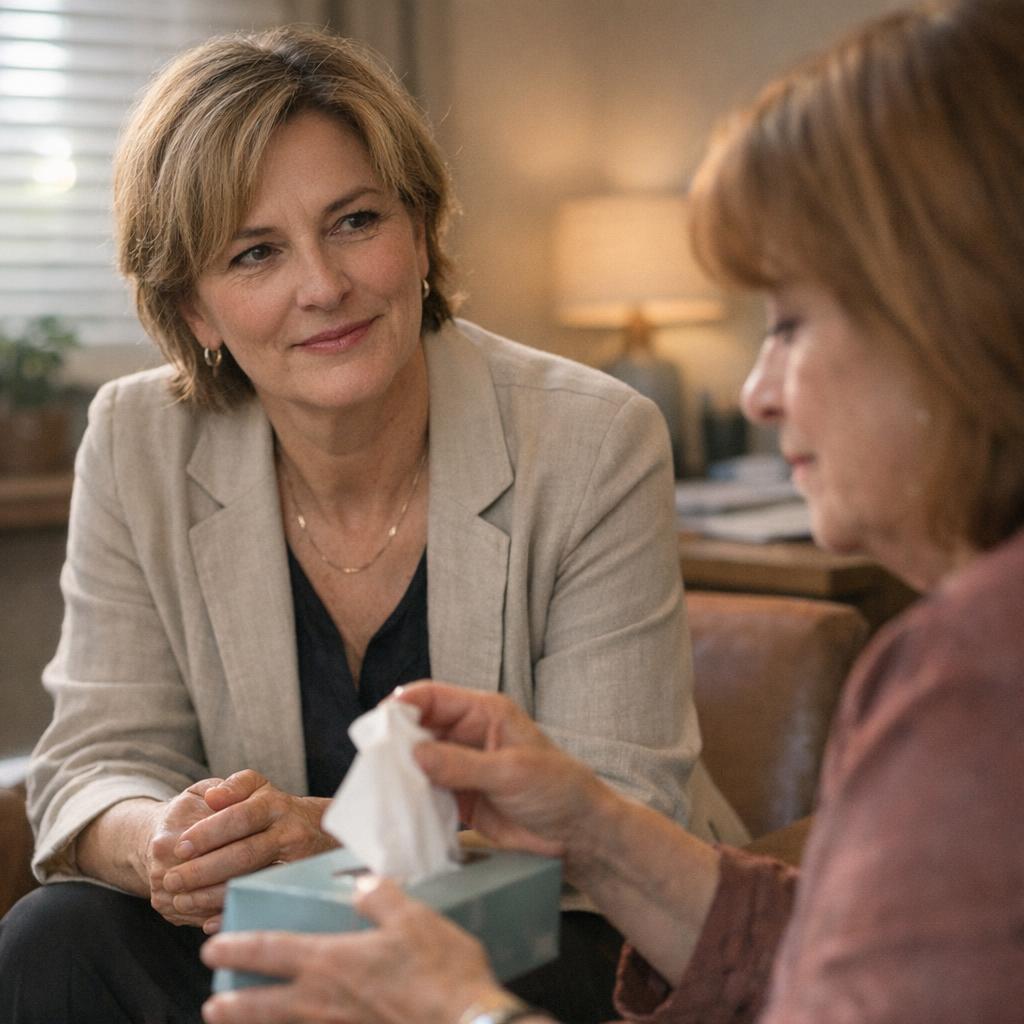 Image by RM AI
The List
I sat at Janet's kitchen table, Dr. Klein's homework assignment staring back at me like an accusation: "What does Carol want?" Such a simple question that I couldn't answer. For three days, I'd start writing, then crumple the paper in frustration. On the fourth day, something broke loose. I wrote "Photography classes" first—something I'd mentioned to Tom years ago that he'd dismissed as impractical. Then "Greece" appeared on my list, followed by "reconnect with college roommate Susan." The floodgates opened. I filled three pages with dreams I'd quietly shelved over thirty years: learning Italian, volunteering at an animal shelter, taking a solo road trip along the Pacific Coast Highway. But then, surprising myself, I started a second column: "Things I'd miss about life with Tom." Our Sunday morning crossword ritual. The way he still reached for my hand during turbulence on flights. How he remembered every bird we'd ever spotted together. I stared at both columns, tears blurring the ink. This wasn't just a list—it was a roadmap to the woman I'd forgotten I could be, with or without Tom. What terrified me most wasn't choosing between these two futures, but realizing how much of myself I'd surrendered without even noticing it happening.
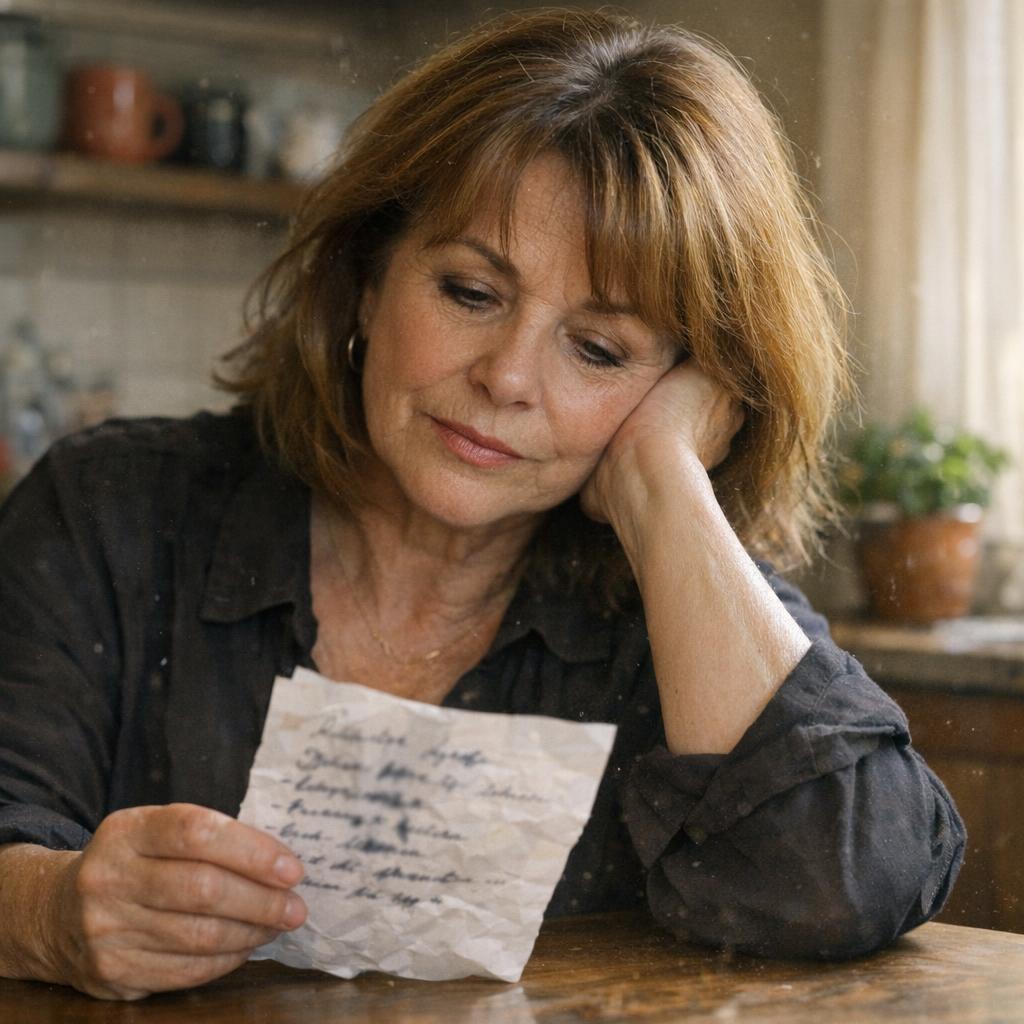 Image by RM AI
The Coffee Shop Run-In
I was waiting for my latte at Perkins Coffee downtown when I heard someone say my name. I turned and there was Melissa, frozen mid-step, clutching her own coffee cup. For a moment, we just stared at each other, the awkwardness thick enough to spread on toast. 'I can leave,' she offered quickly, already backing toward the door. 'No, it's fine,' I said, surprising myself. We ended up sitting at a small table by the window, both of us fidgeting with our cups. She told me she'd applied for a transfer to another store location, somewhere she could start fresh. 'I'm also seeing someone—a therapist, I mean,' she added with a nervous laugh. When she asked if Tom and I were working things out, I found myself answering honestly. 'I don't know yet. I'm figuring out what I want first.' As we stood to leave, she touched my arm lightly. 'Thank you for not hating me,' she said quietly. 'Most women would've thrown hot coffee in my face.' I smiled slightly. 'I'm saving that option for later.' She laughed, and for a brief moment, I saw what Tom might have seen in her—youth, yes, but also a genuine warmth. Walking back to my car, I realized something unsettling: in another life, Melissa and I might have actually been friends.
 Image by RM AI
The Marriage Counselor
Dr. Patel's office felt like neutral territory, with its muted colors and soft lighting designed to defuse tension. After three weeks of separation, Tom and I sat on opposite ends of a beige couch, the distance between us feeling both too small and impossibly vast. 'Let's start by acknowledging how difficult this step is,' Dr. Patel said, her voice calm and measured. 'You're both here, which means something.' Tom spoke first, his voice cracking as he described feeling increasingly invisible as he aged. 'I used to be someone people listened to,' he admitted, not meeting my eyes. 'With Melissa, I felt important again.' I flinched at her name but let him continue. When my turn came, I surprised myself with my honesty. 'I stopped expecting to be seen years ago,' I said, the words burning my throat. 'I became background music in our marriage—always there, but never really heard.' Dr. Patel nodded, jotting notes. 'What I'm hearing from both of you is a profound disconnection that happened so gradually, neither of you noticed until it was severe.' As we left, Tom reached for my hand in the parking lot, then stopped himself. 'Can I call you tomorrow?' he asked tentatively. I nodded, not yet ready to tell him about the photography class I'd signed up for—the first item from my list of wants that I'd actually pursued.
 Image by RM AI
The Accountability Plan
Dr. Patel's office felt more familiar during our second session, though the tension between Tom and me remained palpable. 'Today we'll discuss practical steps forward,' she said, her voice steady as she looked between us. I sat up straighter, the list I'd prepared burning in my pocket. 'I need complete financial transparency,' I stated, surprising myself with my firmness. 'Monthly reviews of all accounts together.' Tom nodded quickly, almost eagerly. 'Anything you want, Carol.' Dr. Patel made notes as we continued. Tom agreed to maintain his individual therapy alongside our couples sessions, acknowledging he needed to understand why he'd created this elaborate deception. The most difficult moment came when Dr. Patel suggested Tom move back home—my stomach tightened instantly. 'With separate bedrooms,' she clarified, noting my reaction. 'Focus on rebuilding trust before intimacy.' On the drive home, Tom asked if I was comfortable with the arrangement. 'I don't know yet,' I admitted, 'but I'm willing to try.' That night, I prepared the guest room, placing fresh sheets on the bed and emptying a drawer for his things. As I worked, I realized this wasn't just about monitoring Tom's behavior—it was about reclaiming my power in our marriage, something I should have done years ago. What I didn't tell him was that I'd already consulted a divorce attorney, just in case this accountability plan failed.
 Image by RM AI
The Homecoming
Tom moved back in on a Tuesday, carrying a single suitcase and an air of uncertainty that filled our home like a fog. I'd made up the guest room with fresh sheets and cleared half the bathroom counter—small gestures that felt monumental in their significance. 'Is this side okay?' he asked, placing his toothbrush in the holder, careful not to let it touch mine. We moved around each other like awkward dancers learning new steps, our decades of marriage suddenly no guide for this strange territory. Dinners became our neutral zone, chopping vegetables side by side, discussing safe topics like the weather or neighborhood gossip. Every Thursday night, we spread our financial statements across the dining table, a ritual of transparency that felt both necessary and painful. 'I transferred my bonus to our joint account,' he'd say, or I'd point out, 'This gas charge seems high.' The most difficult moments came during our nightly check-ins, when Dr. Patel's homework forced us to voice feelings we'd spent years suppressing. 'I felt invisible today when you interrupted me,' I admitted once, watching Tom's face fall with recognition. Some evenings ended with cautious laughter; others with silent retreats to separate rooms. What surprised me most wasn't the difficulty of rebuilding trust—it was discovering how much of myself I'd reclaimed in Tom's absence, and wondering if there was still room for him in this new version of me.
 Image by RM AI
The Photography Class
The community center classroom smelled like fresh paint and coffee when I walked in for my first photography class, clutching the sleek Canon camera Tom had presented to me the night before. 'I want to support your dreams,' he'd said, his eyes searching mine for approval. It was the first gift between us that felt weightless, unburdened by our history. I chose a seat near the window, where natural light spilled across the table. Our instructor, Elaine, a silver-haired woman with tattoo sleeves and infectious energy, moved around the room with the confidence of someone who'd found her calling late in life. 'Photography isn't about capturing what something looks like,' she told us, 'it's about capturing how it feels to see it.' Something in her words resonated deep within me. As we introduced ourselves—a retired accountant, a young barista, a widower with kind eyes—I realized no one here knew me as Tom's wife. I was just Carol, 59, learning photography. When Elaine assigned our first project—'Photograph something familiar as if seeing it for the first time'—I felt a flutter of excitement I hadn't experienced in years. Walking home, camera hanging from my neck like a talisman, I found myself noticing everything: the way light filtered through maple leaves, how shadows pooled in sidewalk cracks, the perfect symmetry of a neighbor's garden gate. What I didn't expect was how, through my viewfinder, I would begin to see myself differently too.
 Image by RM AI
The Setback
I was folding laundry when I found it—a crumpled receipt tucked in Tom's pants pocket. My hands froze mid-fold as I stared at the unfamiliar restaurant name and the time stamp: 1:37 PM on a Tuesday when he'd texted he was working late. Three months of careful rebuilding, of transparency spreadsheets and separate bedrooms and cautious morning conversations over coffee—all of it seemed to evaporate in that moment. My heart hammered against my ribs as I marched downstairs, finding Tom reading in the living room. 'What's this?' I asked, my voice surprisingly steady as I held out the damning paper. The color drained from his face, but not in the guilty way I expected. 'That was lunch with Dr. Harmon,' he said quietly. 'We sometimes meet at that café instead of his office when the weather's nice.' I laughed bitterly. 'Convenient explanation.' He reached for his phone. 'Call him right now if you want to verify.' As I took the phone, my hands trembling, I realized something devastating: despite all our work, despite the photography classes and financial transparency and couples therapy, one crumpled receipt could still send me spiraling into worst-case scenarios. Dr. Patel had warned us that trust, once broken, rebuilds in microscopic increments—but I never understood until that moment how exhausting it would be to live constantly braced for the next betrayal.
 Image by RM AI
The Honest Conversation
We sat on the back porch swing last night, mugs of tea growing cold between us as the sunset painted everything in forgiving gold. 'I still think about her sometimes,' Tom admitted, his voice barely audible above the creaking swing. I felt my body tense, but he continued, 'Not because I want to be with her, but because I'm ashamed of how easily I lied to both of you.' His honesty cut deeper than any lie could. 'Some days,' I whispered back, 'I'm still not sure if staying together is right.' The words hung between us, neither accusation nor surrender, just truth. Tom nodded slowly, his eyes fixed on the darkening horizon. 'Maybe certainty isn't what we should be chasing,' he said finally. 'Maybe it's just about choosing each other again every morning.' We agreed to stop expecting perfect clarity, to accept that doubt might always linger in the corners of our rebuilt marriage. As we headed inside, Tom reached for my hand—not grabbing, just offering. I hesitated only a moment before taking it, realizing that trust isn't about eliminating all uncertainty; it's about being brave enough to move forward despite it. What I didn't tell him was that I'd already scheduled a meeting with a real estate agent to look at small apartments—not because I'd decided to leave, but because I needed to know I could.
 Image by RM AI
The Anniversary Decision
Our thirty-first anniversary arrived exactly six months after I'd stood in that grocery store line and heard myself called Tom's sister. We decided against our usual restaurant celebration, opting instead for a quiet dinner at home—neutral territory in our still-fragile reconciliation. I made his favorite lasagna; he bought a bottle of the wine we'd had on our honeymoon. The normalcy felt both comforting and strange, like wearing clothes that once fit perfectly but now hung differently on my frame. After dinner, Tom handed me an envelope, his fingers trembling slightly. 'I've been working on this for weeks,' he admitted. Inside was a four-page letter, his familiar handwriting covering every inch. He'd poured out everything—his shame, his gratitude for my willingness to try again, promises that felt different from the desperate ones he'd made that first night. I read it twice while he waited, silent and nervous across the table. I hadn't prepared anything in return, but as I folded the letter, I realized I did have something to give him: a decision I'd finally reached after months of therapy, photography classes, and rediscovering myself. 'Tom,' I said, meeting his eyes directly, 'I need to tell you what I've decided about us.'
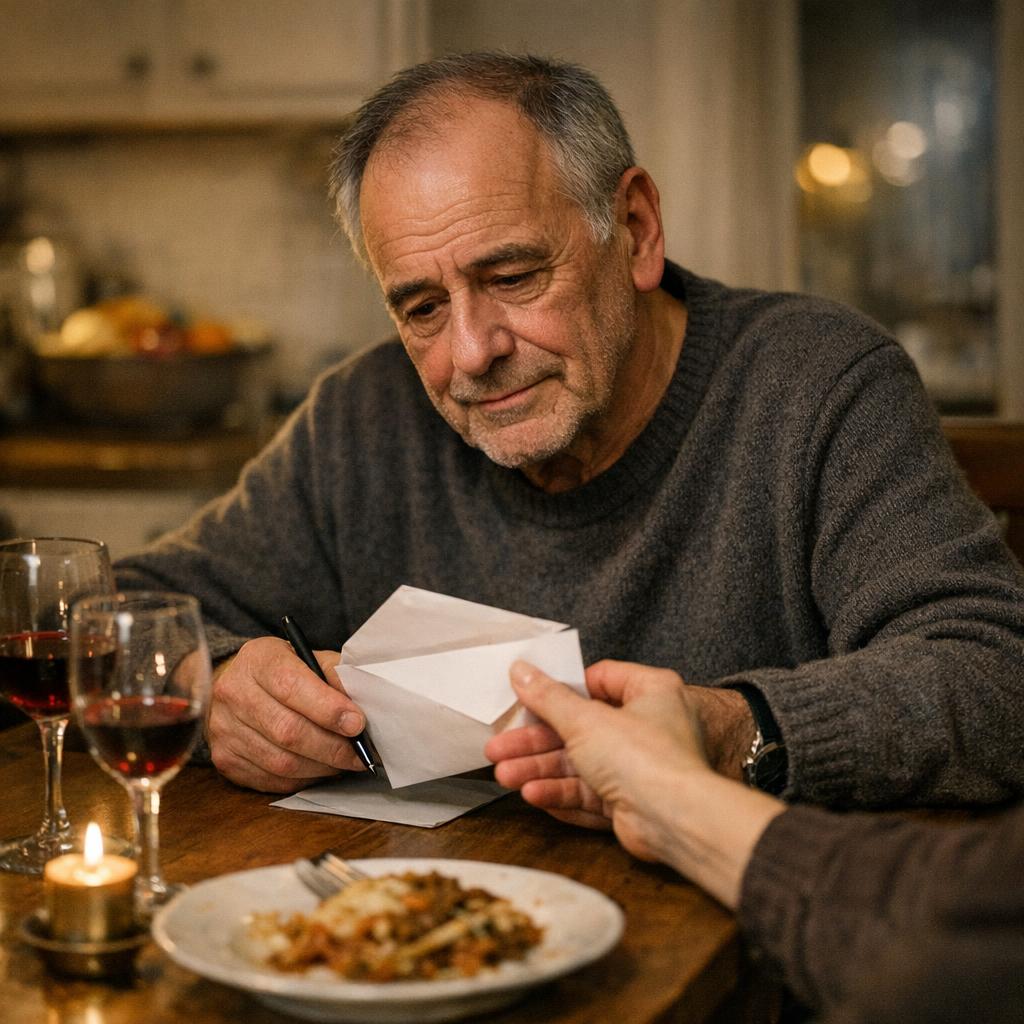 Image by RM AI
The New Beginning
I stood in the doorway of our bedroom, watching Tom arrange his pillow on what had always been his side of the bed. 'Are you sure about this?' he asked, his voice carrying a mixture of hope and hesitation. I nodded, though my heart fluttered with uncertainty. 'I'm not sure about anything anymore, Tom. But I'm tired of living in this in-between space.' After six months of separate rooms and careful distance, we were attempting to share a bed again—not because everything was fixed, but because I'd realized that healing couldn't happen in suspended animation. That night, we lay side by side, not touching but acutely aware of each other's presence. The familiar sound of his breathing, once the soundtrack to thirty years of nights, now felt both comforting and strange. I stared at the ceiling, remembering Dr. Klein's words: 'Moving forward doesn't mean forgetting. It means choosing what to carry with you.' In the darkness, Tom whispered, 'Thank you for not giving up on us.' I didn't respond immediately, knowing that this wasn't about saving our marriage anymore—it was about creating something new from the fragments of what we'd broken. As I drifted toward sleep, I realized that the hardest part wasn't sharing this space again; it was accepting that I might never feel completely safe in it.
 Image by RM AI
The Grocery Store Revisited
I never thought I'd willingly return to a grocery store after what happened last year, yet here we are, Tom and I pushing a cart down the cereal aisle of Westside Market. It's been exactly one year since my world imploded at that checkout counter, and we've deliberately chosen a different store—neutral territory for this mundane yet somehow monumental outing. As Tom debates between granola brands, I realize with a start that I haven't thought about Melissa in weeks. Her name used to flash through my mind like a warning light dozens of times daily, but now she's faded to a dull footnote in our story. When Tom mentions needing to run by the hardware store later, I feel a flicker of curiosity rather than the familiar knot of suspicion. 'Want to come with?' he asks, and the casual invitation feels significant—he's not hiding anymore. I nod, watching him check items off our shared shopping list app, something Dr. Patel suggested for transparency. It's not perfect trust—I doubt it ever will be—but it's something sturdier than the fragile hope we started with. As we approach the checkout, I brace myself out of habit, then realize I'm holding my breath for a ghost that isn't here. The cashier smiles at us both equally, seeing us exactly as we are: just another couple buying groceries on a Tuesday afternoon. It's such a small victory, but somehow it feels like everything.
 Image by RM AI
The Invisible Woman No More
Standing in my closet this morning, I caught my reflection in the full-length mirror—really saw myself for perhaps the first time in years. I remembered that moment at the grocery checkout, the cashier's innocent 'Oh, you must be Tom's sister' comment that shattered my world. It's been exactly one year since that day, and while the pain hasn't completely disappeared, something remarkable has taken its place. I've reclaimed pieces of myself I didn't even realize were missing. My photography isn't just a hobby anymore; it's how I've learned to see the world—and myself—with new clarity. My separate bank account isn't just about financial protection; it's about acknowledging my worth. Even my voice sounds different to my own ears—stronger, more certain. Tom and I are still navigating this new reality together, sometimes stumbling, sometimes surprising each other with moments of genuine connection. But the most important relationship I've rebuilt is with myself. Whether our marriage ultimately survives isn't the only question that matters anymore. I know now that I'll never again allow myself to be erased, reduced to someone's sister or convenient fiction. The invisible woman who stood frozen at that checkout counter a year ago? She doesn't exist anymore. And honestly, I don't think she ever will again.
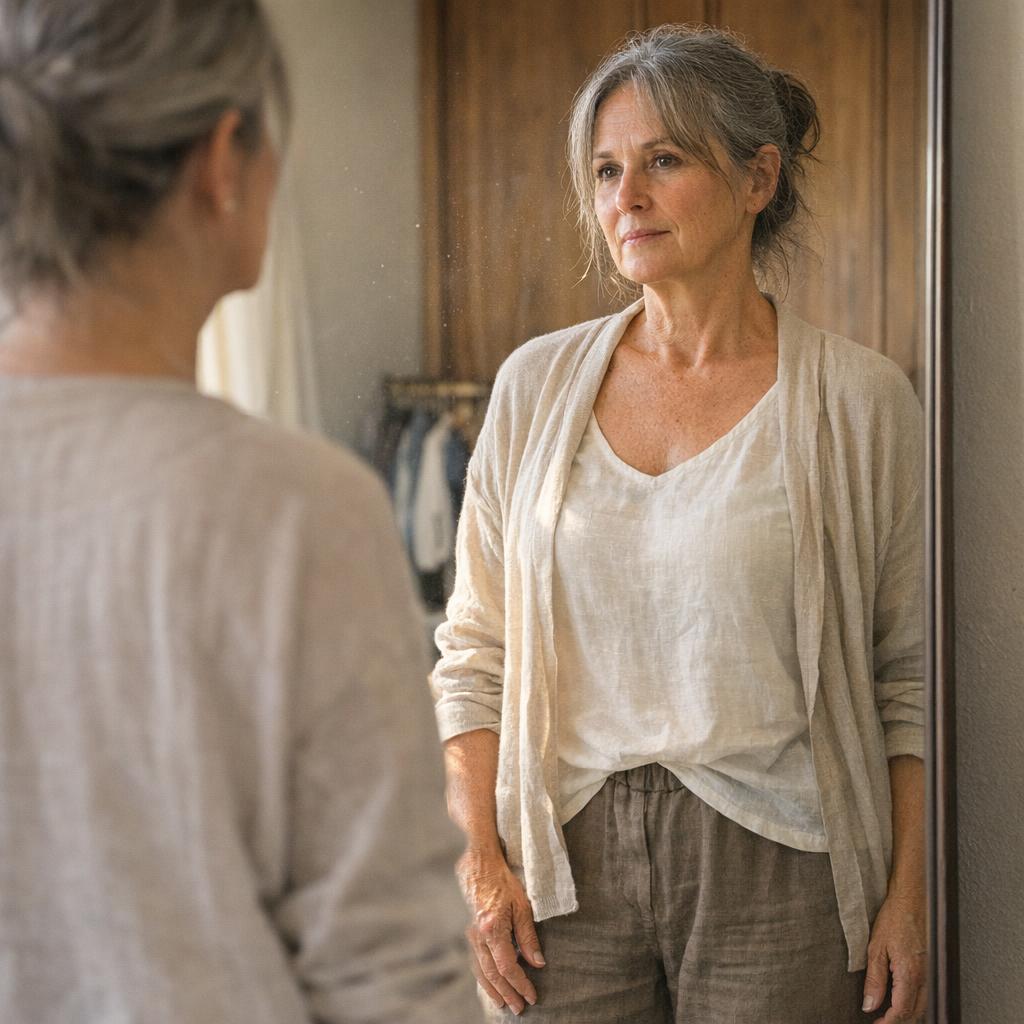 Image by RM AI